What We Build for Remodeling Companies
Every engagement is scoped to your business size, project volume, and specific operational bottlenecks. Here is what a full AI integration looks like for a remodeling company:
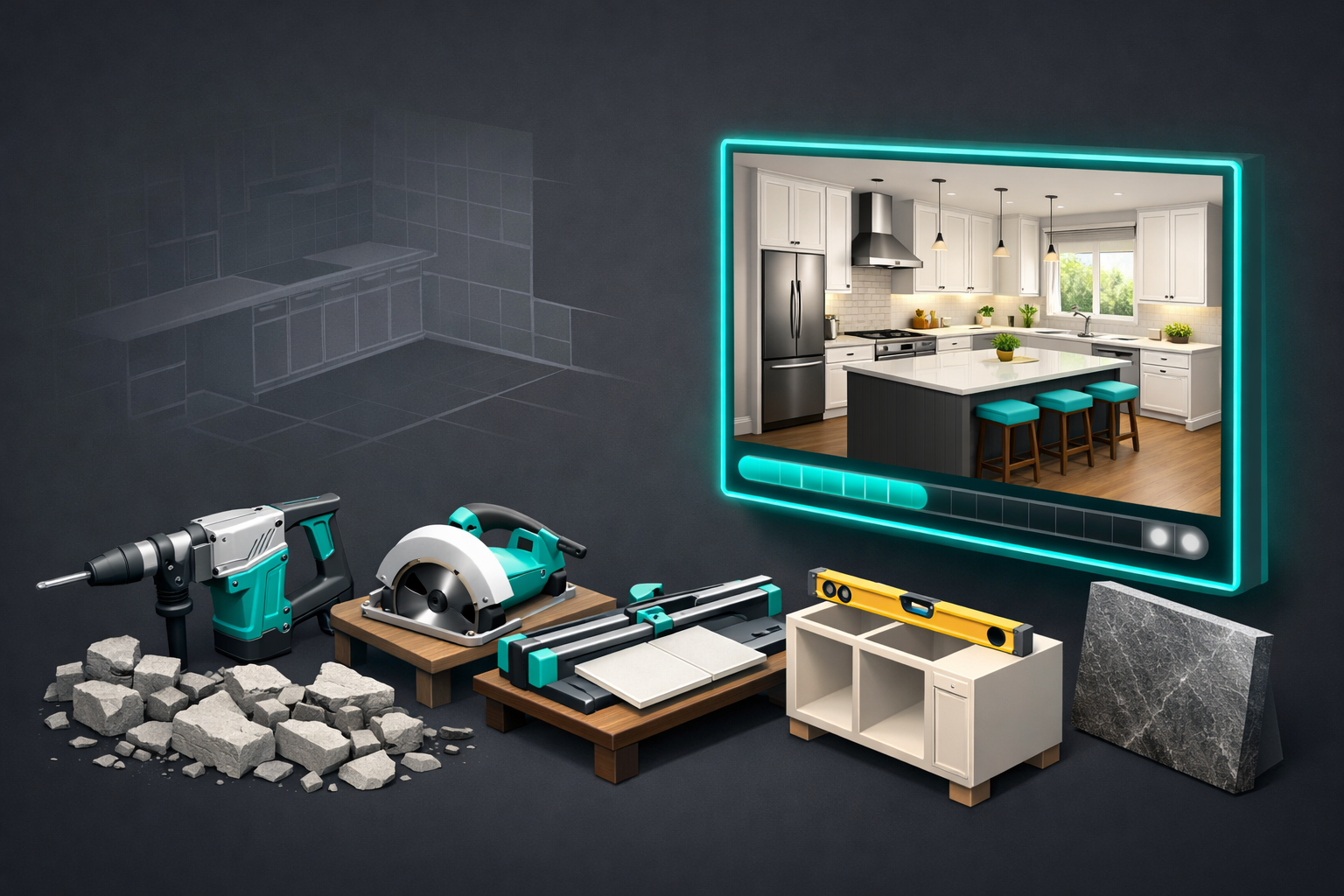
- AI-powered design visualization that generates photorealistic renderings from room photos during client consultations
- Automated estimating engine that produces detailed material takeoffs and cost estimates from floor plans and scope descriptions
- Smart scheduling system that coordinates subcontractors, material deliveries, and inspections across multiple concurrent projects
- Material cost optimization that monitors supplier pricing and suggests purchasing timing and alternatives
- AI-generated 3D walkthroughs for client presentations, design review meetings, and project approvals
- Client communication automation with milestone updates, schedule changes, and photo documentation at each project phase
- Change order management system that calculates cost and timeline impact automatically when scope changes
- Document processing for permits, contracts, lien waivers, and compliance paperwork
- Predictive analytics for project profitability, identifying which project types and price ranges yield the best margins
- Automated follow-up sequences for past clients based on project age, seasonal timing, and property data
- Crew and subcontractor performance tracking with data-driven assignment recommendations
- Integration hub connecting your CRM, estimating software, accounting system, and project management platform
AI Solutions for Remodeling Businesses
Smart Scheduling and Project Coordination
Managing multiple remodeling projects simultaneously is the single biggest operational challenge for growing companies. A bathroom remodel, a kitchen renovation, and a basement finish running at the same time with overlapping subcontractor needs, competing inspection schedules, and material delivery windows that don't always align. This is where traditional scheduling breaks down and AI creates the most value.
Our AI scheduling systems work by ingesting your active project data, subcontractor availability, historical duration data for each phase of work, and external factors like weather forecasts and permit processing times. The system builds optimized schedules that minimize idle time between phases, avoid subcontractor conflicts, and build in realistic buffers based on your actual project history rather than wishful thinking.
When disruptions happen, and they always do in remodeling, the system recalculates automatically. A plumbing rough-in that takes two extra days does not just push the rest of that project back. The AI evaluates the ripple effect across all active projects and suggests the best resequencing option. Your project managers get notified with specific recommendations instead of scrambling to figure out the domino effect on their own.
The scheduling system also handles automated communication. Subcontractors receive updated schedules and confirmation requests. Clients get milestone updates. Your office team sees a real-time dashboard showing every active project's status. The result is fewer phone calls, fewer surprises, and a professional client experience that generates referrals.
Learn more about our scheduling solutions | Workflow automation for contractors
AI Design Visualization and Client Presentations
The consultation is where remodeling projects are won or lost. Homeowners have browsed Pinterest, saved Instagram photos, and watched HGTV. They have a vision in their head, but they cannot articulate it precisely. And they cannot connect that vision to real costs, timelines, and material options. This gap between imagination and reality is where projects stall, where clients say "let me think about it" and never call back.
AI design visualization closes that gap during the first meeting. Our systems allow your team to photograph the existing space with a smartphone, then generate photorealistic renderings showing different design options in real time. Want to see this kitchen with white shaker cabinets and quartz countertops? Here it is. Now with navy blue cabinets and butcher block? Done. How about with the island moved 18 inches to the left and a pendant light fixture? Generated in seconds.
This capability transforms the sales process. Clients can make design decisions with confidence because they are seeing realistic representations of the outcome, not imagining it from a 2D floor plan. It also accelerates the design phase. Instead of three rounds of revisions over four weeks, major design decisions happen in the first or second meeting because the visualization tools make options tangible.
We build these visualization systems to integrate with your estimating workflow. When a client selects a design option, the associated material costs and labor estimates update automatically. The rendering becomes a visual quote that the client can review alongside actual pricing. This connection between design and cost is what separates a professional remodeling consultation from a generic sales pitch.
Explore our custom AI solutions | Business software for contractors
Automated Estimating and Quoting
Estimating is the bottleneck that limits how many projects a remodeling company can bid on. Every estimate requires detailed measurement, material quantity calculations, labor hour projections across multiple trades, current material pricing, and contingency planning. An experienced estimator producing three to four detailed estimates per week is working at capacity. If you are turning away estimate requests because your team cannot keep up, you are leaving revenue on the table.
Our AI estimating tools accelerate this process by 60 to 75 percent. The system analyzes floor plans (uploaded photos or digital files), scope descriptions, and your historical project data to generate detailed material takeoffs and cost frameworks. It accounts for regional material pricing, your specific subcontractor rates, typical contingency percentages by project type, and seasonal cost variations.
The output is not a black box number. It is a detailed line-item estimate that your estimator reviews, adjusts, and refines. The AI handles the computation-heavy work. Your estimator applies their experience and judgment to the areas where human expertise matters most: assessing site conditions, anticipating hidden issues, and making judgment calls about scope complexity.
For companies that track actual versus estimated costs on completed projects, the system gets smarter over time. It learns from your real project data which estimates were accurate, where costs consistently overran, and what project characteristics predict higher contingency needs. After processing 30 to 50 completed projects, the AI-generated estimates typically achieve 87 to 93 percent accuracy before human review.
Material cost optimization is built into the estimating workflow. The system monitors pricing from your preferred suppliers and flags opportunities to adjust purchasing timing or substitute equivalent materials at better prices. On a $75,000 kitchen remodel, material cost optimization typically saves 4 to 8 percent on materials without compromising quality or specification.
Learn about our custom AI solutions | Business software development
AI Customer Service and Communication
Remodeling is a high-touch business. Clients are living in their homes during renovations. They are anxious about timelines, costs, and disruption to their daily lives. The quality of your communication directly impacts client satisfaction, referral rates, and online review scores. But maintaining consistent, proactive communication across 8 to 15 active projects while also managing new leads and completing estimates is a staffing challenge that scales poorly.
AI communication systems solve this by automating the routine touchpoints while keeping your team focused on the conversations that require personal attention. Milestone updates go out automatically when project phases are completed. Weekly progress reports with photos are generated and sent to clients without anyone in your office writing them manually. Upcoming schedule changes trigger proactive notifications before clients have to ask what is happening next.
For new leads, AI-powered intake systems qualify inquiries, gather project details, and schedule consultations without requiring office staff to field every call. A homeowner who fills out your website form at 9 PM on a Saturday gets an intelligent response within minutes, not a voicemail callback on Monday morning. The system asks the right questions about project scope, timeline, and budget range so that when your team follows up, they have the information needed to prepare for a productive first conversation.
Post-project follow-up is another area where automation pays dividends. Our systems track completed projects and trigger outreach at strategic intervals. A kitchen remodel completed 18 months ago might prompt a check-in about whether the client is considering their next project. A bathroom renovation from three years ago might generate a reminder about the master suite they mentioned wanting to update eventually. These automated touchpoints keep your company top of mind without requiring your team to manage a follow-up calendar for hundreds of past clients.
Explore AI customer service solutions | Chatbot development for contractors
Document and Workflow Automation
Remodeling companies generate an enormous volume of paperwork. Contracts, change orders, permit applications, lien waivers, insurance certificates, material purchase orders, subcontractor agreements, warranty documentation, and final completion certificates. Managing this document flow manually creates administrative overhead that grows with every project you add.
Our AI document processing systems automate the creation, routing, approval, and filing of project documents. Contract templates populate automatically from estimate data. Change orders calculate cost and timeline impact and route to clients for digital approval. Permit applications pull project specifications from your estimating system. Lien waivers are tracked and collected from subcontractors automatically as payments are processed.
Compliance documentation is particularly valuable for remodeling companies operating across multiple jurisdictions. Building codes, permit requirements, and inspection protocols vary by city and county. Our systems maintain current compliance requirements for your service area and flag any documentation gaps before they cause inspection delays or permit issues.
The workflow automation layer connects these documents to your project timeline. A completed rough-in inspection automatically triggers the next phase scheduling. A signed change order updates the project budget, adjusts the timeline, and notifies affected subcontractors. A final inspection approval generates the completion certificate and triggers the warranty documentation package. Every handoff that previously required someone in your office to remember, process, and forward now happens automatically.
Document processing solutions | Workflow automation for your business
Predictive Analytics and Business Intelligence
Most remodeling companies make growth decisions based on gut feeling and last year's revenue number. AI analytics gives you the data to make those decisions with precision. Our predictive analytics platforms aggregate your project data, financial records, lead sources, and operational metrics to reveal patterns that are invisible in spreadsheets.
Which project types produce the highest margins after accounting for change orders and warranty callbacks? Which neighborhoods generate the most repeat business and referrals? What is your actual cost per lead by source, and which sources produce leads that convert to signed contracts? How does your project duration compare to your estimates, and which phases consistently run over? These are questions that data answers, and the answers drive better business decisions.
Demand forecasting is particularly valuable for remodeling companies managing seasonal fluctuations. Our systems analyze historical inquiry patterns, local housing market data, permit volume trends, and economic indicators to project demand 60 to 90 days out. This forecast informs staffing decisions, marketing spend allocation, and subcontractor commitment timing. Instead of being caught short-staffed in spring and overstaffed in winter, you plan proactively based on data.
Financial analytics track profitability at the project level, the client level, and the service category level. You might discover that your whole-home remodels average 22 percent margins while your bathroom renovations average 31 percent. Or that projects sourced from referrals have 40 percent fewer change orders than projects from online leads. These insights shape your marketing strategy, your pricing, and your project selection criteria.
Predictive analytics solutions | AI data pipeline development
What to Expect
Phase 1: Discovery and Assessment (Week 1-2)
We start by understanding your business from the inside. Your current tools, your workflow bottlenecks, your team's capabilities, and your growth goals. This is not a survey or a questionnaire. We dig into your actual processes. How do estimates get built? How are projects scheduled? What happens when a subcontractor cancels? Where do client complaints originate? The answers shape every decision that follows.
Phase 2: System Design (Week 3-4)
Based on discovery findings, we design the AI integration architecture. This includes selecting tools, defining integrations, mapping data flows, and documenting how each system component connects to your existing workflow. You review the design and provide feedback before any building begins. We identify quick wins that can be deployed early alongside longer-term systems that require more development time.
Phase 3: Build and Integration (Week 5-10)
Development happens in phases, starting with the highest-impact systems. Typically that means estimating automation and scheduling optimization first, followed by client communication and document processing. Each component is tested with your real project data before going live. Your team is trained on each system as it launches, with documentation and support resources tailored to your specific configuration.
Phase 4: Launch, Optimization, and Support
After full deployment, we monitor system performance, gather feedback from your team, and optimize based on real usage data. AI systems improve over time as they process more of your project data. We provide ongoing support, system updates, and periodic reviews to ensure your technology stack evolves as your business grows. Most clients see measurable efficiency gains within 30 days and significant ROI within 90 days.
Build Smarter Remodeling Operations
The remodeling companies that will dominate the next decade are not just the ones with the best craftsmanship. They are the ones that pair excellent work with excellent operations. AI tools give you the ability to quote faster, schedule tighter, communicate better, and make data-driven decisions about where to focus your growth. Running Start Digital builds these systems for remodeling companies that are ready to operate at the next level. Contact us to start your AI integration.