What We Do
Your sales team rewrites the quarterly forecast three times before close. Your warehouse orders too much of one SKU and runs out of another. A high-value customer cancels and nobody saw it coming. These are not data problems. They are prediction problems. Predictive analytics replaces gut-feel planning with statistical models trained on your actual historical data.
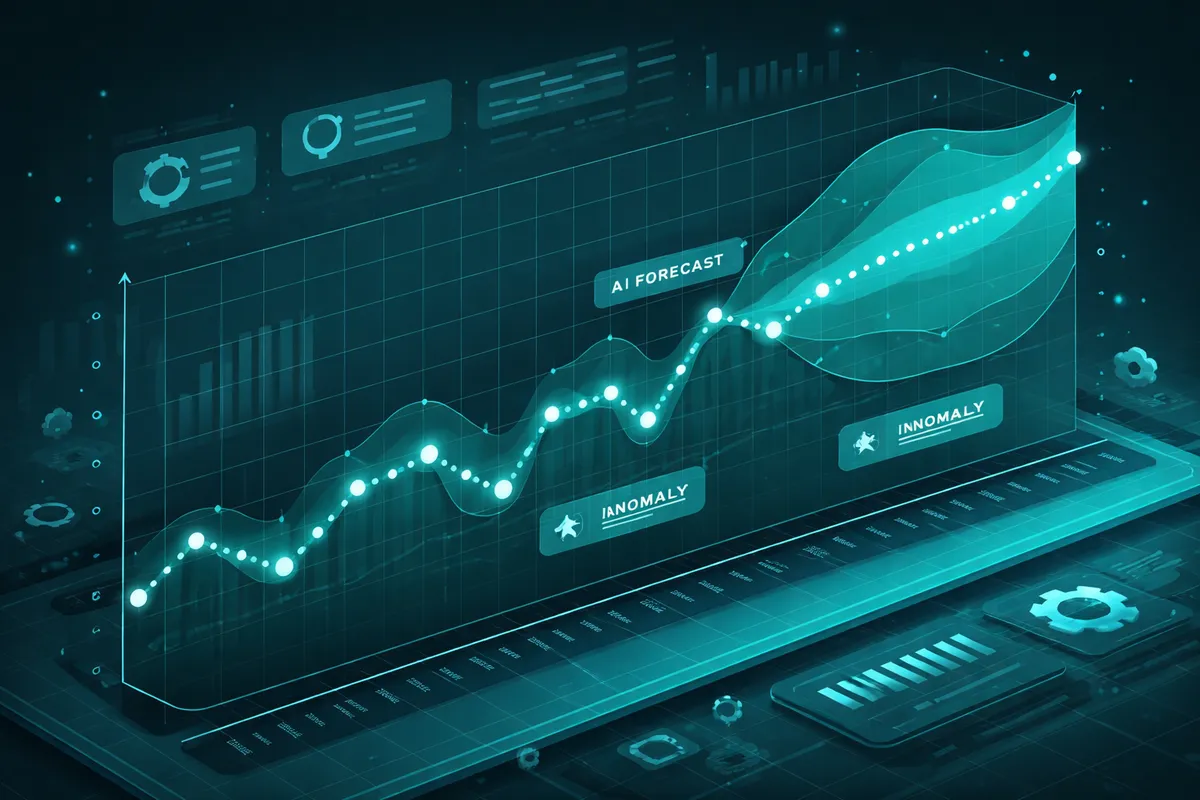
Revenue forecasting models project next quarter's numbers with confidence intervals, so you know the likely range and not just a single target. Churn prediction scores every active customer based on engagement decay, usage patterns, and support ticket frequency, flagging at-risk accounts weeks before cancellation. Demand planning models adjust inventory and staffing recommendations based on seasonality, promotional calendars, and external signals like weather or economic indicators. The output is not a research report. It is a live dashboard with automated alerts that fire when a metric crosses a threshold you define. Your team acts on forecasts, not hunches.
How We Work
We start with a data readiness assessment. We inventory your CRM records, transaction logs, support data, and any other historical sources. We evaluate completeness, consistency, and volume, then tell you exactly which prediction use cases your data can support today and which need additional collection. Model development follows a structured pipeline. We engineer features from your raw data, transforming timestamps into seasonality signals, aggregating transactions into behavioral profiles, and encoding categorical variables for model consumption.
We train multiple candidate approaches: gradient-boosted trees for tabular business data, time-series models for sequential forecasting, and logistic regression baselines for interpretability comparison. Each candidate is evaluated against held-out validation data using metrics that match your business goal, whether that is minimizing false negatives for churn or maximizing accuracy for revenue projection. The winning model is deployed to your preferred delivery channel: a live dashboard with drill-down filters, a weekly email digest, an API endpoint your existing systems can query, or push alerts when a prediction crosses a threshold you set. Every forecast includes a confidence interval so your team knows when to act decisively and when to gather more information.