AI Tools That Are Working Right Now
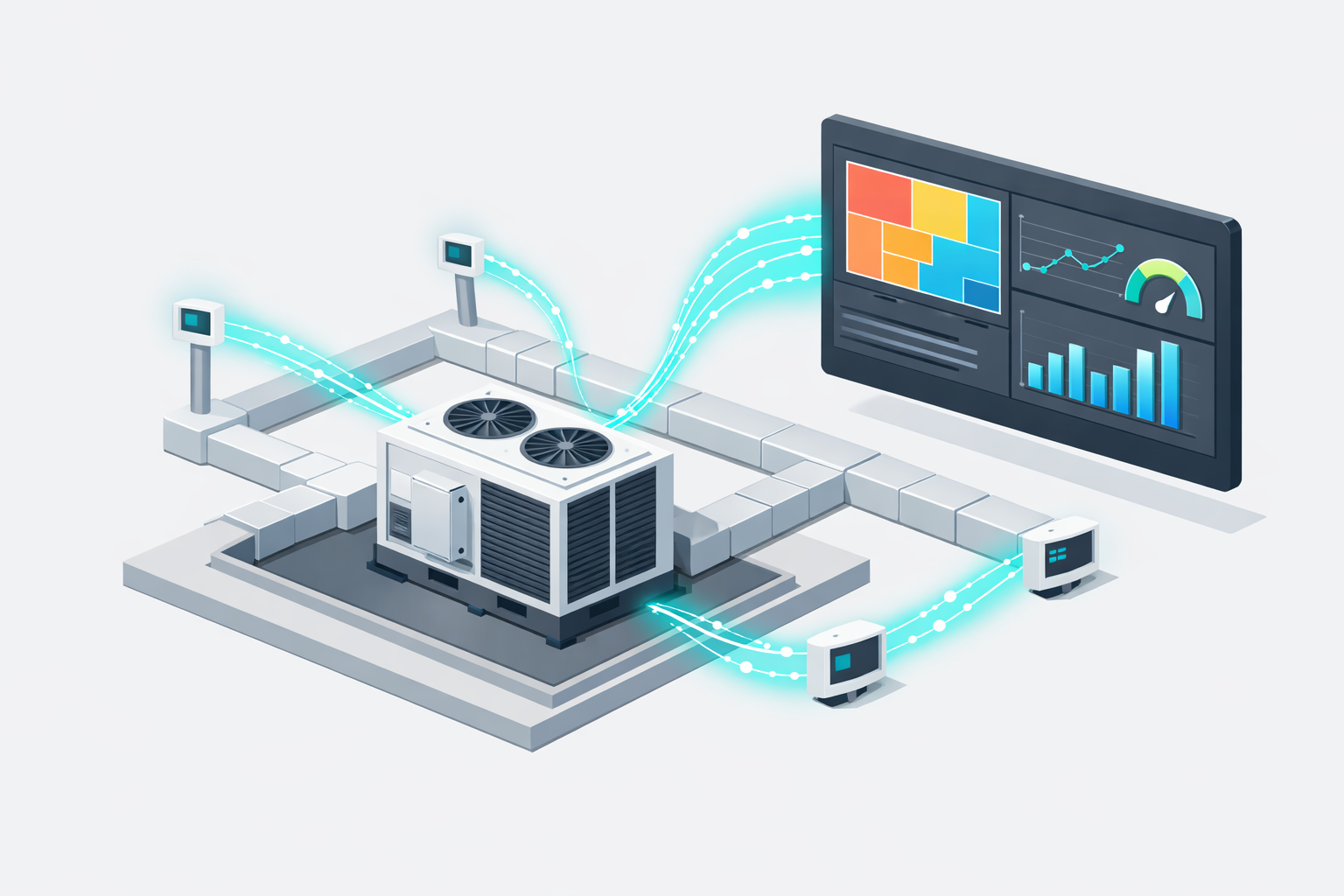
AI-Powered Diagnostics from System Data
Modern HVAC equipment is essentially a computer that heats and cools. Every unit manufactured in the last decade generates operational data. Most of that data gets checked once a year during a maintenance visit, if at all. AI diagnostic systems change that equation by analyzing equipment data continuously.
When a rooftop unit starts drawing higher amp loads on its compressor, the AI flags it weeks before the compressor actually fails. When a heat pump's defrost cycles become more frequent than the pattern for that equipment model and climate zone, the AI identifies the anomaly. When a VAV box in a commercial building starts cycling erratically, the data shows it before any tenant complains.
This diagnostic capability transforms the HVAC business model. Instead of waiting for a breakdown and dispatching emergency service, you contact the customer with specific data showing their equipment needs attention. The conversation is completely different. You are not selling them on a repair they did not know they needed. You are showing them data that proves the issue exists, and offering to fix it before it becomes an emergency.
For commercial accounts especially, this capability commands premium pricing. Building managers and facility directors love data-driven maintenance because it aligns with their goal of avoiding surprise costs and unplanned downtime. You become a technology partner rather than just a service vendor.
Predictive Maintenance Scheduling
Predictive maintenance is the natural extension of AI diagnostics. Once the system identifies equipment trending toward failure, the AI scheduling engine takes over. It considers the urgency of the repair, the technician skills required, the parts availability, the customer's preferred service windows, and the overall schedule capacity to slot the job at the optimal time.
This is fundamentally different from time-based maintenance schedules. The old approach says "service this unit every 6 months regardless of condition." The AI approach says "this specific unit needs attention in the next 3 weeks based on its actual performance data, and here is the best day to schedule it given everything else on the calendar."
The efficiency gain is substantial. Time-based maintenance means you service units that are running perfectly while missing units that need attention. Predictive maintenance allocates your technicians' time based on actual need. Fewer wasted trips to healthy equipment. Fewer emergency calls from equipment that should have been caught during a scheduled visit.
For HVAC companies with 200 or more maintenance contracts, predictive scheduling typically reduces emergency callbacks by 25 to 40 percent. That reduction in emergency work frees up capacity for revenue-generating installation and upgrade projects.
Discover how booking and scheduling systems built for trades handle this complexity.
IoT Thermostat Integration for Proactive Service
Smart thermostats are in millions of homes and businesses now. Most HVAC contractors view them as something they install and walk away from. AI-integrated HVAC operations view them as an ongoing data pipeline that creates service opportunities.
When a connected thermostat shows that a system is running 40 percent longer than comparable systems in similar-sized homes to maintain the same temperature, that is a service opportunity. When the thermostat data shows frequent short cycling, that indicates a problem developing. When energy usage spikes compared to the same period last year with no change in settings, something has changed with the equipment.
AI systems that integrate with thermostat platforms can monitor your entire customer base passively. No truck rolls required. No technician time consumed. The AI watches the data and surfaces the accounts that need attention, ranked by urgency and revenue potential.
This creates a new business model for HVAC companies. Monitoring contracts that include proactive service become a revenue stream with minimal incremental cost. The AI does the monitoring. You dispatch the technician only when the data says there is a real issue. Customers pay a monthly fee for the peace of mind, and they renew at high rates because the service actually works.
AI Dispatch Optimization for Emergency vs. Maintenance Calls
HVAC dispatching is a constant battle between emergency calls and scheduled maintenance. An emergency call comes in and suddenly the afternoon's maintenance route needs to be rearranged. Do you pull a tech off a maintenance job? Which one? How do you reschedule the displaced customers?
AI dispatch systems solve this by treating every scheduling decision as an optimization problem with multiple constraints. When an emergency call comes in, the AI evaluates which technician can respond fastest (factoring current job status, location, and drive time), which maintenance customers can be rescheduled with the least impact, and what the ripple effect is across the rest of the day and week.
The system then executes the plan. It reassigns the emergency call. It automatically contacts displaced maintenance customers with new appointment windows. It updates ETAs for everyone on the affected routes. The dispatcher approves the recommendation with one click rather than spending 30 minutes making phone calls and juggling the calendar manually.
For high-volume HVAC operations handling 15 or more calls per day, AI dispatch reduces average customer wait times by 25 to 35 percent while maintaining or improving maintenance schedule adherence.
See how workflow automation connects your dispatch, scheduling, and customer communication systems.
Automated Maintenance Contract Management
Maintenance contracts are the bread and butter of a stable HVAC business. They provide recurring revenue, create upsell opportunities, and build long-term customer relationships. But managing hundreds of contracts is an administrative burden that grows with every new customer.
AI automates the lifecycle of maintenance contracts. Renewal reminders go out at the right time based on each contract's schedule. Expired contracts trigger win-back campaigns. Upcoming service visits are pre-scheduled based on equipment type and seasonal timing. Parts are pre-ordered based on the equipment being serviced and the most common parts needed for each model and age range.
The system also identifies contract upgrade opportunities. When a customer's equipment ages into a higher-risk category, the AI flags them for a conversation about enhanced coverage. When a customer's usage patterns suggest they would benefit from a higher-tier plan, the recommendation surfaces at the right time.
Contract management automation typically saves 5 to 10 hours per week in administrative time for companies with 200 or more active contracts. The renewal rate improvement alone (usually 5 to 15 percent) often justifies the cost of the automation.
Seasonal Demand Forecasting
Every HVAC owner knows that demand spikes in summer and winter. But knowing that demand will increase is not the same as knowing when it will spike, how much capacity you will need, and what mix of residential versus commercial work to expect.
AI demand forecasting goes far beyond seasonal averages. It incorporates 10-day weather forecasts, historical demand patterns for your specific market, housing permit data, commercial construction activity, equipment age distribution in your service territory, and even utility rate change announcements that drive efficiency upgrade demand.
The output is a week-by-week staffing and parts forecast that lets you make decisions proactively. Hire temp techs two weeks before the heat wave hits, not after you are already overbooked. Pre-stage common parts at your warehouse so your supply house runs do not eat into peak-season labor availability. Scale back marketing spend when the forecast shows demand will fill your calendar organically.
For companies that struggle with the feast-or-famine cycle of seasonal HVAC work, demand forecasting is transformative. It smooths the revenue curve, reduces overtime costs during peaks, and helps maintain productivity during shoulder seasons.
Explore how predictive analytics drives smarter resource planning.
What Custom AI Integration Looks Like
Most HVAC companies already use some combination of field service software, CRM, accounting tools, and equipment databases. The last thing you need is another standalone platform that does not talk to anything else.
Running Start Digital builds AI integration that connects your existing systems. We do not ask you to rip and replace. We build the intelligence layer that makes your current tools work together in ways they were not designed to do on their own.
A typical HVAC integration project starts with identifying the highest-impact opportunity. Usually that is dispatch optimization or customer service automation because those deliver the fastest payback. We build the integration, deploy it alongside your existing workflows, and measure results for 30 days before expanding to additional systems.
For companies that need capabilities beyond what off-the-shelf tools provide, we build custom AI solutions. That might be an AI estimating tool trained on your historical job costing data. Or a chatbot that handles seasonal inquiry surges without additional staff. Or a document processing system that automates warranty claim submissions and tracks reimbursements.
The goal is always the same. More capacity from your existing operation. Less time on administration. Better customer experience. Measurable ROI within 90 days.
Results You Can Expect
HVAC companies implementing AI integration see results that compound over time. Early wins come from efficiency improvements. Sustained gains come from the competitive advantages that efficiency creates.
Technician utilization: 20 to 30 percent improvement during peak season. AI-optimized dispatch and routing means more jobs per truck per day without burning out your team.
Emergency response: 25 to 35 percent faster average response times. Smarter dispatching gets the right technician to the right call faster.
Maintenance contract retention: 5 to 15 percent improvement in renewal rates through automated communication, proactive service, and consistent follow-up.
Administrative overhead: 15 to 25 hours per week recovered from manual scheduling, contract management, and customer follow-up. That time redirects to sales, customer relationships, or owner quality of life.
Shoulder season revenue: 15 to 25 percent reduction in the seasonal revenue dip. Proactive maintenance from IoT monitoring and predictive diagnostics generates work when inbound call volume drops.
Customer acquisition cost: 10 to 20 percent reduction. Faster response times and proactive service generate more referrals and better online reviews, reducing the need for paid advertising.
These metrics are based on real implementations across HVAC companies ranging from single-location operations to multi-branch regional businesses. Your specific results will vary based on your starting point and which integrations you deploy first.
Frequently Asked Questions
Does AI integration work with ServiceTitan, Housecall Pro, or other field service software?
Yes. Custom AI integration is designed to work with the tools you already use. Whether you run ServiceTitan, Housecall Pro, FieldEdge, Jobber, or any other platform, we build integration layers through APIs that connect your existing systems. No data migration required. No retraining your team. The AI works behind the scenes to make your current tools smarter.
How does predictive maintenance work if my customers have older equipment without IoT sensors?
Predictive maintenance does not require IoT-connected equipment. AI systems analyze your service history, equipment age, model-specific failure patterns, and usage data to predict maintenance needs. For customers with connected equipment, the predictions are more precise because real-time data is available. For older systems, the AI uses historical patterns and statistical models to flag likely issues. Both approaches outperform time-based maintenance schedules.
What is the typical ROI timeline for HVAC AI integration?
Most HVAC companies see positive ROI within 60 to 90 days of deployment. Customer service automation (handling after-hours calls and routine inquiries) typically pays for itself within the first month. Dispatch optimization shows measurable results within 4 to 6 weeks. Predictive maintenance and demand forecasting take 2 to 3 months to build enough data for significant impact but deliver the highest long-term returns.
Can AI handle the complexity of commercial HVAC service?
Absolutely. Commercial HVAC service is actually where AI delivers the most value because the complexity is highest. Multi-zone systems, building automation integration, tenant coordination, compliance documentation, and multi-year service contracts all benefit from AI optimization. The AI handles scheduling across multiple buildings, tracks equipment-specific service histories, and manages the documentation requirements that commercial accounts demand.
Will my technicians resist using AI-powered tools?
Adoption is typically smoother than expected because AI integration does not change what technicians do. It changes how work gets to them. They still diagnose, repair, and install. The AI optimizes their routes, pre-loads job information, and reduces the back-and-forth calls with dispatch. Most technicians appreciate having better information before they arrive at a job and spending less time driving between calls.
How does AI customer service handle HVAC-specific emergency triage?
AI customer service for HVAC is trained to ask the right diagnostic questions for heating and cooling emergencies. Is the system making unusual noises? Is there a burning smell? Is the house temperature dangerously high or low? Is there water leaking from the unit? Based on the answers, the AI determines urgency and either escalates to the on-call technician immediately or schedules service for the next available window. The system handles routine calls (pricing questions, maintenance scheduling, hours of operation) completely on its own, freeing your team for calls that require human expertise.