What We Build for Window and Door Companies
AI Photo-Based Measurement System
Accurate measurement is the foundation of every window and door project. Our AI measurement system uses smartphone photos to calculate precise opening dimensions, reducing both measurement time and error rates.
The system works in three steps. First, the consultant or homeowner captures photos of each window and door opening using a calibrated smartphone app. The app guides the user on camera angle, distance, and lighting for optimal accuracy. Second, computer vision algorithms process the images, detecting opening edges, calculating dimensions, and assessing whether the opening is square. Third, the system generates a measurement report with dimensions for each opening, flags for non-standard conditions, and notes on frame type and condition.
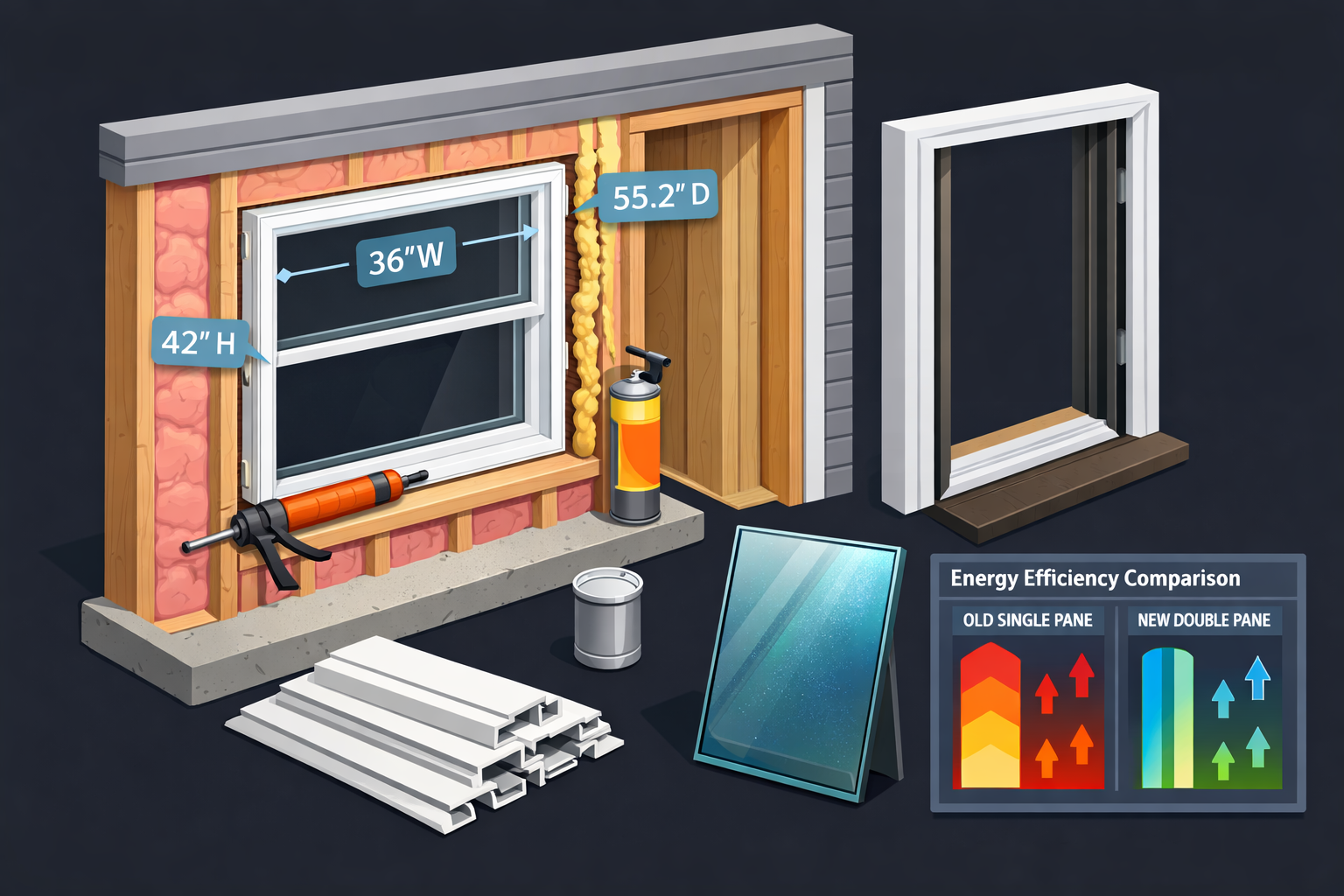
For window openings, the system measures width, height, and depth (sill to interior stop). For doors, it captures width, height, and jamb depth. Measurements are calculated to 1/16-inch precision using geometric analysis and reference calibration. Openings that are significantly out of square, have visible frame damage, or present unusual conditions are flagged for manual verification by the installer.
The technology integrates directly into the quoting system. Measurements flow into the ordering system without manual transcription, eliminating the transposition errors that account for nearly half of all sizing mistakes in the industry. When dimensions are captured digitally and transferred digitally, the human handwriting and data entry errors that cause misfits disappear.
Learn more about our computer vision solutions
AR Window and Door Visualization
Homeowners struggle to visualize how new windows and doors will change the appearance of their home. The difference between a white vinyl double-hung and a black fiberglass casement on the same opening is dramatic, but customers cannot see it from a catalog photo. The difference between a standard entry door and a craftsman-style door with sidelights transforms a home's curb appeal, but that transformation is invisible until it is installed.
Our AR visualization system lets customers see new windows and doors on their actual home in real time. Using a smartphone or tablet, the customer points the camera at their house and the AI overlays the selected products onto the existing openings. Different frame colors, styles, grid patterns, and hardware options can be swapped instantly. Entry doors can be previewed with different panel styles, glass inserts, and finish colors.
The visualization uses your actual product catalog, not generic 3D models. When a customer previews a Marvin Elevate casement window or an Andersen E-Series double-hung, they see a rendering that matches the real product's proportions, colors, and details. This specificity matters because customers who see a generic preview and then receive a different-looking product feel misled. Our visualizations set accurate expectations.
For exterior views, the system renders the home's facade with the selected products, showing how the window style interacts with the existing siding, trim, and architectural elements. For interior views, customers can see how the window's sightlines and grid patterns will look from inside the room. This interior preview is particularly effective for selling higher-end products where the interior aesthetic justifies the premium.
Sales consultants report that AR visualization reduces the decision cycle by one to two weeks on average. Customers who can see the finished result are confident buyers. Those who are choosing between two options can compare side by side on their own home rather than trying to extrapolate from showroom samples.
Energy Efficiency Modeling Engine
Our energy modeling system turns abstract efficiency ratings into concrete dollar figures tailored to each customer's situation. This is the tool that converts "new windows save energy" into "these specific windows will save you $1,847 per year based on your home."
The model inputs include the customer's existing window inventory (type, material, age, condition from the AI assessment), the home's geographic location and orientation (from satellite data), local climate data (heating degree days, cooling degree days, solar heat gain patterns), current utility rates and rate trends, and the performance specifications (U-factor, SHGC, air infiltration) of the proposed replacement products.
The system generates a comparison report showing current estimated energy loss through windows versus projected energy performance with each replacement option. Results are presented in annual dollar savings, monthly bill reduction, payback period, and 20-year total cost of ownership. If the customer is considering multiple product tiers, the report shows the incremental savings and payback for each upgrade level.
This analysis serves double duty during the sales consultation. It justifies the investment by showing concrete returns, and it helps customers choose between product tiers based on actual performance differences rather than abstract specifications. A customer choosing between a $12,000 double-pane vinyl package and a $18,000 triple-pane fiberglass package can see that the premium option saves an additional $600 per year, resulting in a payback differential of 10 years. Some customers will choose the premium. Others will choose the value option. Both feel informed rather than sold.
The energy model also generates documentation for utility rebate programs and tax credit applications. Many utilities and states offer rebates for ENERGY STAR qualified window replacements, and the federal tax credit for energy-efficient home improvements (25C) covers up to $600 per year for qualifying windows. Our system produces the performance documentation required for these programs, making it easy for customers to capture every available incentive.
Learn more about our custom AI solutions
Multi-Day Installation Scheduling
Window and door replacement projects often span multiple days, especially for whole-home replacements. A 15-window project might require two to three days of installation work. A large project combining windows, entry doors, and sliding doors might take four to five days. Scheduling these multi-day projects requires balancing crew assignments, material delivery timing, weather conditions, and customer availability across overlapping timelines.
Our scheduling system optimizes multi-day installation projects by considering every variable that affects completion. Crew skills and certifications (some products require manufacturer-certified installers). Equipment requirements (second-story windows may require scaffolding or specialized equipment that is shared across crews). Material delivery dates from the manufacturer, which can vary by two to four weeks depending on product type and customization. Weather windows, because exterior work on windows and doors requires dry conditions and moderate temperatures for proper sealing and insulation. And customer constraints like work schedules, events, and security considerations.
The system builds installation schedules that minimize gaps between project days, ensuring that a project started on Monday finishes on Wednesday rather than stretching to the following week because of scheduling conflicts. It coordinates material staging so that delivery arrives one to two days before installation begins, preventing the jobsite clutter of early delivery or the delays of late arrival.
For companies running multiple crews, the system balances workload across teams and identifies scheduling conflicts before they become problems. If two projects require the same specialized equipment on the same day, the system flags the conflict during scheduling rather than letting crews discover it at 7 AM on installation day.
Learn more about our scheduling solutions
Warranty and Maintenance Tracking
Windows and doors come with complex warranty structures. Manufacturer warranties cover the product itself, typically for 20 years to lifetime depending on the component. Installation warranties cover your labor and workmanship, usually for 5 to 10 years. Glass breakage warranties, hardware warranties, and finish warranties may have different terms and conditions. Tracking which warranty applies to which product on which home is a records management challenge that most companies handle poorly.
Our warranty tracking system creates a digital record for every installation, linking each product to its specific warranty terms, installation date, installer, and homeowner. When a customer calls with a warranty issue, your team pulls up the complete history in seconds. Which products were installed, when, by whom, under which warranty terms. The system identifies whether the issue falls under manufacturer warranty, installation warranty, or neither, and generates the appropriate service documentation.
Proactive maintenance reminders extend the customer relationship beyond installation. Automated notifications remind homeowners about seasonal maintenance tasks. Annual check-in messages offer inspection services that generate return visits and referral opportunities. The system transforms a one-time transaction into an ongoing relationship that produces repeat business and word-of-mouth referrals.
Learn more about our AI customer service solutions
Customer Communication Automation
The window and door sales cycle is longer than most home improvement purchases. From initial inquiry to completed installation, the timeline often spans 6 to 12 weeks. During that time, customers go through appointment scheduling, the in-home consultation, quote review and decision-making, product ordering and manufacturing, delivery coordination, and installation scheduling. At each stage, they want to know what is happening and what comes next.
Our communication automation handles the routine touchpoints that keep customers informed without consuming your staff's time. Appointment confirmations with preparation instructions (clear window areas, secure curtains and blinds). Post-consultation follow-ups delivering the quote with energy analysis and visualization images. Decision-stage nurture providing information about financing options, warranty details, and customer testimonials. Order confirmation with expected manufacturing timeline. Production status updates when the manufacturer ships. Installation scheduling with preparation reminders. Day-of notifications when the crew is en route. Post-installation care instructions and warranty documentation.
Each message is triggered by the project's actual status, not a generic timeline. If manufacturing takes an extra week, the system adjusts communication accordingly rather than sending a "your windows are arriving soon" message that turns out to be inaccurate. Transparency throughout the process reduces the anxiety that causes customers to call your office for status updates, freeing your team for higher-value work.
What to Expect
Phase 1: Assessment (Weeks 1-2)
We analyze your current sales and installation workflow from lead to completion. We document your measurement process, quoting workflow, ordering procedures, and scheduling methods. We review error rates on recent orders to identify where sizing mistakes originate. We assess your manufacturer relationships and pricing structures. We interview your sales team, installers, and office staff to understand pain points and bottlenecks from every perspective.
Phase 2: System Design (Weeks 3-4)
We design the AI integration stack tailored to your operation. This includes the measurement system calibrated for your product lines, the quoting engine loaded with your manufacturer pricing, the energy modeling system configured for your service area's climate and utility data, and scheduling optimization based on your crew structure. We present projected improvements in measurement accuracy, quoting speed, close rate, and scheduling efficiency. You approve the plan before build begins.
Phase 3: Build and Integration (Weeks 5-10)
Systems are built and deployed in priority order. Measurement and quoting go first because they impact every sale immediately. We load your manufacturer pricing databases and configure product specifications. Your sales team trains on the measurement app and quoting tool during ride-along sessions on real appointments. Energy modeling and AR visualization follow. Scheduling and communication automation complete the build. Each system integrates with your existing CRM and ordering platforms.
Phase 4: Optimization and Scaling
After 30 days of live operation, we compare AI measurements against actual installed dimensions to calibrate accuracy. We analyze quoting speed and error rates. We review close rate changes on consultations using the new tools versus historical baselines. Energy modeling assumptions are validated against actual customer utility bills where data is available. Monthly optimization refines every system based on your real-world performance data.
Industry Connections
Window and door companies frequently collaborate with adjacent trades. General contractors and home builders specify and subcontract window and door installation on new construction and major renovations. HVAC contractors coordinate on energy efficiency projects where window replacement and HVAC upgrades happen together. Painting contractors often work alongside window replacement projects on exterior renovation jobs. Electricians collaborate on smart glass installations and motorized window and door systems that require electrical integration.
Measure Once. Quote Instantly. Install Perfectly.
Every window that comes back from the manufacturer because of a measurement error costs you money, time, and customer trust. Every quote that takes two days to deliver gives your competitor a chance to get there first. Every customer who cannot visualize the finished product delays their decision or walks away entirely.
AI integration for window and door companies eliminates the errors, delays, and uncertainty that cost you jobs and margin. Precise measurement from photos. Instant quoting with real manufacturer pricing. Energy modeling that closes sales with concrete numbers. AR visualization that lets customers see before they buy. And scheduling that keeps multi-day projects running smoothly from delivery through completion.
Schedule a consultation and let us show you how AI tools can transform your window and door operation from measurement through warranty management.