What We Do
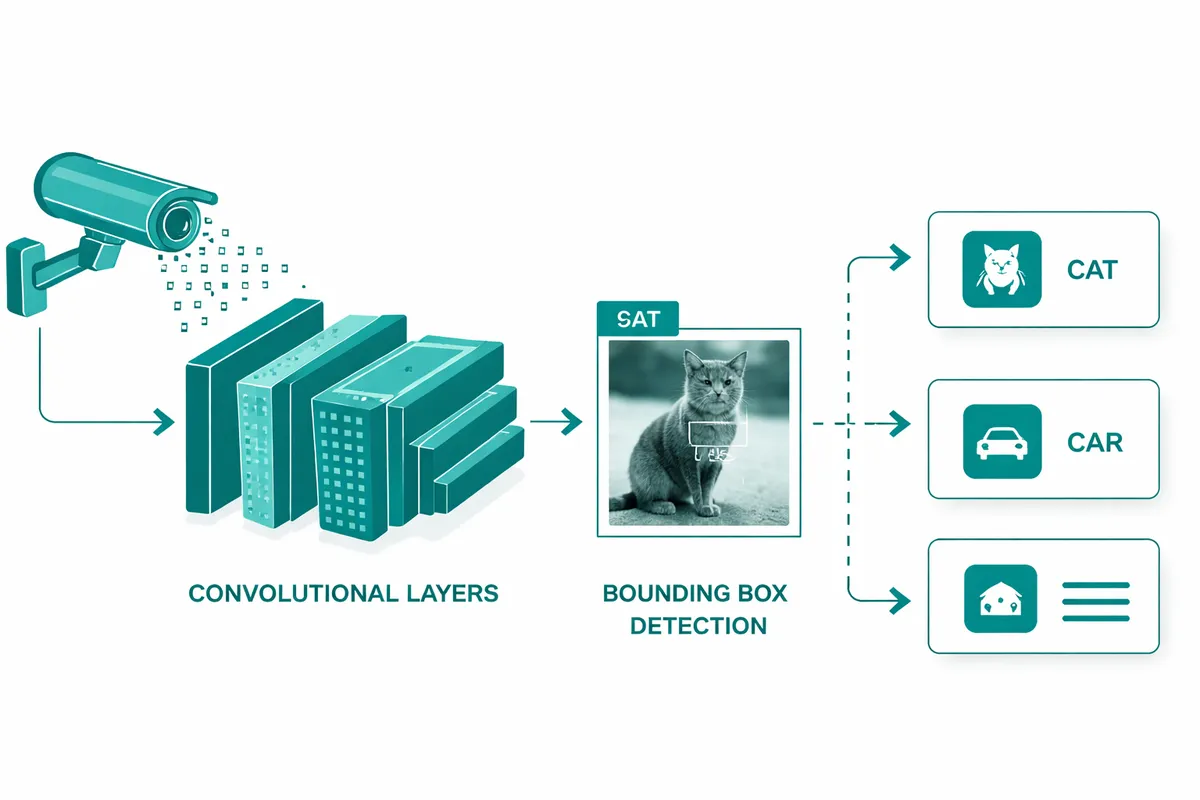
A human inspector on a manufacturing line checks roughly 300 units per hour and catches about 85 percent of defects on a good day. By hour six, that rate drops. A computer vision system processes 20 units per second at 97 percent accuracy and never degrades. That gap is not theoretical. It is the difference between shipping defective product and catching it before it leaves the floor. Computer vision turns cameras you may already own into automated decision systems.
On a production line, it detects scratches, misalignments, and color inconsistencies in real time and diverts defective items before packaging. In a warehouse, it counts inventory on shelves without a person walking every aisle, completing a full cycle count in hours instead of days. In document processing, it reads handwritten forms, extracts printed text from scanned invoices, and digitizes paper records that would otherwise sit in filing cabinets. In retail, it powers visual search so customers photograph a product and find it in your catalog instantly. Each application starts with a specific business problem: what needs to be seen, how fast, and what action follows the detection.
How We Work
We begin by defining the visual task in precise terms: what the system must detect, the acceptable error rate, the throughput requirement, and the action that follows each detection. A scratch on an automotive part triggers a divert. A miscount on a shelf triggers a reorder. A signature on a form triggers a workflow. The action determines the system architecture. Data collection uses images from your actual environment, not stock photos or synthetic data. We capture the full range of real conditions: varying light levels across shifts, camera angles as they exist on your floor, product variations across SKUs, and the edge cases your team already knows cause false calls.
We label this data with your quality team to ensure the model learns from the same criteria your inspectors use. Model training evaluates multiple architectures and selects the one that meets your accuracy and speed requirements on held-out test images. Before production deployment, we benchmark the model against your current process: defect escape rate, throughput per hour, and false positive frequency. You see a direct comparison of human performance versus machine performance on your actual data. Deployed models are monitored continuously. When accuracy drifts below your threshold, whether from new product variations, camera changes, or environmental shifts, the system flags the degradation and triggers a retraining cycle using newly collected images.