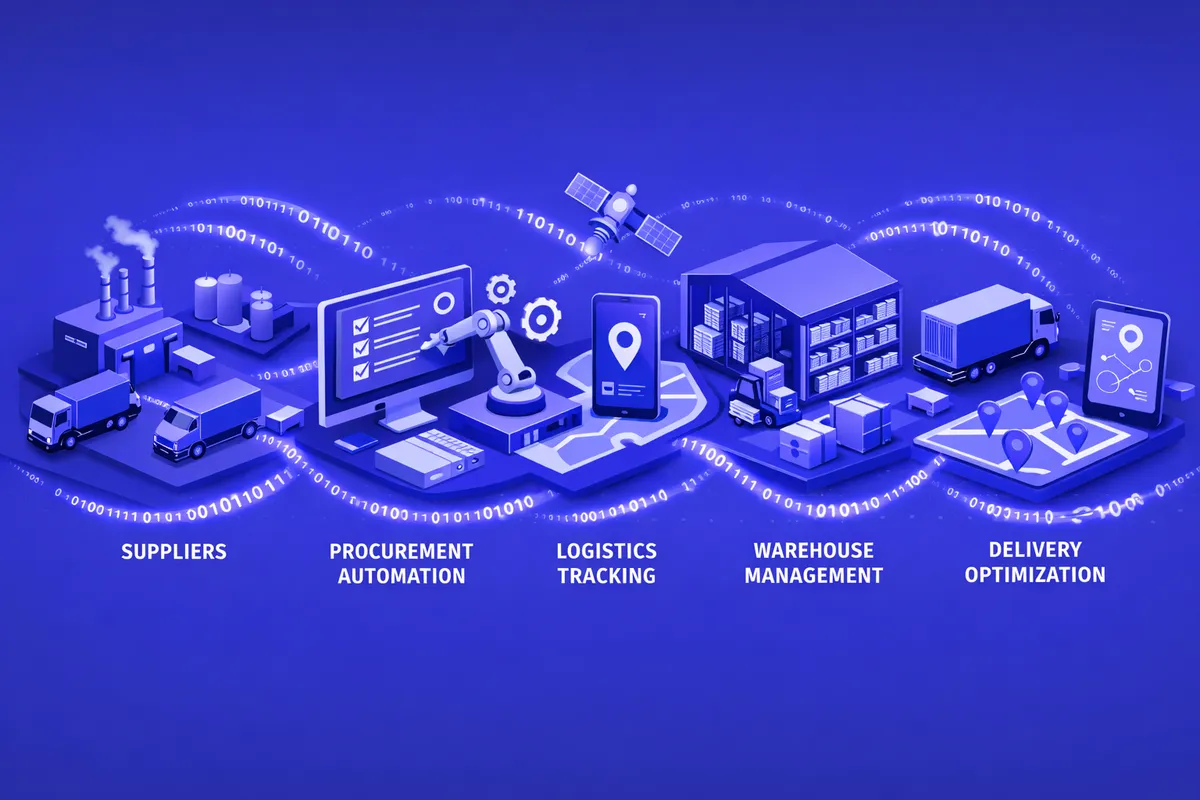
Our Supply Chain Automation Work in Detroit
- Supply chain process mapping and automation opportunity assessment tailored to automotive and manufacturing operating environments
- Procurement workflow automation: demand-triggered PO generation from EDI signals, approval routing, and supplier acknowledgment management
- Just-in-time inventory management automation including demand signal processing and production schedule-driven replenishment
- Supplier communication automation: EDI transaction processing, order confirmations, advance ship notices, and exception handling
- Inbound logistics visibility automation including real-time tracking for shipments from suppliers across Southeast Michigan and national supply networks
- Quality compliance documentation and supplier certification workflow automation for IATF 16949 and APQP requirements
- Warehouse receiving, inspection, and put-away workflow automation
- Returns processing and supplier return authorization management
- Real-time supply chain visibility dashboards connecting procurement, production, and inventory data
- EDI integration across automotive standard transaction sets: 830, 850, 856, 810, 862, and OEM-specific formats
- Integration with OEM supplier portals for Ford, GM, and Stellantis
Industries We Serve in Detroit
Tier 1 and Tier 2 Automotive Suppliers. The Automation Alley corridor in Oakland County, Dearborn's supplier concentration, and the broader Southeast Michigan supplier network represent the deepest automotive supply chain automation market in the world. We build for these operations with the domain knowledge that distinguishes implementations that work in automotive from general supply chain automation.
Automotive OEM Production Operations. Ford's Michigan Central and Dearborn campuses, GM's Warren Technical Center and Flint assembly operations, and Stellantis's Auburn Hills and Warren facilities all operate supply chain functions that automation supports across planning, procurement, and inbound logistics.
Mobility and EV Component Manufacturers. Detroit's transition toward electric vehicles creates new supply chain infrastructure needs for battery packs, power electronics, and EV drivetrain components. We build automation for these new supply chains with the compliance and traceability requirements the EV supply chain demands.
Medical Device and Healthcare Supply Chain. Detroit's medical device manufacturing community, including companies serving Henry Ford Health System, the Detroit Medical Center, and national healthcare distributors, needs supply chain automation with the FDA compliance and lot traceability documentation that medical device regulations require.
Defense and Aerospace Manufacturers. Southeast Michigan's defense manufacturing sector needs supply chain automation that handles DFARS compliance documentation, small business subcontracting reporting, and the procurement controls that government contracting requires.
Industrial and Heavy Equipment. Detroit's broader manufacturing sector, beyond automotive, needs supply chain automation that handles complex bill of materials procurement, multi-tier supplier management, and the quality documentation standards that industrial customers require.
What to Expect
Week 1 to 2: Process Assessment. We map your current supply chain workflows with specific attention to the EDI transaction flows, OEM customer requirements, and quality documentation processes that shape Detroit's automotive supply chain. We identify the highest-cost bottlenecks and produce a prioritized automation roadmap.
Weeks 3 to 6: Design and Integration Architecture. We design automated workflows and EDI integration architecture, define connections with your ERP and WMS, and produce the technical specification before implementation begins.
Months 2 to 4: Implementation. We implement highest-priority automations, test against real production data and EDI test environments, and deploy with monitoring that ensures reliable performance under production conditions.
Month 5 and beyond: Expansion and Optimization. We extend automation to additional process areas, optimize live workflows based on operational data, and expand coverage as the automated footprint grows.