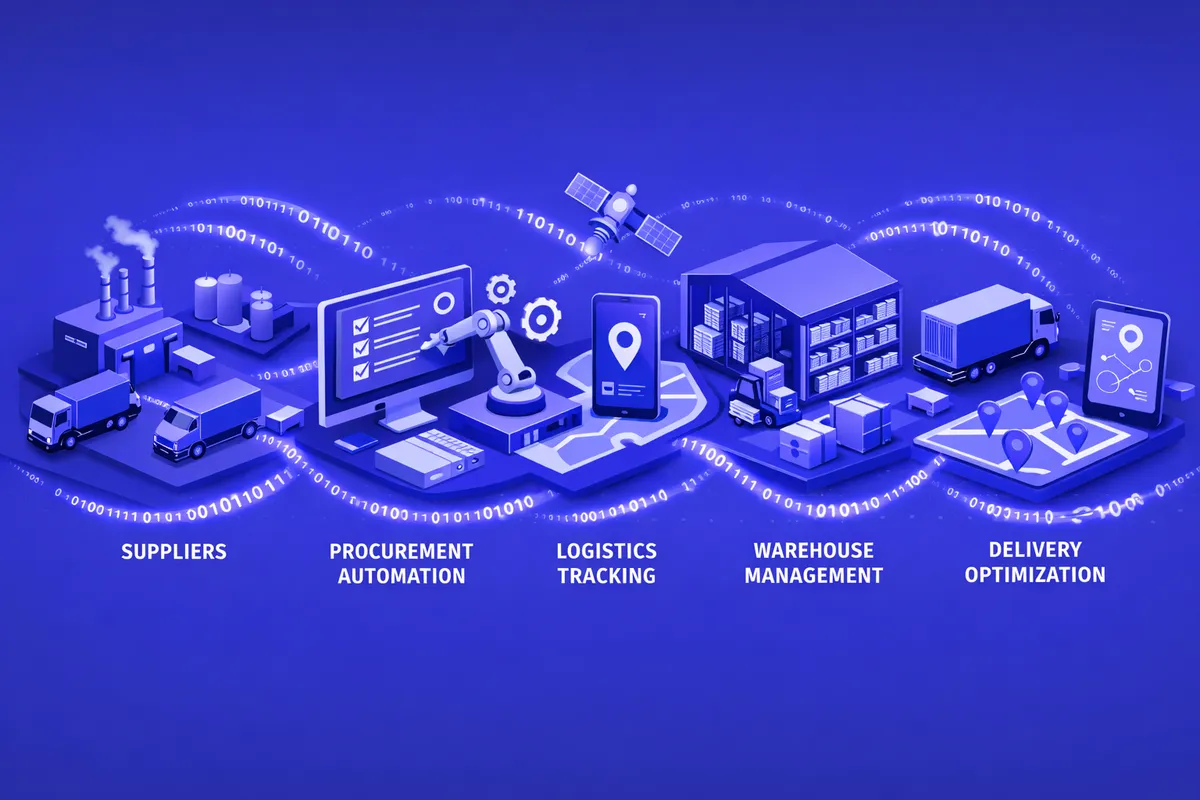
Our Supply Chain Automation Work in Atlanta
- Supply chain process mapping and automation opportunity assessment for Atlanta's manufacturing, distribution, and e-commerce operations
- Procurement workflow automation: demand-triggered purchase order generation, approval routing, and supplier acknowledgment management
- Supplier communication automation: order confirmations, advance ship notices, delivery updates, and exception handling
- Inventory management automation: demand forecasting, replenishment triggers, safety stock management, and multi-location synchronization
- Shipment tracking and logistics visibility automation across carriers and freight brokers serving Southeast routes
- Port of Savannah integration for Atlanta businesses managing inbound import shipments
- Warehouse receiving, put-away, and fulfillment workflow automation
- Returns processing and reverse logistics automation
- Quality control documentation and compliance workflow automation for regulated industries
- Real-time supply chain visibility dashboards connecting procurement, logistics, and inventory data
- Integration with ERP, WMS, TMS, and supplier portals including Manhattan Associates, Blue Yonder, and SAP
Industries We Serve in Atlanta
Manufacturing and Industrial Companies. Atlanta-area manufacturers, from food processing plants along the I-75 corridor to aerospace suppliers near the airport, need supply chain automation that manages complex multi-supplier production schedules and inbound logistics from domestic and international sources.
Third-Party Logistics and Fulfillment. Atlanta's 3PL sector, serving e-commerce and retail customers across the Southeast, needs warehouse automation and order management systems that handle the volume and velocity the market requires.
E-commerce Brands. Atlanta-based e-commerce brands competing nationally need order processing automation, inventory management, and fulfillment coordination that keeps pace with customer expectations for fast delivery.
Food and Beverage Distribution. Georgia's food and beverage industry, from Atlanta's restaurant distribution networks to Southeast regional food manufacturers, needs supply chain automation that handles perishable inventory management, temperature-monitored logistics, and food safety compliance documentation.
Healthcare Supply Chain. Atlanta's major health systems and the medical supply distributors serving them need automation that handles clinical supply procurement, expiration tracking, lot number compliance, and the vendor management workflows that healthcare supply chains require.
Retail and Consumer Goods. Atlanta's retail businesses, from boutiques in Buckhead to large format retailers serving the Metro area, need inventory management and replenishment automation that prevents stockouts while managing carrying costs.
What to Expect
Week 1 to 2: Process Assessment. We map your current supply chain workflows, identify the specific bottlenecks producing the most cost and delay, and prioritize automation opportunities by ROI potential and implementation complexity.
Weeks 3 to 6: Design and Integration Architecture. We design the automation workflows, define integration points with your ERP, WMS, and supplier systems, and build the technical specification for implementation.
Months 2 to 4: Implementation. We implement the highest-priority automations first, test against your actual data and workflows, and deploy with the monitoring infrastructure that ensures reliable operation.
Month 5 and beyond: Expansion and Optimization. We add automation for the next priority processes, optimize the live automations based on operational data, and expand the visibility dashboard as the automated footprint grows.