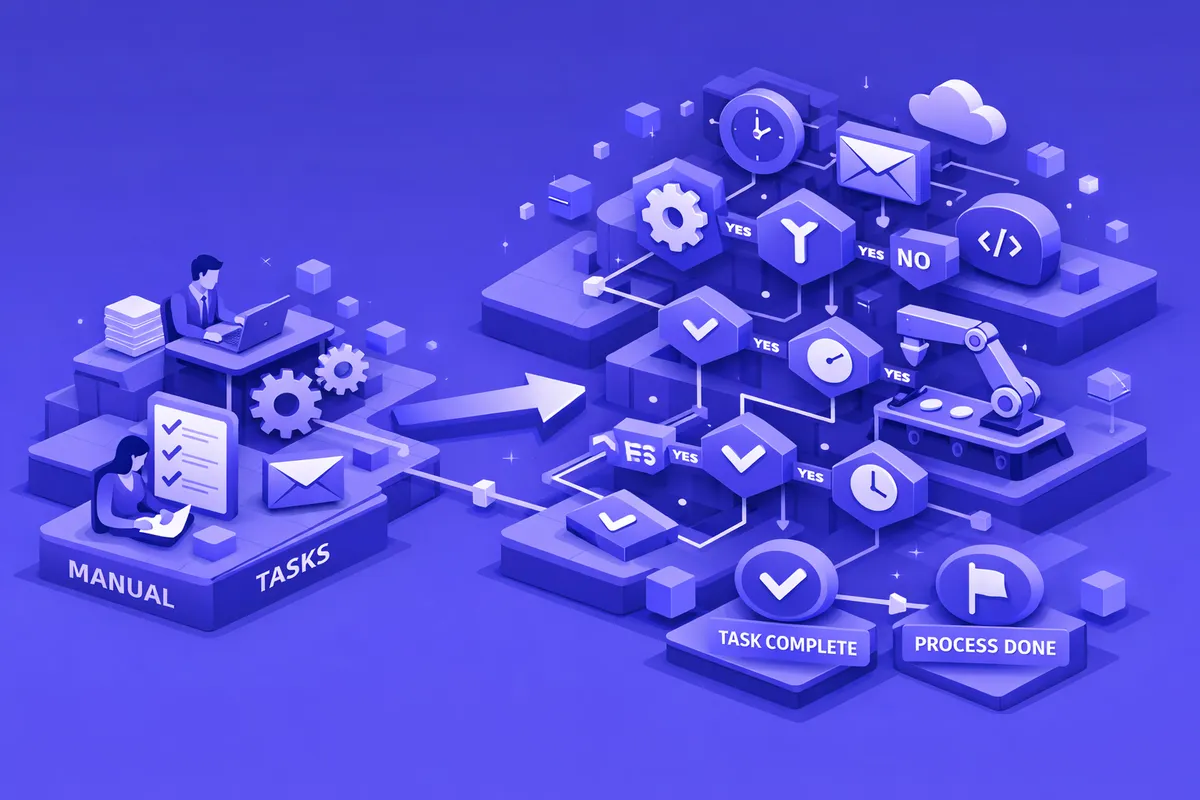
Our Business Process Automation Services in Atlanta
- Process mapping and automation opportunity assessment across departments
- Automation strategy with ROI projections by process and timeline
- Workflow design and digital process implementation using modern automation platforms
- Robotic process automation (RPA) for legacy systems without modern APIs
- System integration automating data flow between CRM, ERP, and operational platforms
- Document processing, generation, and routing automation
- Approval and escalation workflow automation with configurable rules and notifications
- Healthcare-specific automation: patient intake, insurance verification, referral management, and billing workflows
- Customer communication automation for onboarding, renewal, reminder, and follow-up sequences
- Exception handling workflows with intelligent routing and human escalation design
- Process monitoring dashboards and alerting for automated workflow visibility
- Staff training, documentation, and knowledge transfer
Industries We Serve in Atlanta
Fintech and Financial Services (Midtown, Buckhead). Atlanta hosts one of the largest concentrations of fintech companies in the country, from early-stage ATDC startups to established payment processors and wealth management firms. Compliance reporting, client onboarding, account verification, and audit documentation are all processes that automation handles reliably while reducing the error risk that compliance teams dread. We build automations that meet the documentation requirements of regulated financial services without creating IT bottlenecks.
Healthcare and Medical Practices (Emory, Piedmont, and affiliated groups). Atlanta's major health systems and the independent practices in their networks face constant administrative volume. Patient intake forms, insurance eligibility checks, prior authorization requests, referral routing, appointment reminders, and billing reconciliation are each individually labor-intensive. Automated together, they free clinical and administrative staff to focus on patient care rather than paperwork. We design healthcare automations with HIPAA compliance built in from day one.
Logistics and Supply Chain (Hartsfield-Jackson corridor). As the hub of the Southeast's logistics network, Atlanta has a dense concentration of freight forwarders, third-party logistics companies, and distribution center operators. Shipment status updates, exception notifications, customs documentation routing, and carrier communication are all automatable processes. We build automations that connect your TMS, WMS, and carrier APIs so information flows without manual intervention.
Real Estate and Property Management. Atlanta's construction boom across Old Fourth Ward, West Midtown, and the BeltLine has created hundreds of new property management operations. Lease renewal communication, maintenance request routing, vendor invoice processing, and tenant onboarding are all processes that property managers handle manually at significant time cost. We automate these workflows so property managers spend their time on relationships and decisions rather than paperwork.
Professional Services and Consulting. Law firms, accounting practices, and consulting firms in Buckhead and Midtown face document-intensive processes at every stage: engagement letters, billing, compliance filings, and client reporting. We build automations that handle the document generation and routing so professional staff focus on billable work rather than administrative tasks.
SaaS and Technology Companies (Tech Square, ATDC, Alpharetta). Atlanta's tech companies often need to automate customer onboarding, subscription billing management, and support ticket routing. We build automations that integrate with the modern SaaS tools they already use, from Salesforce and HubSpot to Zendesk and Stripe, creating workflows that handle customer lifecycle stages without manual intervention.
What to Expect
Discovery. We start by mapping your current processes from end to end. That means interviewing the people who actually do the work, not just reviewing org charts. We document process steps, handoffs, system touchpoints, error rates, and time consumed. This phase takes one to two weeks and produces a clear picture of where automation delivers the most value.
Strategy. We rank automation candidates by impact (time saved, error reduction, business risk of delay) and feasibility (technical complexity, integration requirements, change management needs). We present a prioritized roadmap with specific ROI projections for each initiative. You decide which to pursue and in what order.
Implementation. We build automations in phases, starting with the highest-priority process. Each phase has defined deliverables, acceptance criteria, and a go-live date. Most Atlanta clients have their first automation in production within six weeks of engagement start. Subsequent phases follow with each automation live before the next begins.
Results. We establish baseline metrics before every automation launches: time per execution, error rate, staff hours consumed. After deployment, we track the same metrics and report the delta. We provide ongoing monitoring, maintenance, and updates as processes evolve or business requirements change.