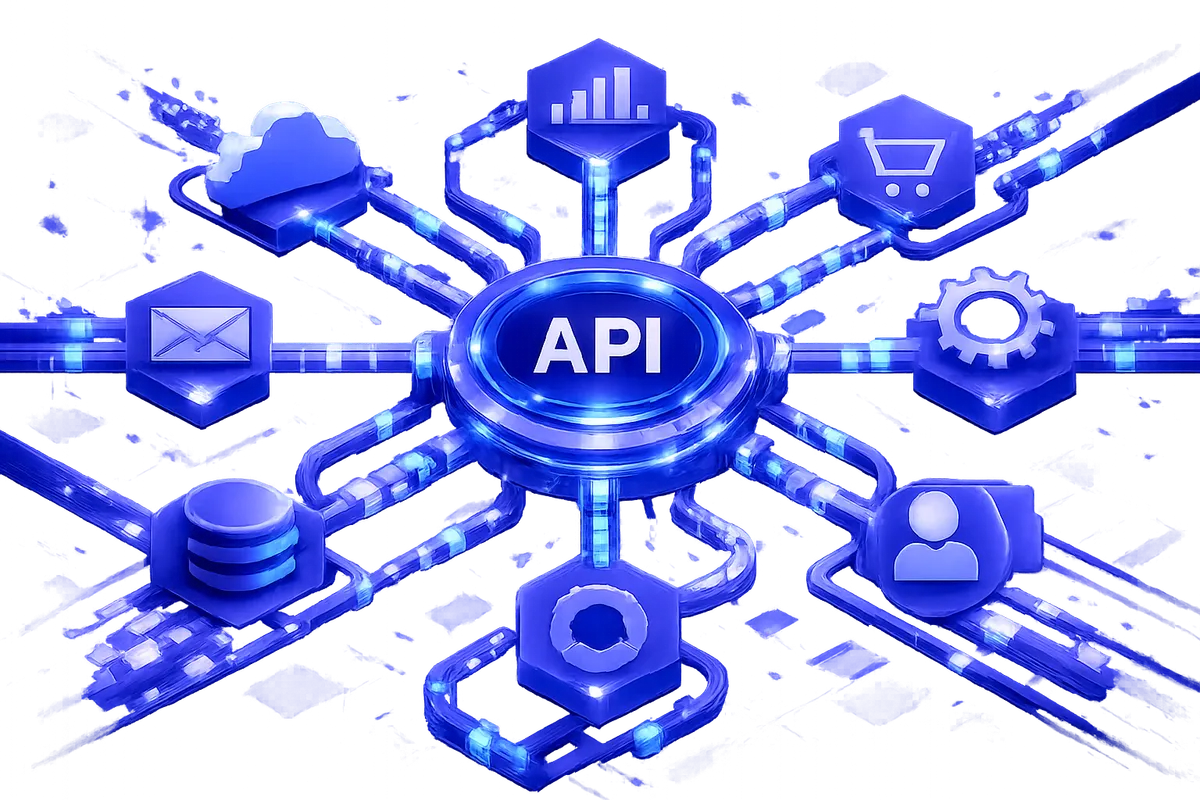
Our API Integration Services in Atlanta
- Integration requirements analysis mapping every system in your technology stack, the data each system owns, and the flows that need to be automated
- Integration architecture design: selecting the right patterns (point-to-point, middleware, event-driven, ETL) for your specific requirements and scale
- Custom API development building the connectors and translation layers that link your systems when no pre-built connector exists
- Third-party platform integrations: Salesforce, HubSpot, Epic, Athenahealth, Cerner, QuickBooks, NetSuite, SAP, Shopify, BigCommerce, Stripe, Workday, and dozens of other platforms commonly used by Atlanta businesses
- Healthcare interoperability integrations: HL7 FHIR R4, CCD document exchange, and custom clinical data flows with HIPAA-compliant architecture
- EDI integration for Atlanta manufacturers and logistics companies: X12 transactions (850, 856, 810, 204, 214, and others) and AS2 or SFTP transmission
- Data mapping and transformation building the translation layer between systems that use different data models, identifiers, and field structures
- Authentication and security implementation: OAuth 2.0, API key management, and HIPAA-compliant access controls for sensitive data integrations
- Error handling, retry logic, and dead-letter queue implementation ensuring data is never lost when a downstream system is unavailable
- Webhook and event-driven integration for real-time data flows where batch processing introduces unacceptable latency
- Legacy system integration: database-level and file-based integration for Atlanta enterprise systems that predate modern API design
- Integration monitoring dashboards with alerting for failures, latency anomalies, and volume deviations
- Ongoing maintenance retainers covering third-party API updates, performance optimization, and incremental additions
Industries We Serve in Atlanta
Healthcare and Life Sciences Atlanta's healthcare ecosystem is one of the Southeast's most complex. Emory Healthcare, Piedmont Healthcare, Northside Hospital, Children's Healthcare of Atlanta, and Grady Memorial collectively run technology environments involving dozens of systems from multiple vendors. The healthcare technology companies building products for these organizations need to integrate with their EHR platforms, patient engagement systems, billing infrastructure, and laboratory information systems. HIPAA compliance is the non-negotiable design requirement for every healthcare integration we build: encrypted data transmission and storage, role-based access controls, complete audit logging, and minimum necessary data access principles are built into the architecture from the start. We have built Epic, Athenahealth, and Cerner integrations for Atlanta-area clients and understand the configuration complexity that each major EHR implementation introduces.
Fintech and Financial Services Atlanta's Midtown fintech corridor, connected to the national payments infrastructure through NCR, Global Payments, and the generation of payments companies building here, requires integration expertise that understands both the technical and regulatory dimensions of financial data exchange. Common fintech integration needs include core banking system connectivity, payment processor APIs, ACH network integration, KYC and identity verification platform connections, and regulatory reporting data flows. Financial integrations require security architecture that satisfies applicable regulatory standards, and we build them with that requirement as the foundation rather than an afterthought.
Logistics and Supply Chain Hartsfield-Jackson's cargo operations and Atlanta's position as the Southeast's distribution hub create a large logistics and supply chain sector with intensive integration requirements. Logistics integrations typically connect transportation management systems to carrier APIs, warehouse management systems, customer ERP platforms, and real-time tracking visibility portals. The reliability requirements are high because supply chain operations cannot afford data gaps. We build logistics integrations with the error handling, retry logic, and monitoring that production supply chain environments require.
E-Commerce and Retail Atlanta's consumer brands, from West Midtown boutiques to national brands with Atlanta roots, need integrations that connect their e-commerce platforms to inventory management, order fulfillment, customer service, accounting, and marketing automation systems. The complexity grows with each channel added: a brand selling through its own website, Amazon, wholesale, and retail simultaneously needs integrations that keep inventory and order data consistent across all of them. We build retail technology integration stacks for Atlanta brands at every scale and channel complexity.
Manufacturing and Industrial Atlanta's manufacturing sector, particularly the industrial operations in the South Fulton corridor and the specialty manufacturers throughout the metro area, runs ERP and production management systems that need to exchange data with supplier portals, customer EDI systems, logistics platforms, and modern analytics tools. Legacy ERP integration is a common need: connecting SAP or Oracle systems that have operated in isolation to modern SaaS platforms that the business has added over time. We build manufacturing integration stacks that bring together old and new systems without requiring replacement of legacy infrastructure.
SaaS and Technology Companies Atlanta's growing software company ecosystem produces B2B products that need to integrate with the enterprise systems their customers run to be commercially viable. A software company that cannot integrate with Salesforce, ServiceNow, or SAP cannot sell to enterprise accounts that run those platforms as their systems of record. We build integration capabilities for Atlanta SaaS companies that expand their addressable market by enabling enterprise integration scenarios their development teams did not anticipate at product inception.
What to Expect
Requirements Analysis We map your complete technology landscape: every system, the data each system owns, the flows that currently exist, and the manual processes that should be automated. This produces a clear integration requirements document that prioritizes initiatives by business impact and implementation complexity.
Architecture Design We design the integration architecture before writing any code: selecting appropriate patterns for each integration need, defining data transformation logic, planning error handling and retry behavior, and documenting the security architecture. You review and approve before implementation begins.
Build and Test We implement integrations with thorough testing at each stage. Testing covers happy paths, error conditions, edge cases, and volume testing where the integration will handle significant transaction loads in production.
Monitoring and Support Every integration we deploy includes monitoring for data flow volumes, latency, error rates, and system availability. Ongoing maintenance retainers cover third-party API updates, performance optimization, and incremental additions as your business requirements evolve.