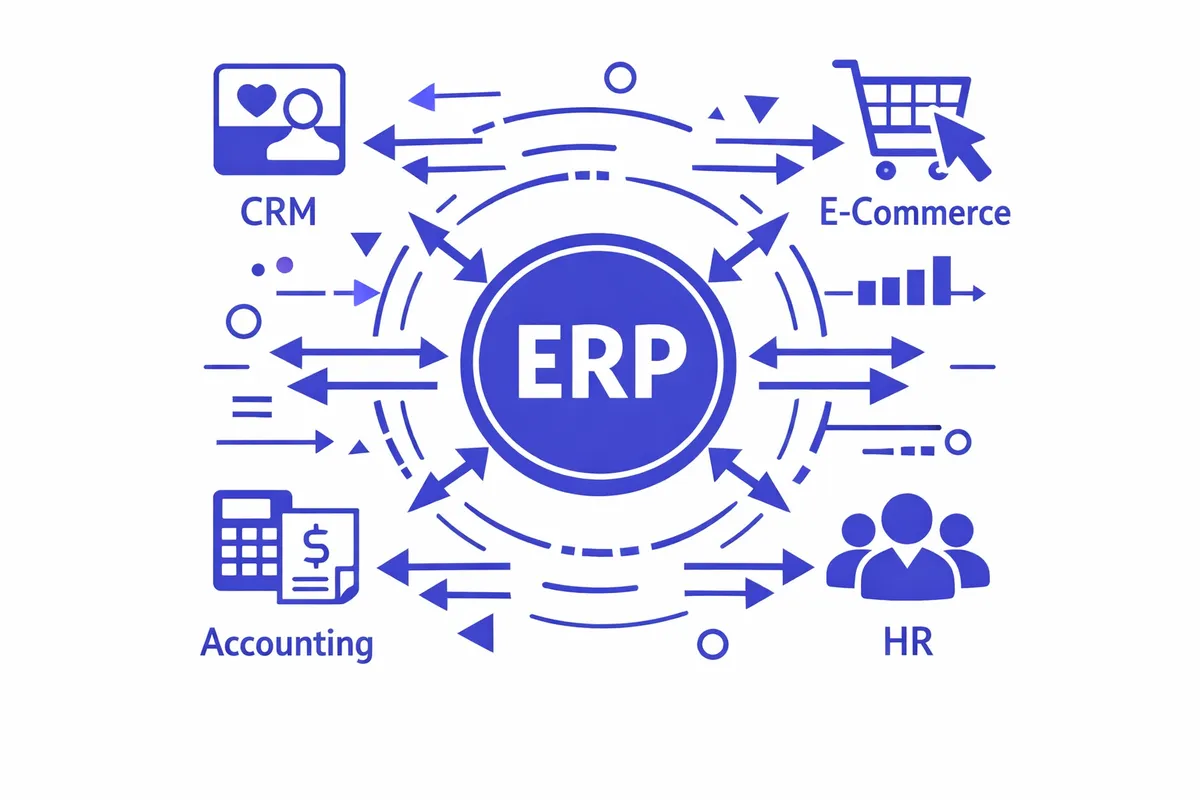
Our ERP Integration Services in Atlanta
- Full system audit and integration architecture mapping across your complete technology stack
- Data flow design with field-level transformation rules for each system pair
- ERP-to-CRM integration for unified customer, account, and transaction data
- E-commerce and marketplace integration for automated order and inventory synchronization
- Warehouse management system and TMS connectivity for logistics operations at the Hartsfield-Jackson corridor
- Financial system, banking, and payment platform integration with reconciliation automation
- HR and payroll system connectivity for workforce data synchronization
- Supply chain and vendor portal integration for procurement automation
- Custom API development and middleware for proprietary or legacy systems without modern interfaces
- Integration monitoring dashboards with real-time health visibility
- Automated error alerting, retry logic, and exception queue management
- Real-time and batch synchronization options based on operational urgency and volume requirements
- Post-launch documentation and ongoing maintenance support
Industries We Serve in Atlanta
Logistics and Supply Chain: Hartsfield-Jackson corridor distribution and logistics companies manage ERP integrations with transportation management, warehouse management, customer portals, and carrier APIs. We design for the data volume and real-time latency requirements that high-throughput logistics operations demand. A single ERP-WMS integration failure in a distribution center processing thousands of daily shipments is a significant operational event, and we design every integration with that operational reality in mind.
Healthcare and Hospital Systems: Emory Healthcare, Piedmont, Northside, and WellStar affiliates manage supply chain, billing, clinical, and HR systems that were built independently and need integration to support efficient operations. We design healthcare ERP integrations with data accuracy, compliance documentation, and audit trail requirements built into the architecture.
Fintech and Financial Services: Atlanta's rapidly growing financial technology sector uses ERP integrated with CRM, billing, customer data platforms, and financial reporting systems. We design integrations that support fast-growing companies without creating architectural debt that becomes expensive to unwind later.
Manufacturing and Distribution: Metro Atlanta manufacturers and distributors connecting ERP to production management, quality systems, and customer order platforms need integrations that reflect manufacturing data complexity and real-time production requirements.
Multi-Channel Retail and E-commerce: Atlanta consumer brands selling through multiple channels need ERP connected to e-commerce platforms, marketplace sellers, physical retail POS systems, and third-party logistics providers with accurate inventory and order data flowing across all channels simultaneously.
Technology and SaaS: Atlanta technology companies connect ERP to Salesforce, HubSpot, billing platforms, and financial reporting tools. We design these integrations to support fast-growth environments where the technology stack evolves frequently.
What to Expect
System Audit and Discovery: We begin by documenting your complete technology stack, mapping every data flow that currently exists, and identifying every data flow that should exist but does not. We assess API quality and documentation for each system, identify data quality issues that need addressing before integration, and estimate the complexity and risk of each integration on the roadmap.
Architecture and Design: We produce detailed integration architecture documentation covering data flow diagrams, field mapping specifications, transformation logic, error handling design, and synchronization strategy for each system pair. This documentation is reviewed and approved before any development begins.
Build and Testing: We build integrations with error handling, retry logic, and monitoring built in from the start. We test against realistic data volumes and edge cases, not just happy-path scenarios. For high-stakes integrations like financial transactions or inventory counts, we build reconciliation jobs that cross-check system state independently.
Launch and Monitoring: We launch with monitoring active from day one and provide a stabilization period with close oversight. We deliver documentation covering architecture, data flows, and troubleshooting procedures. Ongoing maintenance support is available through retainer arrangements.