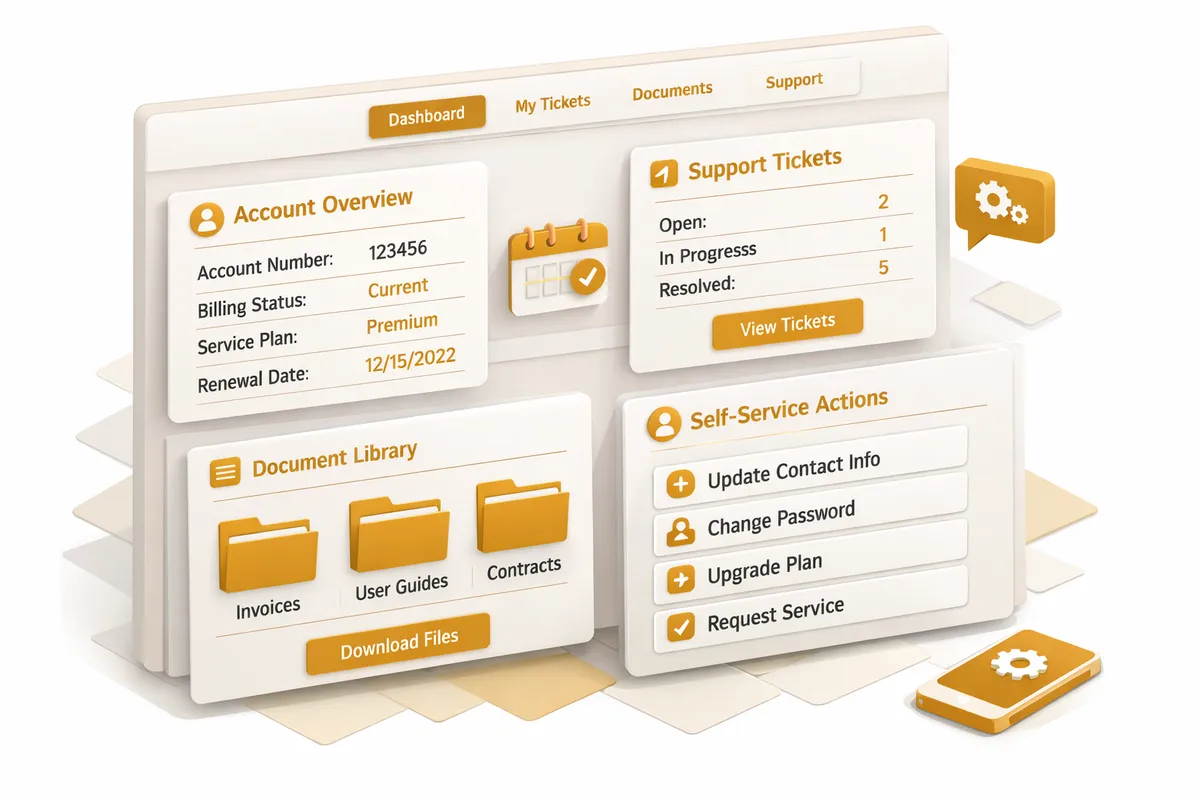
How We Build Customer Portals for Sioux Falls
We start with the workflow the portal has to support, not the screens it should have. Most failed portal projects in this market started by listing features. We start instead by mapping how a patient, client, or homeowner actually moves through the relationship today, where the manual handoffs are, what the staff time cost of each handoff looks like, and which moments are the highest-value ones to automate first. The mapping produces a written specification before any design work begins, and it usually identifies one or two operational chokepoints that the portal can clear in the first release.
Architecture is next. We design the portal data model, the integration surface to the systems already in place (EHR, custodial feed, ServiceTitan, accounting), the authentication and authorization layer, and the compliance posture. For HIPAA-bound applications we capture encryption, access control, audit logging, and BAA compatibility into the design before development begins. For financial services portals we apply the same discipline to PCI and SOC standards. Implementation runs on Next.js and React on the frontend with a Node.js or Python tier and PostgreSQL on AWS, deployed in two-week sprints with working portal screens at the end of each one. We design specifically for the device profile your customers use, which in Sioux Falls means mobile-first for trades subscribers, mixed for healthcare, and desktop-comfortable for wealth management.
Industries We Serve in Sioux Falls
Construction and Home Services: Sioux Falls contractors, HVAC firms, roofers, plumbers, and landscapers running maintenance subscriptions across Brandon, Tea, Harrisburg, Hartford, and Dell Rapids need homeowner portals that show service history, schedule next visits, capture work-in-progress photos, and process payments. We build portals that hold subscription renewal rates ten points higher than phone-and-email shops can hold them, particularly across the April through October window when the office cannot afford to spend time on routine service questions.
Real Estate: Sioux Falls brokerages, property managers, and developers need investor portals, tenant portals, and homeowner portals that match the actual transaction flow of the local market. We build real estate portals that handle deal-document workflow, commission tracking, tenant maintenance requests, and investor reporting for firms whose volume has outgrown the standard SaaS feature set.
Specialty Healthcare: Multi-provider, multi-location specialty practices on the Western Avenue and 41st Street corridors need patient portals that handle intake forms, appointment scheduling, treatment-plan presentation, post-visit follow-up, and HIPAA-compliant patient communication. We build portals for dental groups, orthodontic practices, dermatology offices, mental health practices, and the specialty healthcare ecosystem competing with Sanford and Avera for retail patients in this market.
Financial Services: Sioux Falls wealth managers, insurance brokers, mortgage brokers, accounting firms, and the fintech operators emerging from the credit card services legacy near downtown need client portals that handle document collection, planning deliverables, statement archive, secure messaging, and the audit trail this regulatory environment requires. We build to SOC and PCI expectations because the buyers in this category will check.
Senior Care: Senior living, memory care, home care, and hospice operators across the Sioux Empire run a unique portal use case where the resident is the customer but the adult child making the placement decision, often from out of state, is the actual portal user. We build family-facing portals that show care updates, billing, and communication history in a format adult children can actually use, particularly during the Q4 and Q1 placement decision spike that follows holiday family visits.
Manufacturing and Professional Services: Sioux Falls manufacturers and the law firms, accounting firms, and A and E firms serving them need customer-facing portals for order status, document exchange, project status, and engagement management. We build portals that bridge twenty-year-old internal systems to modern customer-facing experiences without forcing a full back-office replacement.
What to Expect Working With Us
1. Discovery and Workflow Mapping. We map the actual customer journey, identify where manual handoffs cost the most time, and define the highest-value moments to automate first. This phase produces a written specification and an honest project estimate before either of us commits.
2. Architecture and Compliance Design. We design the portal data model, the integration surface, the authentication layer, and the compliance posture. For HIPAA, PCI, or SOC requirements the work happens in design, not at the end. The architecture is approved before any code is written.
3. Sprint-Based Implementation. We build in two-week cycles with working portal screens at the end of each one. Your staff and a small group of pilot customers can test against real software early, which surfaces design misalignments while they are still cheap to fix.
4. Launch, Adoption Support, and Evolution. We launch with onboarding flows designed for your customer base, monitoring on the systems your staff depends on, and an evolution roadmap. Most Sioux Falls clients stay on a maintenance retainer for the first year while the portal proves itself in production.