How We Build AI Integration Services for Sioux Falls
Discovery starts with a stack inventory. We list every SaaS subscription the business pays for, every internal tool, every spreadsheet that runs the actual day, and every manual handoff that happens between people. Most Sioux Falls operators are surprised by the count. We then identify the workflow that loses the most money when it breaks, almost always lead intake, scheduling, or billing, and we design an integration that fixes it first.
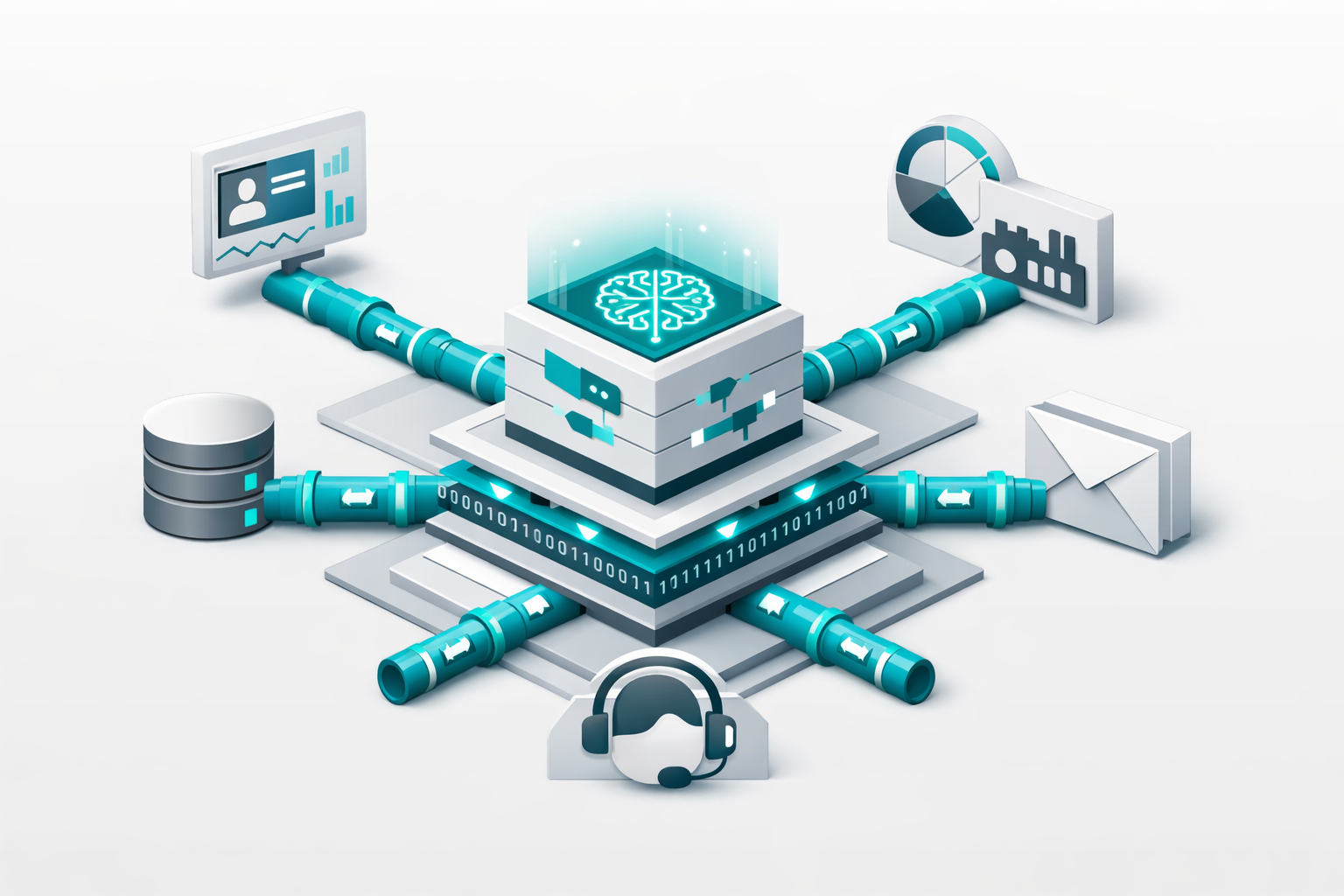
Build happens in three waves. The first wave is connection. We use the integration platforms appropriate to the stack: native APIs where they exist, Zapier or Make for lightweight glue, custom connectors where vendor support is thin. The objective is to move data between the tools the business already pays for without forcing a platform migration. A Brandon HVAC contractor keeps the field service app, keeps the accounting tool, but stops typing the same job twice.
The second wave is AI augmentation. Once the data is moving, we layer AI inside the workflow. A lead from a 41st Street corridor search gets scored before it reaches the rep. A new patient inquiry at a McKennan Park practice gets pre-qualified by an AI intake before the front desk sees it. Quote follow-ups draft themselves and queue for human review. The integration is no longer just plumbing. It is plumbing that thinks.
The third wave is consolidation. Some tools earn their seat after integration and some do not. We help the owner cancel the duplicates, replace the underperformers, and document what is left so the next office manager does not have to start over. The proprietary integration logic stays with the client. The savings on the killed subscriptions usually cover a meaningful share of the engagement.
Industries We Serve in Sioux Falls
Construction and Home Services. A roofer, HVAC contractor, plumber, electrician, remodeler, or landscaper working the Sioux Empire typically runs four or five tools that were chosen one at a time. Field service, dispatching, accounting, lead source, and review management rarely sync without help. We integrate the stack so a Brandon dispatcher sees scheduling, crew utilization, and lead conversion in one place, and the spring through fall construction window stops leaking jobs to the operators with cleaner workflows.
Real Estate. Brokerages, mortgage brokers, property managers, and developers in Sioux Falls work in MLS systems, transaction management platforms, marketing CRMs, and showing schedulers. We connect the layers so a Tea relocation lead from Minneapolis flows from website to CRM to lender pre-qual to showing calendar without a coordinator typing the same name four times. The buying season runs March through October and the operators with integrated stacks dominate it.
Specialty Healthcare. Dental, orthodontic, chiropractic, physical therapy, dermatology, OB-GYN, and the Western Avenue med spa segment all run EHR plus patient communication plus marketing plus reviews on different vendors. We integrate them with HIPAA controls intact so a Whittier resident booking online flows into the EHR cleanly, recall reminders fire on schedule, and review requests reach the right patient at the right moment in the visit cycle.
Financial Services. Insurance brokers, wealth managers, credit unions, accounting firms, and mortgage operators in the financial bench underneath Wells Fargo, Citi, and First PREMIER work with custodial systems, CRM platforms, document portals, and compliance tools that rarely talk. We integrate them so a Pettigrew Heights household appears in one consolidated view across every advisor and every product, with audit trails preserved at every hop.
Senior Care. Assisted living, memory care, home health, and hospice operators across the Sioux Empire run inquiry forms, intake CRMs, EHR-lite tools, and family communication platforms that fragment the family conversation. We integrate them so the adult child who searches at 11 PM after Thanksgiving sees a fast, coherent response on the next call, and the intake team has the full history at the moment of decision in Q4 and Q1.
Manufacturing and Professional Services. A precision-ag supplier in the East Side industrial belt, a Daktronics-tier fabricator, a Phillips Avenue law firm, or an accounting practice near the Empire Mall area runs on legacy ERP, document management, time tracking, billing, and CRM platforms that grew separately. We integrate them so proposals draft from time and project data, invoices reconcile to engagement records, and the operator stops paying admin time to copy fields between tools.
What to Expect Working With Us
1. Stack Inventory. A fixed-price audit that catalogs every tool, every subscription, every manual handoff, and every workflow that loses money when it breaks. The deliverable is a written integration plan with priority order. You keep it regardless of next steps.
2. First Workflow Live. Inside thirty days we integrate the highest-leverage workflow, usually lead intake or scheduling. Data moves automatically and at least one AI augmentation, scoring or routing, is operating from the start.
3. Stack Consolidation. Inside ninety days we have integrated the remaining priority workflows, decommissioned the redundant tools, and produced a documented architecture diagram. The monthly subscription bill typically drops in this phase.
4. Compounding Phase. Months four through twelve are when new tools and AI use cases ship cheaply because the integration backbone is already there. Adding a new channel, a new location in Harrisburg, or a new service line stops requiring a quarter of operational chaos.