How We Build Computer Vision for Sioux Falls
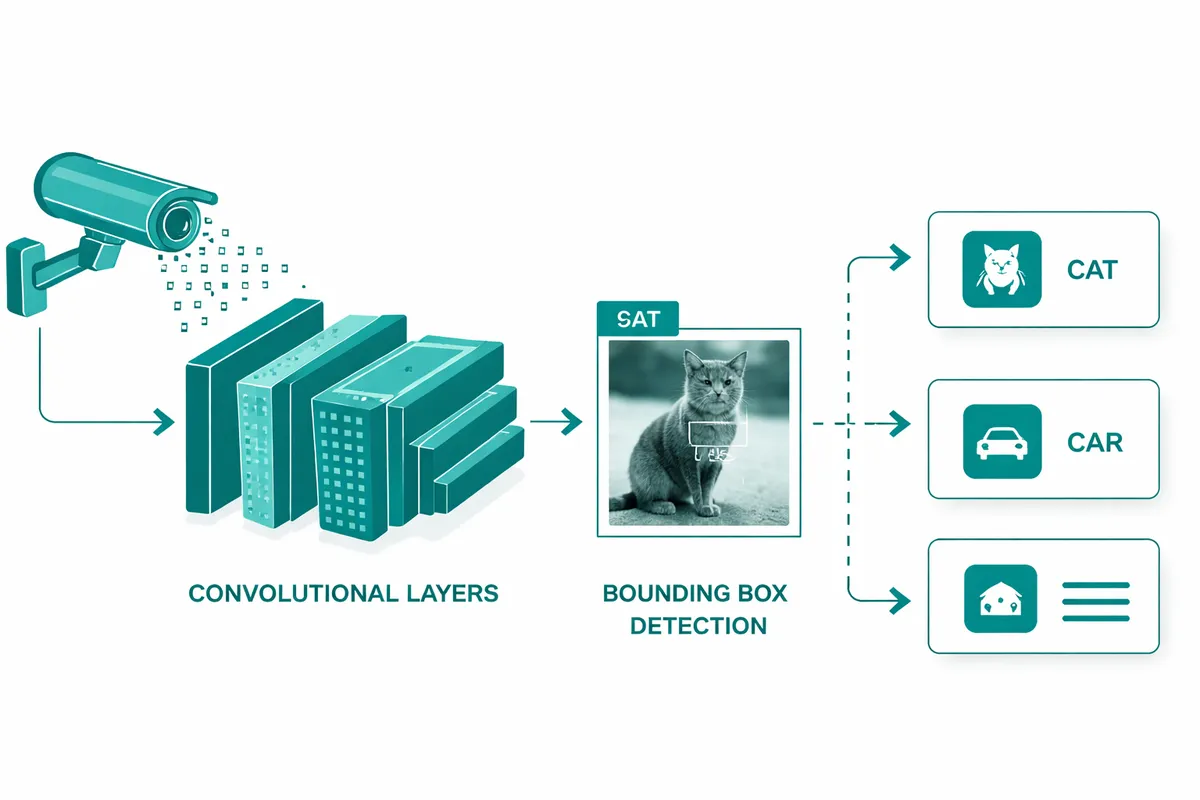
Discovery starts with the image source. Most Sioux Falls operators are already taking the photos the model needs to train on. We sit with the operator and audit the existing photo library, the device workflows the crews actually use, and the moments in the job lifecycle where photos already happen. Every camera moment is a potential data input.
Build happens in three phases. The first is data assembly and labeling. We organize the operator's historical photos, label the categories that matter (component types, damage classes, stage of work, quality issues), and supplement with public data where the model needs broader context. For a roofer this might mean labeling shingle types, hail damage indicators, and flashing conditions. For an HVAC contractor it might mean equipment models, refrigerant lines, and clearance issues.
The second phase is model training and evaluation. We start with the right baseline, typically a fine-tune of a vision foundation model rather than a from-scratch architecture, and we measure against the operator's actual decisions. A model that scores well on a generic benchmark and poorly on Sioux Falls roof photos in October light is not a usable model. We iterate until accuracy on the operator's images, in the operator's lighting and conditions, hits the threshold for production.
The third phase is workflow integration. The model lands inside the field service software, the CRM, the estimating tool, or the document portal. Crews keep taking photos exactly the way they do today. The system tags, organizes, and surfaces the data automatically. Estimators see structured material lists from images. Project managers see automated daily progress reports. Clients receive professional documentation packages without anyone formatting them by hand.
Industries We Serve in Sioux Falls
Construction and Home Services. Roofers, HVAC contractors, plumbers, electricians, remodelers, and landscapers across the Sioux Empire are the primary buyer for computer vision. The billion-dollar permit market produces enormous photo volume, and operators inside the spring through fall window need every advantage. We build vision systems that auto-document jobs from the field, generate damage reports for insurance work, produce material take-offs from site photos, and attach proof-of-work imagery to invoices automatically. A Brandon roofer ships cleaner deliverables to insurance carriers and homeowners than competitors still doing it manually.
Real Estate. Brokerages, property managers, and developers in Sioux Falls use vision systems for listing photo quality control, property condition documentation, and tenant move-in and move-out comparisons. Vision models flag missing or low-quality photos before listings go live, identify property features automatically for marketing copy, and produce side-by-side condition reports across the McKennan Park, All Saints, and Tea property portfolios that property managers oversee.
Specialty Healthcare. Dermatology, dental imaging, optometry, and the Western Avenue med spa segment use computer vision in clinical contexts where appropriate. We build HIPAA-compliant systems for clinical image management, before-and-after documentation workflows, and patient-education image organization. Models stay inside compliance boundaries and clinical decision support remains in the clinician's hands.
Financial Services. Insurance brokers and adjusters working alongside Sioux Falls construction operators use vision systems to evaluate damage claims, document property conditions, and accelerate claims handling. Wealth managers and estate planners use vision-supported document management for processing the volume of statements, deeds, and closing documents that arrive across a household's financial life.
Senior Care. Assisted living, memory care, home health, and hospice operators across the Sioux Empire use computer vision for facility documentation, resident safety monitoring inside privacy-respecting designs, and equipment and supply tracking. Vision systems support the operations team without replacing the human caregivers who carry the relationships.
Manufacturing and Professional Services. Precision ag suppliers, ag-tech operators in the Raven Industries and POET Energy orbit, Daktronics-tier industrial fabricators in the East Side belt, and the engineering and architecture firms clustered between downtown and the Empire Mall area run vision systems for quality control, defect detection, shop-floor monitoring, and field documentation. A Hartford steel fabricator runs production faster when the QC step happens at the camera rather than in a downstream review.
What to Expect Working With Us
1. Image Audit. A fixed-price engagement that catalogs the operator's existing photo workflows, identifies the highest-leverage vision use case, and produces a written training and deployment plan. You keep the document regardless of next steps.
2. Pilot Model. Inside the first sixty days we assemble training data, label what needs labeling, and ship a pilot model deployed on a slice of the operator's actual workflow. Performance numbers come from real images, not curated demos.
3. Production Deployment. Inside ninety days the model is integrated into the operator's field service software, CRM, or document workflow. Crews keep working the way they always have. The vision layer runs underneath, automatically.
4. Compounding Phase. Months four through twelve are when the model improves with every new photo, every operator correction, and every retraining cycle. The proprietary image data set deepens, the model accuracy climbs, and the operational gap with competitors who do not have a vision system widens every quarter.