How We Build AI Compliance Governance for Sioux Falls
We start with a written inventory. Every team in the business that uses AI gets logged: the tool, the data type, the use case, the contractual basis, and the current control state. For a specialty practice this typically surfaces five to fifteen unsanctioned AI uses across clinical, billing, marketing, and front desk teams. For a financial firm it surfaces unsanctioned use in research, portfolio commentary, client communications, and prospecting. The inventory is the part most engagements skip and the part that determines whether the program survives an examination.
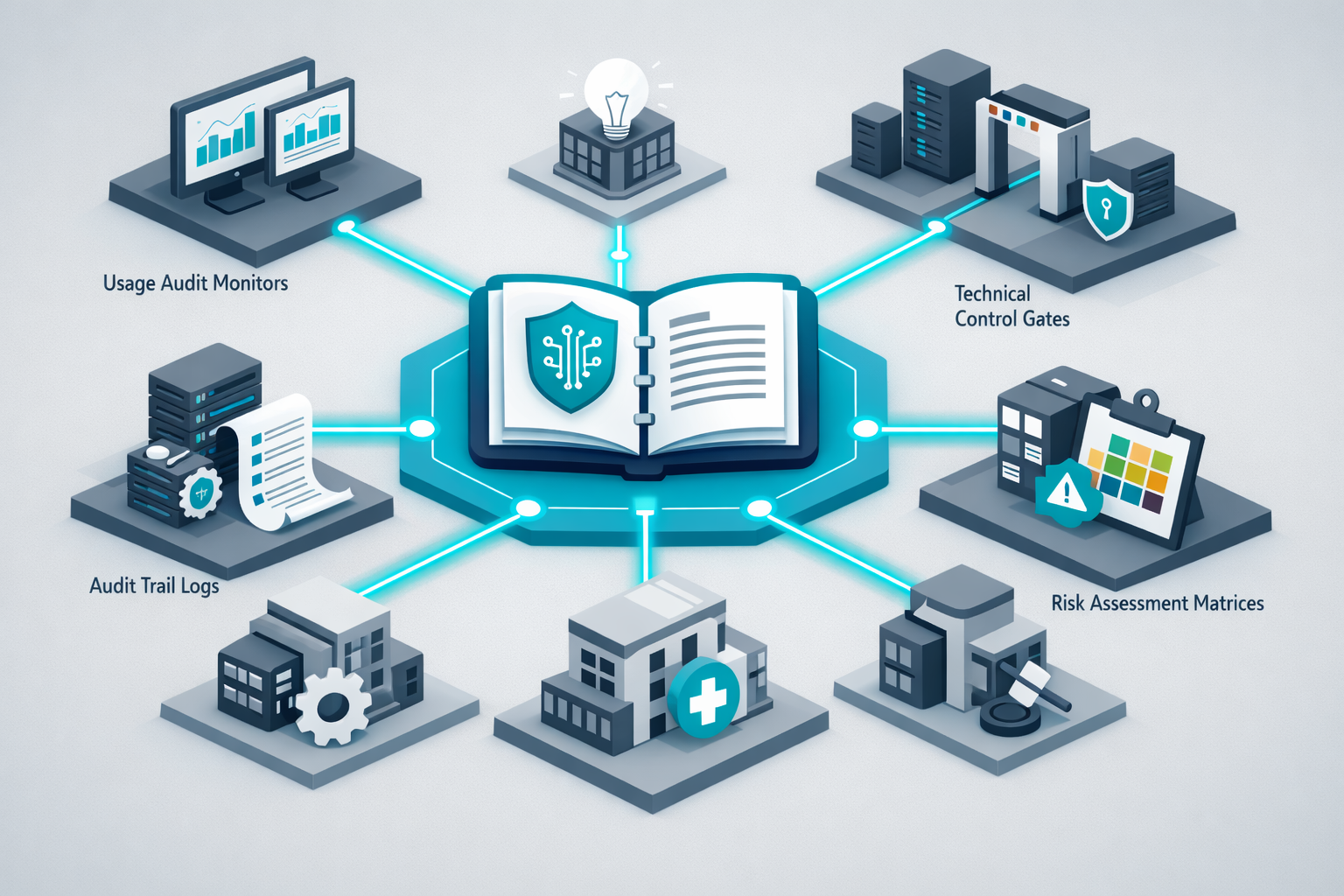
From the inventory we build the policy framework. Acceptable use, prohibited use, data classification rules tied to PHI, NPI, MNPI, and trade secrets, vendor evaluation criteria, model audit logging requirements, incident response procedures, and a documented AI risk register. The policies are written for South Dakota businesses, with references to the actual regulators and contracts your firm answers to, not a generic template lifted from a national consultancy.
We then implement controls. Role-based access on AI tools, data loss prevention rules that block PHI and NPI from leaving the perimeter, audit logging on prompts and outputs for the regulated workflows, model card documentation for any system that touches client data, and Business Associate Agreements with the model vendors your team actually uses. Controls integrate with the platforms your team works in (Microsoft 365, Google Workspace, Salesforce, Redtail, Open Dental, Dentrix, Continue Care, ServiceTitan, and the ECMs your firm runs).
We close with training. Compliance officers, partners, advisors, and frontline users each get role-specific training on what is allowed, what is documented, and what triggers escalation. We run a tabletop incident exercise so the breach response procedure is not theoretical.
Industries We Serve in Sioux Falls
Construction & Home Services Contractors and trades operating across the East Side, Brandon, Tea, and Harrisburg increasingly use AI for proposals, image generation, scheduling, and customer communications. The exposures are different from healthcare but real: copyright on training data, accuracy claims on AI-generated estimates, defamation risk in automated review responses, and lien-related documentation that needs human signoff. We build governance frameworks that let trades use AI productively without picking up exposure their general liability carrier did not underwrite.
Real Estate Brokerages and property management firms working migration buyers from Minneapolis, Des Moines, and Chicago use AI for listing copy, buyer communications, market analysis, and document review. Fair housing rules, MLS data licensing terms, and state real estate commission expectations all apply to AI-generated content. We build the governance that keeps the production speed gains without picking up fair housing or licensing exposure.
Specialty Healthcare Practices on 41st Street and Western Avenue face the heaviest compliance lift. HIPAA Privacy Rule, Security Rule, breach notification, state medical board expectations, and Sanford and Avera vendor due diligence all apply. We build HIPAA-grade frameworks with documented BAAs, audit logs, role-based access, and risk assessments that survive third-party review.
Financial Services Wealth advisors, insurance brokers, accounting firms, and mortgage operators on Phillips Avenue and the Western Avenue professional corridor answer to FINRA, the SEC, the South Dakota Division of Insurance, and state CPA boards. AI governance for these firms covers MNPI handling, recordkeeping, supervision rules, advertising review, and the documented controls examiners look for during routine reviews.
Senior Care Assisted living, memory care, home care, and hospice operators serving the Sioux Empire handle PHI under HIPAA and resident records under state survey rules. AI governance covers family communication tools, care planning assistance, and any model that touches resident data. The framework is built to survive South Dakota Department of Health review and carrier underwriting questions.
Manufacturing & Professional Services South Dakota's 1,146 manufacturers and the Sioux Falls professional services bench in law and accounting use AI for engineering documentation, contract review, research, and operations work. We build governance covering trade secrets, attorney-client privilege, customer NDA compliance, and the export control rules that apply to certain manufacturers.
What to Expect Working With Us
1. AI Inventory and Risk Assessment We catalog every AI tool in use across your teams, classify the data each touches, score the risk, and document the current control state. Most engagements surface unsanctioned use that needs immediate remediation. The assessment runs two to three weeks and costs $500 for a focused scope or rolls into the larger program.
2. Policy Framework and Controls Plan We draft the policy set tailored to your regulatory profile, propose a controls implementation plan, and walk it through with your compliance officer, partners, or board. You see exactly what changes for your team and what does not before any rollout.
3. Implementation and Documentation We deploy the controls, integrate with the platforms your team uses, run user training, draft the BAAs and vendor questionnaires, and produce the documented program packet your examiners and vendor reviewers will read.
4. Annual Review and Update Regulations and tooling shift quickly. We review the program annually, update the inventory, refresh the training, and produce the documentation refresh that keeps the program current rather than letting it ossify.