How We Build AI Data Pipelines for Sioux Falls
We start with a data audit. A team member sits with the operator and traces every system that holds customer or operational data: scheduling platforms, EHR exports, ERP modules, CRMs, accounting software, email tools, the spreadsheets that the office manager actually uses to run the day. We map who owns each source, how often it updates, and where the duplicates live. The audit becomes a written architecture document the client owns regardless of next steps.
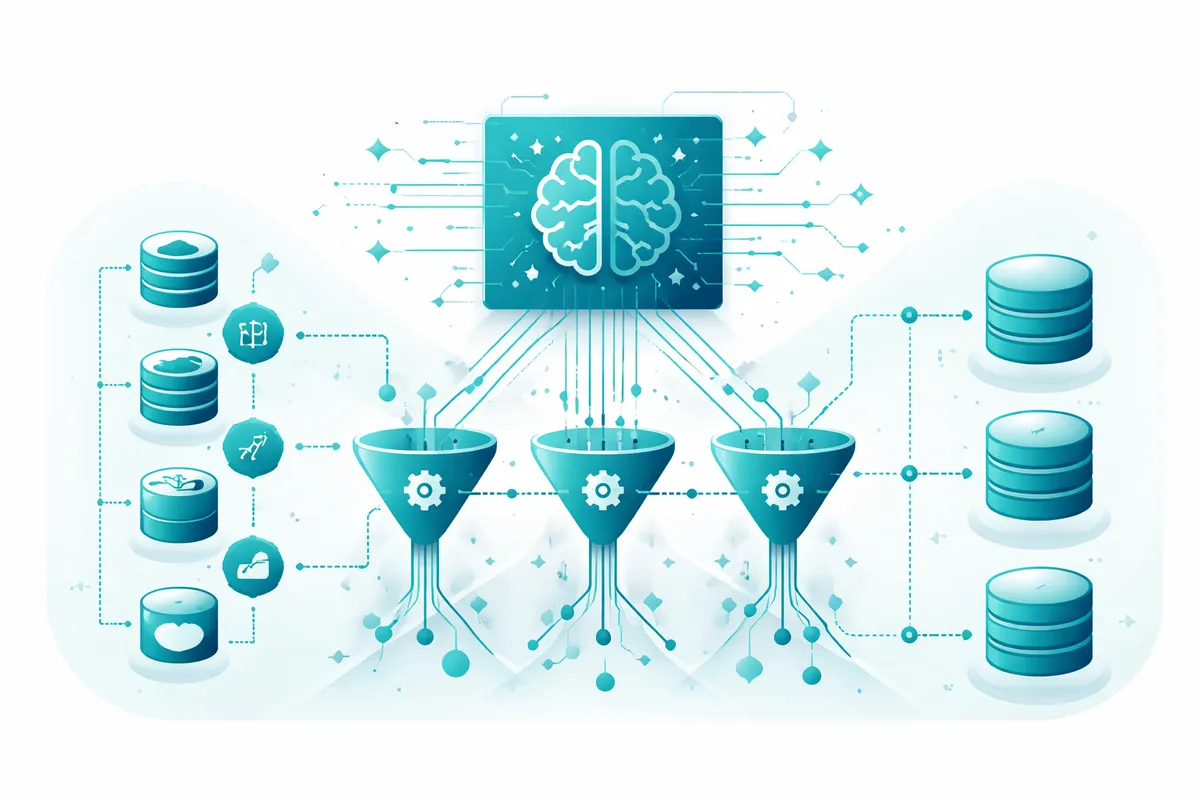
The build phase has three layers. First, ingestion. We connect to each source with the appropriate method: APIs where they exist, scheduled exports where they do not, change-data-capture where the vendor supports it. For a vendor practice tied to Sanford or Avera referral systems, that often means working with HL7 or FHIR feeds and ensuring HIPAA-compliant transit and storage. For a Daktronics-tier industrial supplier, it means EDI plus the custom shop-floor tracker that nobody documented.
Second, transformation. We standardize formats, deduplicate records, resolve identity across systems (the same customer is "Smith, J" in one tool and "John Smith" in another), and apply business rules that turn raw rows into usable signals. Third, activation. The cleaned data lands in a warehouse, a feature store, or directly into the AI tools that act on it. A senior care intake team in Tea sees the right family record surfaced before the call lands. A roofer in Dell Rapids gets next-day scheduling forecasts before the spring rush. The pipeline runs in the background, every day, without anybody thinking about it.
Industries We Serve in Sioux Falls
Construction and Home Services. Roofers, HVAC contractors, plumbers, electricians, remodelers, and landscapers across the Sioux Empire run on a patchwork of field service software, scheduling tools, accounting platforms, and lead-gen sources. Inside the spring through fall construction window, the difference between a clean pipeline and a broken one is measured in jobs lost. We build pipelines that pull leads from website forms, Google ads, Angi, and referral channels into a single CRM view, route them by service area across Brandon, Tea, Harrisburg, and Hartford, and feed scheduling and crew utilization data back to the dispatcher in real time.
Real Estate. Brokerages, property managers, mortgage brokers, and developers in Sioux Falls work in MLS systems, transaction management platforms, CRMs, and marketing tools that rarely speak to each other. We build pipelines that pull listing activity, showing requests, and lead behavior into one warehouse so the team can run AI scoring on which Minneapolis transplant is closest to writing an offer on a Cathedral Historic District renovation or a new Tea build. The pipeline runs from MLS through CRM into nurture without manual reentry.
Specialty Healthcare. Dental, orthodontic, chiropractic, physical therapy, dermatology, OB-GYN, and the growing med spa segment along Western Avenue and 41st Street operate alongside Sanford and Avera but on their own systems. Compliant data flow across scheduling, EHR, billing, and patient communication is the foundation for AI patient-recall, no-show prediction, and treatment plan adherence. We build HIPAA-aware pipelines that move the right data into AI tools without ever crossing a compliance line.
Financial Services. Insurance brokers, wealth managers, credit unions, accounting firms, and the mid-market fintech bench underneath the Wells Fargo, Citi, and First PREMIER towers depend on data feeds from custodians, processors, and core platforms. We build pipelines that consolidate household-level views, flag at-risk accounts, and feed compliance-aware AI summaries to advisors before client meetings. Audit trails are built into every step.
Senior Care. Assisted living, memory care, home health, and hospice operators across the Sioux Empire run on EHR-lite tools, family CRM systems, and intake forms that rarely sync. South Dakota ranks sixth nationally as a retirement destination, and the Q4 to Q1 decision cycle depends on intake teams seeing the full family conversation history when a call comes in at 11 PM. We build pipelines that unify the inquiry, tour, application, and move-in funnel into a single record.
Manufacturing and Professional Services. Precision-ag suppliers in the East Side industrial belt, Daktronics-tier industrial fabricators, law firms off Phillips Avenue, and accounting firms near McKennan Park all run on legacy ERPs, document management, time tracking, and billing platforms that were never designed to talk to each other. We build pipelines that consolidate operational, financial, and customer data into a warehouse where AI can run forecasting, anomaly detection, and proposal automation without anybody exporting CSVs.
What to Expect Working With Us
1. Data Audit. A fixed-price engagement that catalogs every system holding customer or operational data, identifies the highest-leverage integrations, and produces a written pipeline architecture. You keep the document whether or not you proceed.
2. Foundation Pipeline. Inside the first thirty to sixty days we stand up the core ingestion, deduplication, and warehouse layer for the two or three highest-value sources. The first AI use case, usually lead scoring or customer recall, goes live in the same window.
3. Activation Layer. Once the warehouse is clean, we connect it to the tools that act on the data: CRMs, scheduling platforms, email systems, AI agents, and the client portal. This is when the operational lift becomes visible to the team.
4. Compounding Phase. Months four through twelve are when the pipeline pays back. New AI use cases ship in days rather than months because the data layer is already there, the warehouse keeps growing, and the cost of every new model or agent drops because the foundation has been done once and done right.