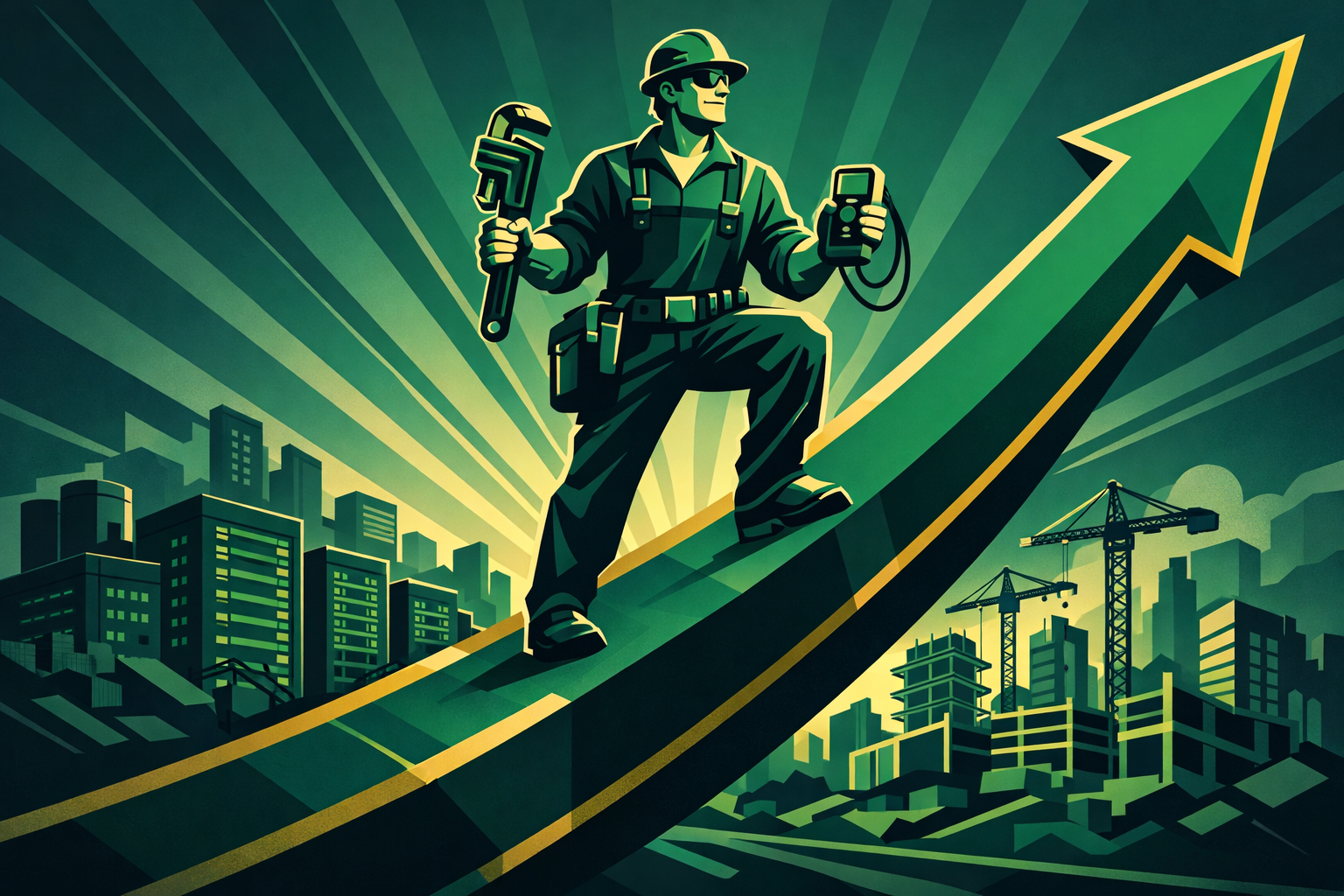
The AI Displacement Map: What Is Vulnerable and What Is Not
To understand why the trades are uniquely protected, you need to understand what AI actually does well and what it cannot do at all.
What AI Excels At
AI is exceptional at pattern recognition in structured data. It can read a contract and flag anomalies faster than a paralegal. It can analyze a financial statement and identify risks faster than a junior analyst. It can write functional code from a natural language description. It can generate marketing copy, translate languages, summarize documents, and classify images.
Every one of these tasks shares common traits. They are digital. They are repeatable. They operate on information, not physical materials. They can be performed from anywhere with an internet connection.
What AI Cannot Do
AI cannot operate in unstructured physical environments. It cannot adapt to the infinite variability of real-world conditions. Every house is different. Every commercial building has unique quirks. Every repair job presents a puzzle that requires visual inspection, physical testing, and judgment calls based on experience that does not exist in any training dataset.
Consider what an electrician does on a typical service call. They arrive at a house built in 1962. The panel is a Federal Pacific (known fire hazard). The previous homeowner did unpermitted work in the basement. The wiring in the attic is a mix of knob-and-tube and Romex. Nothing matches the original blueprint, assuming a blueprint even exists.
The electrician has to assess this environment in real time, develop a safe remediation plan, execute it with physical precision, and ensure the result passes inspection. No AI system on earth can do this. Not in 2026. Not in 2036. The combination of physical presence, diagnostic judgment, manual dexterity, and code knowledge is simply outside the domain of what artificial intelligence can address.
The Vulnerability Spectrum
Think of careers on a spectrum from fully digital to fully physical. On the digital end: data entry, basic accounting, document review, scheduling, report generation. These roles are being compressed or eliminated by AI tools right now.
In the middle: roles that blend digital and physical work. Project management. Sales. Healthcare administration. These roles are being augmented by AI, meaning the human is still necessary but needs fewer support staff.
On the physical end: electricians, plumbers, HVAC technicians, roofers, general contractors, solar installers, and every other trade that requires a human on site. These roles are not being augmented or replaced. They are experiencing a demand surge that AI is actually accelerating.
The Labor Shortage Is Not a Blip. It Is Structural.
The skilled trades labor shortage has been building for 25 years. It is not a cyclical downturn in trade school enrollment. It is the result of structural forces that will take decades to reverse.
The Retirement Wave
The average age of a skilled tradesperson in the United States is 55. Roughly 40% of the current trade workforce will retire within the next ten years. The pipeline of new workers entering the trades has not kept pace with this attrition for over two decades.
Between 2020 and 2025, the construction industry alone lost an estimated 500,000 workers to retirement. The replacement rate has been approximately 60% of the departures. That 40% gap compounds every year.
The College Pipeline Failure
For 30 years, the dominant cultural message to young Americans was simple: go to college. The trades were positioned as a fallback, not a first choice. Vocational programs in high schools were cut. Shop classes disappeared. Guidance counselors steered students toward four-year degrees regardless of aptitude or interest.
The result: a generation of college graduates with significant debt and, in many cases, skills that are now being automated. Meanwhile, the trades that were dismissed as "lesser" careers now offer starting wages that exceed what many college graduates earn, with zero student debt and a clear path to six-figure income within five to seven years.
Gen Z Is Starting to Get It
The narrative is shifting. Gen Z, watching older millennials struggle with student debt and white-collar job instability, is showing increased interest in trade careers. Trade school enrollment has risen year over year since 2022. Social media has played a surprising role here. Electricians, plumbers, and HVAC technicians documenting their work and their income on platforms like TikTok and YouTube have done more for trade recruitment than any government program.
But the shift is happening slowly. It will take years for increased enrollment to translate into experienced journeymen and masters who can meet current demand. In the interim, the supply-demand imbalance continues to favor existing trade professionals and trade businesses.
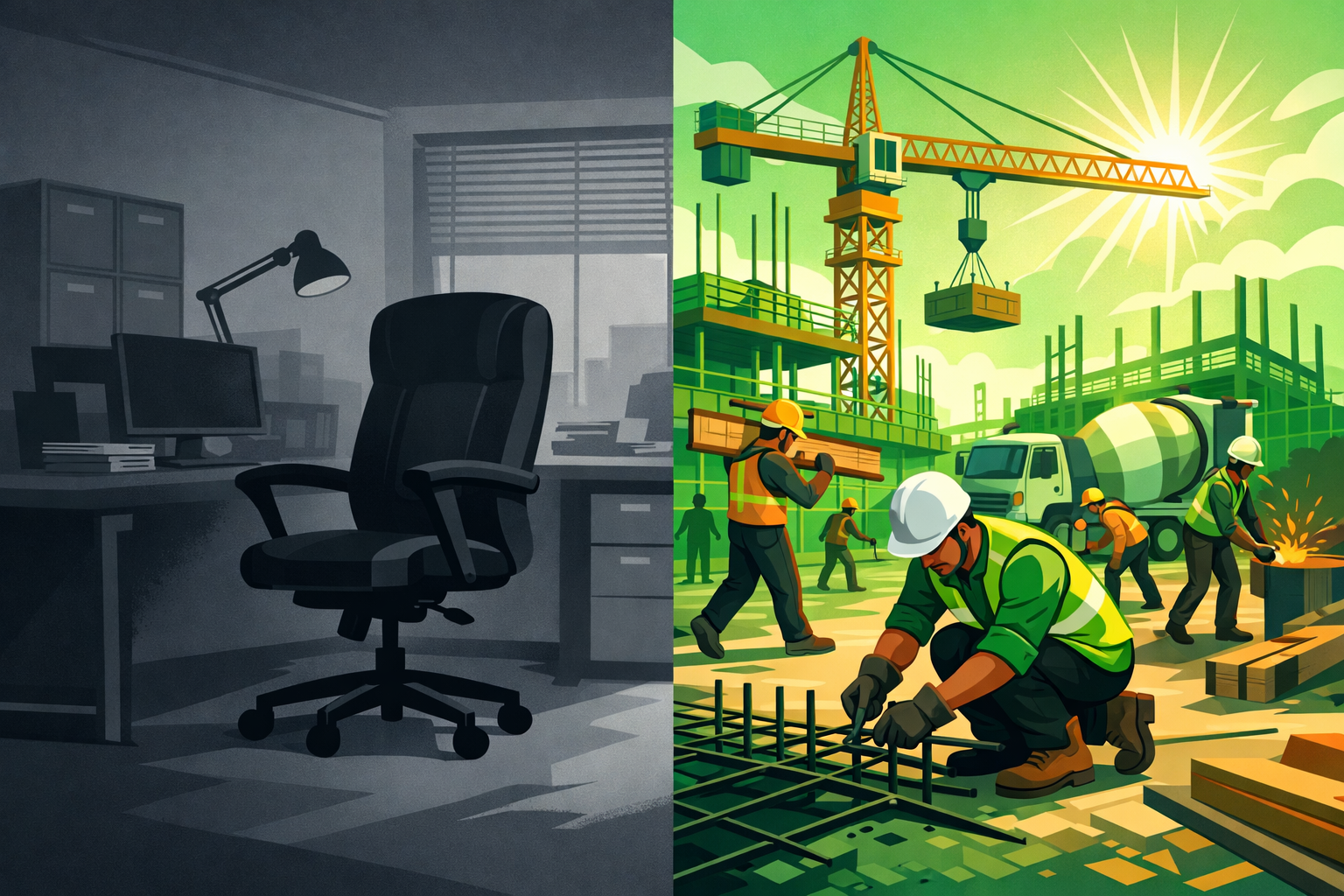
The Data Center Boom: A Demand Multiplier
There is a factor accelerating trade demand that most people outside the industry do not fully appreciate: the data center construction boom.
Why Data Centers Need Trades
Every AI model that automates a white-collar task runs on physical hardware in a physical building. That building requires electrical infrastructure (massive amounts of it), HVAC systems for cooling, plumbing for water-cooled systems, fire suppression, and ongoing maintenance.
A single hyperscale data center can require over 100 megawatts of electrical capacity. To put that in perspective, that is enough electricity to power roughly 80,000 homes. The electrical work alone for one facility can employ hundreds of electricians for 18 to 24 months.
The Scale of Construction
The data center construction pipeline in the United States is unprecedented. Major technology companies have committed over $300 billion in data center investment through 2030. Every one of those facilities needs to be built by human hands. The electrical systems, the cooling infrastructure, the fire suppression, the plumbing. None of it can be installed by AI.
This creates an ironic feedback loop. The more AI advances, the more data center infrastructure is needed. The more data centers are built, the more demand there is for skilled trade labor. AI's success is literally fueling demand for the people it cannot replace.
Beyond Data Centers
The construction boom extends well beyond data centers. Reshoring of manufacturing (semiconductors, batteries, pharmaceuticals) is driving industrial construction across the country. The energy transition requires massive buildouts of solar, wind, and grid infrastructure. Aging housing stock in every major metro needs renovation, rewiring, and system replacement.
For solar installers, construction companies, and home builders, the project pipeline extends as far as the eye can see.
Wage Growth: The Market Is Repricing Trade Labor
When demand exceeds supply, prices rise. This is as true for labor as it is for any other commodity. And it is happening across every trade.
The Numbers
Median wages for skilled trades have outpaced general wage growth every year since 2021. In high-demand markets, the premium is even more dramatic.
Journeyman electricians in major metros are earning $45 to $65 per hour. Master plumbers running their own operations are clearing $150,000 to $250,000 annually. HVAC business owners with three to five trucks are generating $500,000 to $1.5 million in annual revenue. These are not outliers. These are the new normal in a supply-constrained market.
The Overtime Factor
Because there are not enough workers to meet demand, existing workers are logging significant overtime. A tradesperson working 50 to 55 hours per week (common during peak season) at journeyman rates with overtime premium can earn well into six figures without owning a business, managing employees, or taking on any entrepreneurial risk.
The Ownership Premium
For trade professionals who make the leap from employee to business owner, the economics are even more favorable. A well-run trade business in 2026 operates in a seller's market. You can be selective about which jobs you take. You can command premium pricing. You can build a waitlist instead of chasing leads.
The constraint is not finding customers. The constraint is building the systems and team to serve them. This is where smart marketing becomes the differentiator.
Why Trade Businesses That Invest in Marketing Now Will Dominate
Here is where the opportunity thesis connects to concrete action. The trades are booming. Demand is outstripping supply. Wages are rising. All of this is true regardless of whether you invest in marketing.
So why market at all?
Because the boom will not last forever in its current intensity. The businesses that use this window to build brand equity, operational systems, and customer acquisition infrastructure will be the ones that survive and thrive when the market eventually normalizes.
Brand Equity Compounds
A trade business with no online presence, no reviews, no content, and no search visibility is invisible. It survives on word of mouth and repeat business. When the market tightens (and it always does eventually), that business has no moat.
A trade business that spent three years building a library of helpful content, accumulating hundreds of five-star reviews, ranking on the first page of Google for its key service terms, and nurturing a database of past customers through automated follow-up sequences has built something defensible. When the next downturn comes, that business keeps getting calls while the invisible competitors scramble.
The First-Mover Advantage in Digital
Most trade businesses are still marketing the way they did in 2010. A basic website. Maybe some Google Ads. A Facebook page that has not been updated since last year. The bar for digital marketing in the trades is low.
That is the opportunity. Because the bar is low, a trade business that invests in professional SEO, quality content marketing, optimized PPC campaigns, and active social media presence will stand out dramatically from the competition. Not because they are doing anything revolutionary. Because they are doing what every other industry figured out a decade ago.
The first trade businesses in each local market to build real digital infrastructure will capture disproportionate market share. And digital market share, unlike a truck or a tool, does not depreciate.
Hiring Leverage
Here is a benefit of marketing that most trade business owners do not consider. A strong brand attracts better employees. In a labor shortage, where every trade business is competing for the same limited pool of skilled workers, the company with the professional website, active social presence, and strong reputation has a hiring advantage.
Young tradespeople entering the workforce want to work for companies that look professional, have good reviews, and appear to be well-run. Your marketing is not just a customer acquisition tool. It is a recruitment tool.
The Decade Ahead: Positioning for 2026 to 2036
The next ten years will be the most lucrative decade in the history of the American skilled trades. The combination of structural labor shortage, AI-driven infrastructure demand, reshoring, energy transition, and aging housing stock creates a demand environment that has no historical precedent.
But demand alone does not build wealth. Captured demand builds wealth. The businesses that will dominate are the ones that invest in the systems, technology, and marketing infrastructure to capture more of the demand that already exists.
What Smart Trade Businesses Are Doing Right Now
They are building their digital presence with professional websites, rich content, and local SEO that captures search traffic in their service areas.
They are implementing AI-powered tools to handle phone answering, scheduling, review management, and customer follow-up. Not to replace their team. To multiply what their team can accomplish.
They are running data-driven advertising campaigns that target the highest-value jobs in their best-performing zip codes.
They are investing in their brand identity. Truck wraps, uniform programs, professional photography, and consistent visual presence across every channel. A strong brand creates trust before the customer ever picks up the phone.
They are treating marketing as infrastructure, not expense. Every dollar spent on a website, a content library, a review profile, or an email database is an investment in an asset that appreciates over time.
Common Misconceptions About AI and the Trades
"AI Robots Will Eventually Do Physical Work"
Robotics and AI are different disciplines. Robots capable of operating in unstructured environments (like a 60-year-old house with non-standard framing and unknown wiring) are decades away from commercial viability, if they are ever viable at all. The physical world is infinitely more complex than the digital world. Do not confuse a chatbot writing an email with a robot replumbing a bathroom.
"The Trades Are a Backup Career"
This framing is outdated and economically illiterate. A master electrician earning $180,000 per year with zero student debt, building equity in a business, and operating in a market with effectively unlimited demand is not in a "backup career." They are in one of the strongest economic positions available to any American worker in 2026.
"Young People Do Not Want to Work in the Trades"
The data says otherwise. Trade school enrollment is rising. Apprenticeship applications are at record levels. The cultural stigma is fading as financial reality sets in. Young people are watching AI displace white-collar workers and asking a rational question: where can I build a career that AI cannot touch?
"Marketing Does Not Matter When You Have More Work Than You Can Handle"
This is the most dangerous misconception of all. Having more work than you can handle is a temporary condition of a boom market. It is not a business strategy. The businesses that thrive long-term are the ones that used the boom years to build the brand, reputation, and customer infrastructure that sustains them through any market condition.
The Bottom Line
AI is reshaping the economy. That is not speculation. It is happening right now, in real time, across every industry. But the reshaping is not uniform. Some careers are being displaced. Some are being augmented. And some are being propelled into the most favorable market conditions they have ever experienced.
The skilled trades fall firmly in that third category. Physical skilled labor. Diagnostic expertise. The ability to solve real-world problems in real-world environments with real tools and real materials. These capabilities are not just AI-resistant. They are AI-benefited. The same technology that is automating office work is driving unprecedented demand for data centers, infrastructure, and construction.
For trade business owners, the question is not whether the opportunity exists. It exists. The question is whether you are building the systems to capture it. The marketing infrastructure. The digital presence. The operational technology. The brand equity that compounds over years and protects you when the cycle eventually turns.
The trades are not a refuge from AI. They are the foundation that AI is being built on. Act accordingly.
Related Guides
Content Systems That Scale: From First Post to Content Machine
One post is a start. A content system is an asset. Build a repeatable content operation that compounds without depending on any single creator.
Distribution Strategy: How Your Product Shapes Your Channels
The right marketing channel is a function of your product and customer. Learn how to match what you sell to how you reach people.
Your First 90 Days of Startup Marketing
The first 90 days of marketing make or break your launch. Get the week-by-week playbook for channels, messaging, and early traction.