Our AI Strategy Consulting Work in Atlanta
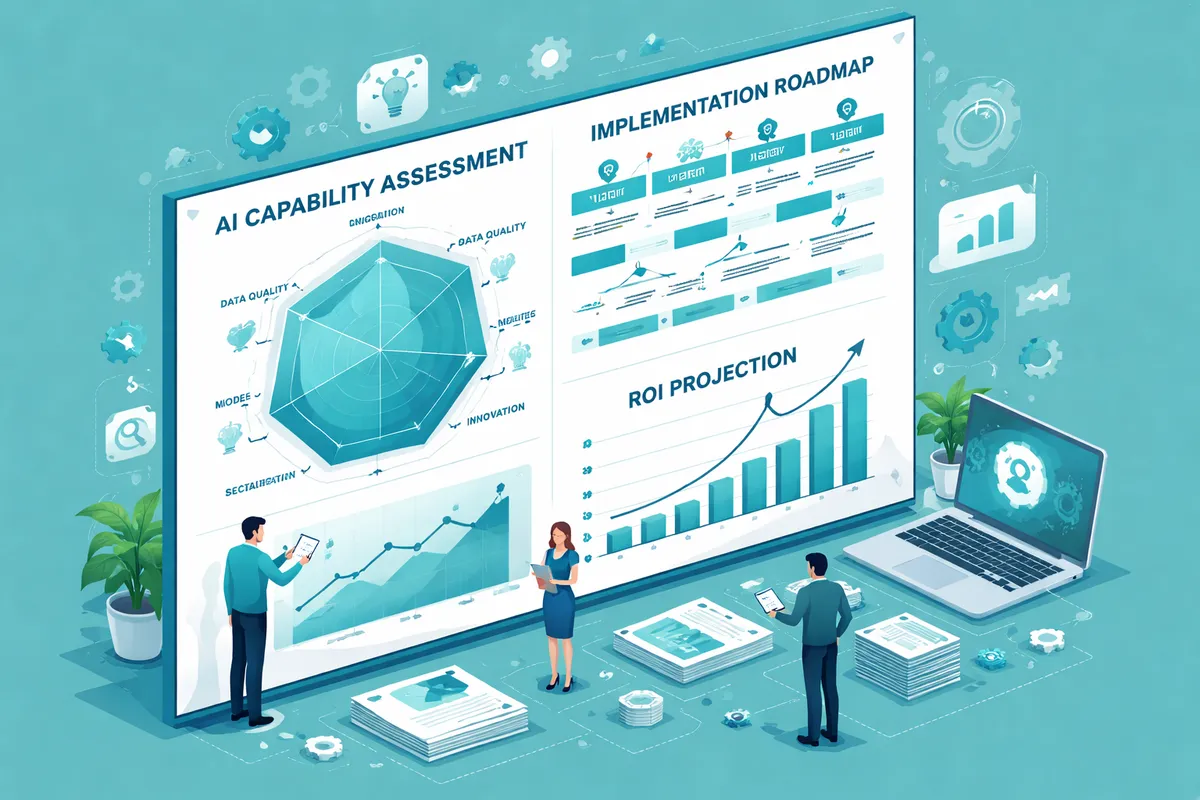
- AI readiness assessment across your data infrastructure, team capabilities, and existing technology stack with honest evaluation of gaps and the investment required to close them
- Use case identification and prioritization calibrated to Atlanta's specific industry dynamics: fintech fraud and risk use cases, Hartsfield-Jackson logistics route and demand optimization, Emory and Grady clinical workflow and document processing applications, Tech Square SaaS product personalization
- ROI modeling with business case development for each prioritized AI initiative, structured for the executive conversations at Atlanta headquarters where investment decisions are made
- Data readiness and infrastructure audit identifying what you have, what you are missing, and what data collection or quality improvements need to happen before model training begins
- Build vs. buy analysis across the AI tool and platform landscape, with vendor evaluation for Atlanta companies navigating the SaaS AI market
- Phased implementation roadmap with specific milestones, resource requirements, and success metrics tied to the business outcomes that matter most in your situation
- Georgia Tech ATDC and research ecosystem evaluation for companies with long-horizon AI investment who may benefit from academic partnership
- HIPAA compliance architecture assessment for Atlanta healthcare clients, designed into the roadmap from the first day rather than addressed as an implementation detail
- Change management and team upskilling planning for Atlanta organizations where AI adoption requires retraining existing staff or restructuring workflows
- Ongoing AI advisory and quarterly strategy review as the AI landscape and your competitive environment evolve
Industries We Serve in Atlanta
Fintech and Financial Services. Atlanta's fintech cluster spans Midtown, Buckhead, and the Old Fourth Ward, with companies like NCR, Cardlytics, Global Payments, and dozens of payment technology startups accumulating transaction and behavioral data at significant scale. AI strategy for Atlanta fintech companies focuses on fraud detection model development, credit risk assessment, customer segmentation, and the regulatory compliance workflows that govern financial data in this market. The concentration of payment technology infrastructure in Atlanta makes it one of the best markets in the country for financial AI applications that have real production data to work with from day one.
Healthcare Systems and Life Sciences. Emory Healthcare, Piedmont, Grady Health System, Wellstar, Children's Healthcare of Atlanta, and the surrounding health technology vendor ecosystem represent one of the Southeast's most complex healthcare AI markets. AI strategy for Atlanta healthcare organizations must account for HIPAA compliance, the specific clinical complexity of the patient populations each system serves, and the EHR and clinical data infrastructure already in place. Strategy work for health technology vendors serving these systems requires understanding the procurement dynamics and integration requirements of each major system.
Logistics and Supply Chain. Hartsfield-Jackson's cargo volume and the dense Southeast distribution network make Atlanta one of the country's strongest markets for logistics AI. Route optimization, demand forecasting, carrier performance analytics, and warehouse management automation all have strong ROI cases in this market because the operational scale and data depth are both present. AI strategy for Atlanta logistics companies identifies the specific workflow bottlenecks where machine learning creates the fastest measurable improvement in throughput, cost, or accuracy.
Film, Media, and Entertainment Production. Tyler Perry Studios, EUE/Screen Gems, and the growing Atlanta production community generate substantial content libraries and production management complexity that AI can address through content search, rights management automation, and production scheduling optimization. AI strategy for Atlanta media companies identifies where content intelligence, automated metadata tagging, and production workflow AI create operational efficiency without disrupting the creative process.
B2B Technology and SaaS. ATDC, Atlanta Tech Village, and the Coda building at Tech Square anchor an ecosystem of AI-native and AI-adopting SaaS companies competing against national incumbents. AI strategy for Atlanta SaaS companies focuses on product differentiation through AI feature development, customer success automation, and data-driven product roadmap prioritization. For startups at ATDC, strategy work also addresses the practical question of building with third-party AI APIs versus investing in proprietary model development.
Retail and Consumer Brands. Atlanta hosts the headquarters of major national retail brands and the regional distribution infrastructure that serves the Southeast. AI strategy for Atlanta retail companies addresses personalization at scale, inventory optimization, demand forecasting, and customer service automation. The combination of national customer reach and Atlanta's logistics infrastructure creates AI applications that are relevant to both the customer-facing and supply chain dimensions of retail operations.
Professional Services and Higher Education. Buckhead and Midtown law firms, Emory University, Georgia Tech, Clark Atlanta, and Morehouse College all face AI adoption questions that are specific to knowledge work, research management, and institutional operations. AI strategy for Atlanta professional services and higher education organizations addresses document intelligence, research automation, client service efficiency, and the governance requirements that apply when AI is applied to sensitive client or student data.
What to Expect
Discovery. We spend two to three weeks mapping your operations, data assets, competitive dynamics, and organizational capabilities. We interview leadership and key operators across the functions where AI creates the most impact. For regulated Atlanta industries including healthcare and financial services, we assess your compliance architecture and data governance at this stage. We come out of discovery with a clear picture of where your business has genuine AI potential and where it does not.
Strategy. We present a prioritized AI roadmap with specific initiatives, ROI projections, data requirements, technical dependencies, and phased implementation timelines. We work through the business case for each initiative and help your leadership team align around the starting points that deliver the fastest measurable return in your Atlanta market context.
Implementation. Clients who want to move from strategy into execution engage us to build and deploy the identified AI solutions. We build in phases, delivering production-ready technology at each milestone so you see results throughout the engagement rather than waiting for a single large delivery. The roadmap we build is designed to guide execution by any competent team if you prefer to implement internally or with other vendors.
Results. We track performance against the metrics established at project start and report transparently throughout the engagement. For ongoing advisory relationships, we conduct quarterly strategy reviews to assess progress, adjust priorities based on production data, and update the roadmap as the AI landscape and your competitive environment evolve.