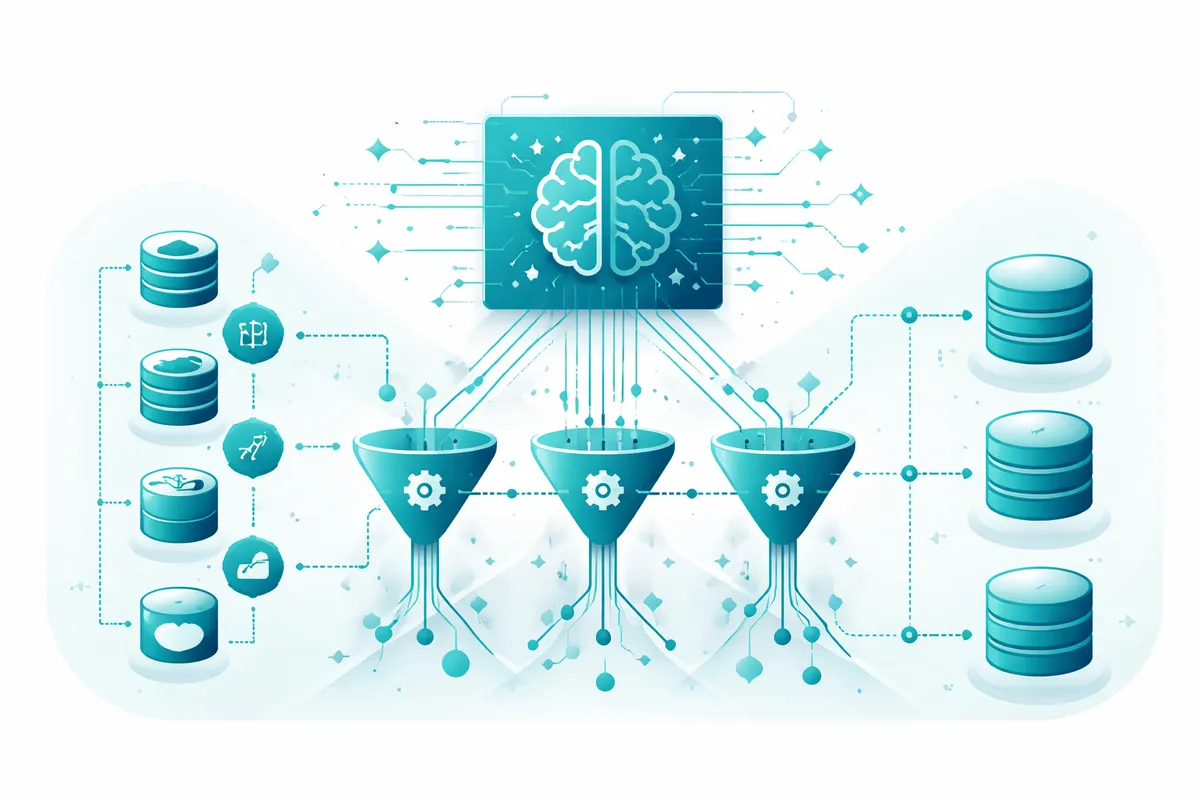
Our AI Data Pipeline Work in Atlanta
- Payment transaction streaming pipelines for Atlanta fintech companies including payment processors, lenders, and financial technology platforms requiring real-time data delivery to fraud detection and customer analytics models
- HIPAA-compliant healthcare data pipelines for Atlanta health systems and physician networks, connecting EHR, claims, lab results, and clinical measurement data to analytics and AI platforms with full audit trails
- Logistics data aggregation pipelines for Atlanta companies operating in the Hartsfield-Jackson freight corridor, combining carrier tracking, customs, and operational data for route optimization and demand forecasting AI
- Real-time event streaming infrastructure for Atlanta tech companies at ATDC and Atlanta Tech Village building AI-native products that require low-latency data delivery to production models
- Data warehouse and data lake implementation for Atlanta enterprises at NCR Voyix, Equifax, and other major employers consolidating data from multiple business units, regions, and source systems
- Feature store design and development for Atlanta AI teams that need to build, manage, and share ML features across multiple models without duplicating engineering effort
- Data quality monitoring frameworks with automated alerting that surfaces problems before they affect production AI models or analytics dashboards
- Pipeline orchestration using Apache Airflow, Prefect, and Dagster configured for Atlanta companies' specific infrastructure, team capabilities, and compliance requirements
Industries We Serve in Atlanta
Fintech. Atlanta's payment processing, lending, and financial technology companies operate on transaction data that requires real-time streaming pipelines with extremely high reliability and accuracy standards. Fraud detection models need sub-second data. Credit risk models need complete and consistent application data. Customer analytics models need unified behavioral data across digital and physical channels. We build pipelines that deliver each data type at the latency and quality level the specific model requires.
Healthcare. Emory, Piedmont, Grady, Children's Healthcare of Atlanta, Northside Hospital, and the region's medical practices and health technology companies process clinical records, insurance claims, and administrative documents at volumes that require automation. Building AI on this data requires HIPAA-compliant pipelines that encrypt PHI at every stage, enforce strict access controls, maintain comprehensive audit logs, and keep PHI out of systems that do not need it.
Logistics. With Hartsfield-Jackson as the world's busiest passenger airport and a major cargo hub, and with Georgia's deep port infrastructure supporting Southeast freight movements, Atlanta's logistics sector processes shipping manifests, customs documents, carrier tracking events, and freight paperwork at enormous volume. Pipelines that aggregate and normalize this data unlock route optimization, delay prediction, and capacity planning AI.
Technology. Atlanta Tech Village and ATDC companies building AI-native products need foundational data infrastructure that scales from prototype to production without requiring a complete rearchitecture. We design pipelines with appropriate scale for current state and a clear growth path.
Film and Media. Atlanta's production companies and the studios that operate on Georgia's film tax credit need content metadata pipelines, audience analytics infrastructure, and rights management data flows that feed business intelligence and distribution optimization tools.
Retail. Atlanta retailers with multi-channel operations, from Midtown anchor tenants to Buckhead luxury brands to high-growth e-commerce companies, need pipelines that unify sales, inventory, and customer data across physical and digital channels for AI and analytics.
What to Expect
Discovery. We assess your current data environment: the source systems generating data, the downstream models and analytics tools that need it, and the gaps between them. We identify where data quality problems originate, what latency the priority use cases require, and what compliance frameworks apply. For healthcare clients, we map PHI flows and BAA requirements before any architecture recommendation. For fintech clients, we assess the regulatory reporting requirements that affect pipeline design.
Architecture and Design. We develop a pipeline architecture that matches your specific requirements, selecting the right tools and patterns for your data volume, latency needs, team capabilities, and budget. We prioritize the highest-value data flows to deliver early results while building toward a comprehensive data infrastructure.
Implementation. We build the pipelines in stages, delivering working infrastructure for the highest-priority use cases first. We implement data quality monitoring at every stage and configure alerting before any pipeline reaches production. We document the architecture and write operational runbooks so your team can manage the system after the project.
Handoff and Support. We train your data engineering team on the architecture, the tools, and the operational procedures. Most Atlanta companies with technical teams take over pipeline operations within 30 to 60 days of the project completing. We offer ongoing managed support for organizations that prefer to outsource pipeline monitoring and maintenance.
Atlanta's AI Potential Starts With the Right Data Foundation.
Running Start Digital builds data pipelines that Atlanta businesses can build AI on confidently. Contact us to discuss your data infrastructure needs.