Your Cart (0)

Your cart is empty

New York

Supply Chain Automation in New York

Professional supply chain automation services for New York businesses. Strategy, execution, and results.

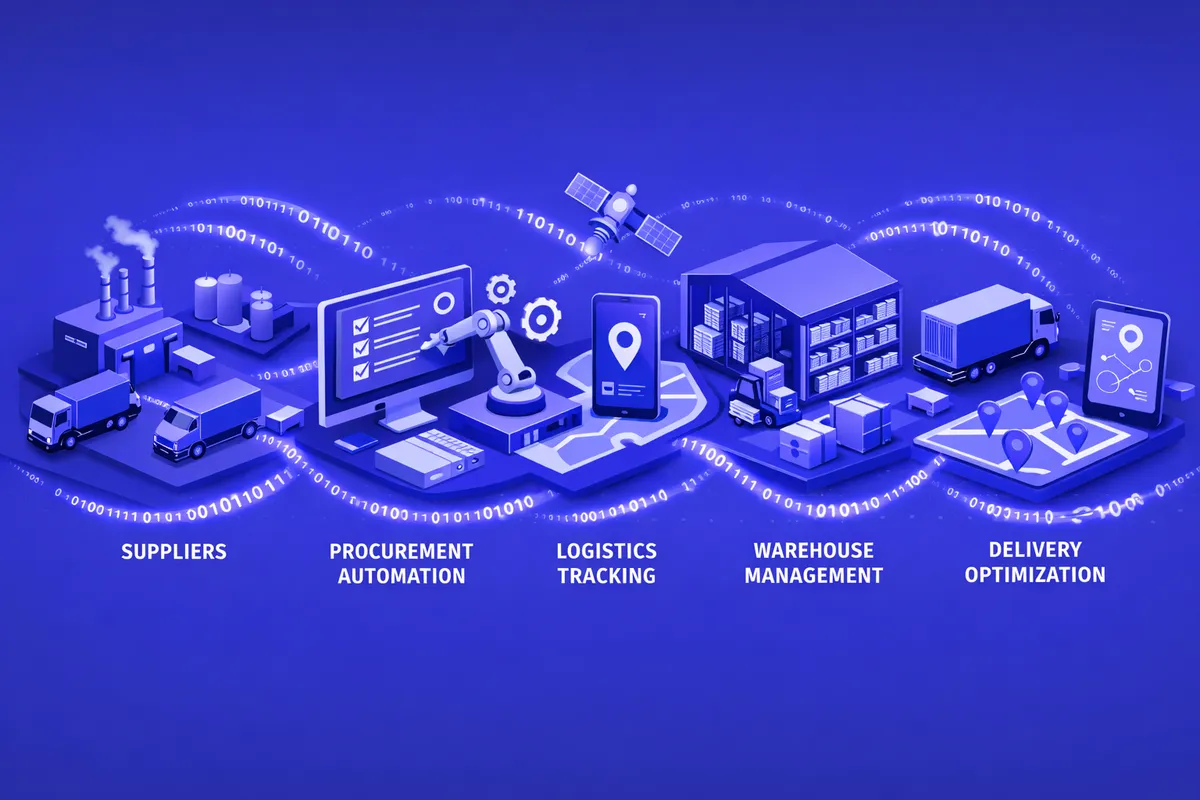
Supply Chain Automation in New York service illustration

Our Supply Chain Automation Work in New York

  • Supply chain process mapping and automation opportunity assessment calibrated to New York's specific cost and operational constraints
  • Procurement workflow automation: PO generation, vendor communication, approval routing, and acknowledgment management
  • Demand forecasting and inventory replenishment automation with New York's premium carrying costs as the primary optimization objective
  • Multi-channel order management and fulfillment routing automation across direct-to-consumer, wholesale, and retail channels
  • Last-mile delivery scheduling automation including Manhattan delivery window management and building access coordination
  • Carrier integration and real-time shipment tracking automation
  • Returns processing and reverse logistics automation
  • Fashion and seasonal production cycle automation: purchase order management from seasonal production plans through factory-to-warehouse tracking
  • Food distribution route optimization, delivery confirmation, and temperature chain documentation
  • Real-time supply chain visibility dashboards
  • Integration with ERP, WMS, 3PL platforms, and carrier systems

Industries We Serve in New York

Fashion and Apparel. Garment District brands, SoHo boutiques, and direct-to-consumer fashion companies managing global production cycles need procurement automation that compresses lead times and eliminates the manual coordination that delays seasonal deliveries.

Food and Beverage Distribution. New York's food distribution market serves thousands of restaurants, hotels, and institutional accounts across five boroughs daily. Route optimization, delivery scheduling, and temperature chain documentation automation are operational requirements, not optional improvements.

E-commerce Brands. New York-headquartered e-commerce brands serving national audiences need order processing, inventory management, and carrier integration automation that delivers the speed and accuracy customers expect from any brand competing in today's market.

Healthcare and Pharmaceutical. New York-Presbyterian, Mount Sinai, NYU Langone, and Northwell Health are served by medical supply distributors that need procurement and inventory automation with the compliance documentation, lot traceability, and expiration management that healthcare supply chains require.

Luxury Goods and Retail. Midtown flagship stores, SoHo luxury boutiques, and luxury goods brands managing limited-supply inventory need inventory automation that prevents stockouts of high-margin products while controlling carrying costs for slow-moving SKUs.

3PL and Fulfillment Providers. New York's 3PL sector, serving fashion, e-commerce, and specialty retail clients, needs warehouse automation and order management systems that handle volume accuracy and real-time client visibility.

What to Expect

Week 1 to 2: Process Assessment. We map your supply chain workflows with specific attention to the New York cost and operational constraints that make your bottlenecks more expensive than they would be elsewhere. We produce a prioritized automation roadmap with ROI estimates.

Weeks 3 to 6: Design and Integration Architecture. We design automated workflows, define integration points with your systems, and produce the technical specification before implementation begins.

Months 2 to 4: Implementation. We implement highest-priority automations first, test against real data and operational scenarios including Manhattan delivery constraints, and deploy with monitoring infrastructure.

Month 5 and beyond: Expansion and Optimization. We extend automation, optimize live workflows based on operational data, and expand coverage as the automated footprint grows.

Frequently Asked Questions

Fashion supply chains involve global production coordination, complex seasonal timing, and multi-channel distribution across wholesale, retail, and D2C simultaneously. We automate purchase order generation from seasonal production plans, vendor acknowledgment processing, factory-to-port shipment tracking, inbound customs clearance monitoring, inventory allocation across channels, and fulfillment routing to wholesale and D2C destinations. The automation compresses cycle times and eliminates the manual coordination that creates the delayed deliveries that turn full-price selling opportunities into markdown situations.

Yes. Manhattan delivery windows, building dock access restrictions, union delivery schedules, and traffic patterns are automation inputs that we build into delivery scheduling and route optimization systems. Automated scheduling coordinates deliveries against these constraints in real time, preventing the conflicts that create failed deliveries and repeat charges. Delivery confirmation automation provides proof of delivery for the restaurant and retail accounts that require it for payment processing and dispute resolution.

Inventory carrying cost reduction is the primary ROI driver for most New York supply chain automation projects. Demand forecasting automation improves ordering accuracy, reducing the safety stock buffer needed to compensate for manual forecast uncertainty. Replenishment automation eliminates the over-ordering behavior that occurs when manual processes are slow and buyers compensate by ordering more than needed. Real-time inventory visibility across warehouse locations prevents the duplicate orders that occur when inventory position is not current. Together, these improvements reduce carrying costs by 20 to 40 percent in most New York implementations.

We integrate with major 3PL platforms including ShipBob, Flexport, and regional fulfillment providers common in New York's metropolitan area. We also build custom integrations for 3PLs using proprietary warehouse management systems. Integration eliminates the manual order transmission and status checking that creates hours of delay between your order management system and fulfillment execution, which is particularly costly in a market where same-day delivery expectations are increasingly standard.

A focused automation for a single process, such as procurement cycle automation or carrier integration, takes four to six weeks. Multi-process implementations connecting ERP, WMS, and carrier systems take three to five months. We structure implementation to deliver the highest-impact automation first so New York businesses see cost savings and operational improvements before the full program is complete. New York's cost environment means the ROI materializes faster than in lower-cost operating environments.

New York's premium cost environment makes supply chain automation ROI proportionally higher than in other markets. Each hour of labor saved has higher value. Each square foot of warehouse space freed has higher value. Each reduced error has higher correction cost savings. New York clients consistently see supply chain automation deliver measurably higher ROI than comparable implementations in lower-cost markets, with most clients recovering implementation costs within six to twelve months of go-live. New York's supply chain demands precision and speed that manual processes cannot deliver at this city's scale and cost structure. Contact Running Start Digital to assess your operations, identify the automation opportunities that will have the largest impact, and build the infrastructure that keeps you competitive in the most demanding supply chain market in the country.

Ready to get started?

Let's talk about supply chain automation for your New York business.