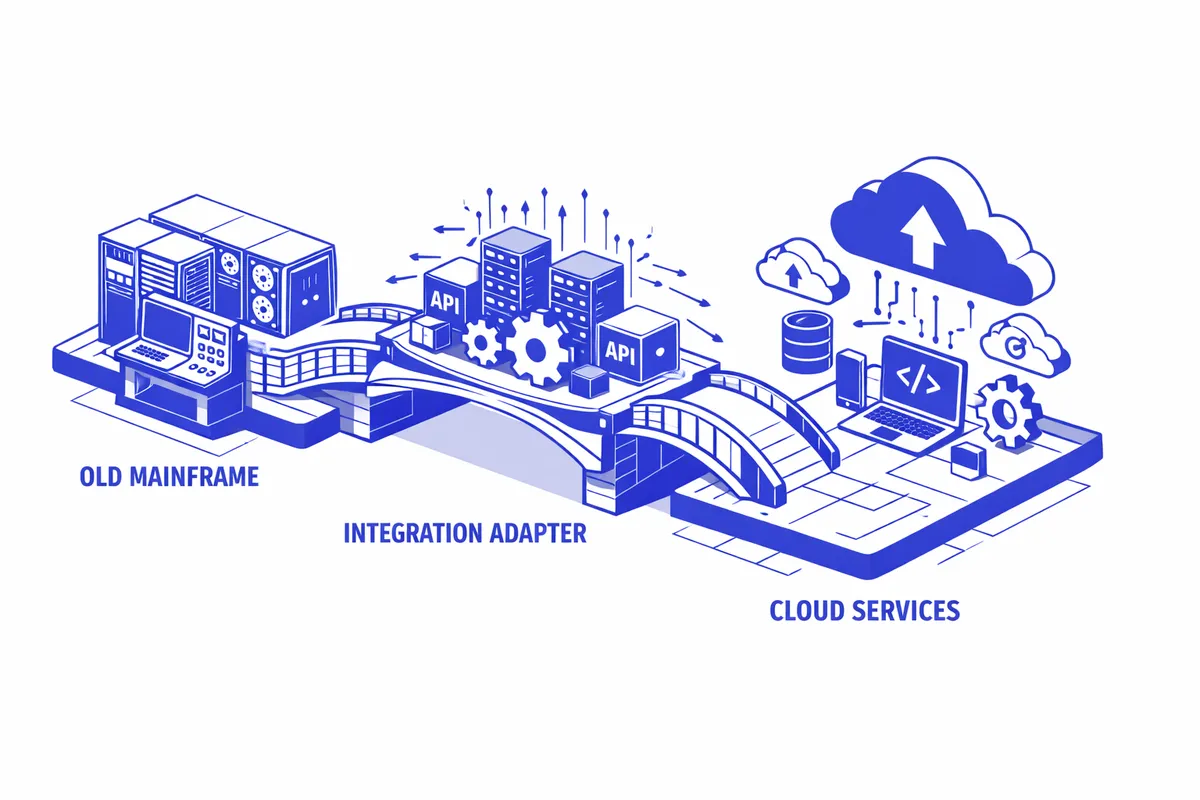
Our Legacy System Integration Services in New York
- Legacy system discovery, documentation, and risk assessment
- Integration architecture design for regulated and high-stakes environments
- Financial services mainframe integration and API wrapper development
- COBOL and older-generation language interface development
- Middleware and integration layer development
- API wrapper creation for systems with no native connectivity
- Database-level integration for direct data access
- Screen scraping and robotic process automation for UI-only legacy systems
- HL7 v2 and FHIR integration for New York healthcare organizations
- SHIN-NY connectivity for New York health information exchange
- Securities industry messaging: FIX protocol and SWIFT integration
- Media rights management system integration
- Data migration from legacy to modern systems with validation
- Audit trail and compliance logging for regulated industries
- Reconciliation monitoring and data consistency management
- Modern web and mobile interface development layered on legacy data
Industries We Serve in New York
Financial Services, Banking, and Investment Management: The Financial District and Midtown financial corridor represents the world's deepest concentration of financial legacy systems. Core banking platforms, trading systems, settlement platforms, and financial data infrastructure all need integration with modern analytics, compliance, wealth management, and customer-facing tools through architectures designed to meet SEC, FINRA, and New York State banking regulatory requirements.
Insurance Companies: New York's insurance sector, from the major carriers operating from Midtown to the Lloyd's market participants and specialty underwriters across the city, manages policy and claims systems built before modern integration standards. These systems hold decades of contract and claims data that modern distribution, CRM, and analytics platforms need access to.
Healthcare and Hospital Systems: NewYork-Presbyterian, NYU Langone, Memorial Sloan Kettering, Mount Sinai, Northwell Health, and NYC Health and Hospitals collectively represent one of the most complex healthcare legacy integration environments in the country. SHIN-NY connectivity, HL7 to FHIR translation, and HIPAA-compliant data architecture are standard components of our healthcare legacy integration work in New York.
Media, Publishing, and Content Distribution: New York's media industry manages content rights, royalties, licensing, and distribution across systems built in multiple eras of media technology. Connecting legacy rights management systems to modern streaming distribution platforms, digital asset management systems, and royalty processing platforms is a critical integration category in this sector.
Real Estate and Property Management: New York's real estate companies, from the large REITS operating major commercial properties to the residential property management firms managing thousands of units across the five boroughs, run property management and financial systems that need integration with modern tenant portals, analytics platforms, and transaction management tools.
Legal and Professional Services: Large law firms and professional services organizations in Midtown and Downtown Manhattan manage matter management, billing, and records systems that need integration with modern knowledge management platforms, client portals, and analytics tools.
What to Expect
Step 1: Legacy System Discovery and Risk Assessment. In New York's regulated industries, discovery includes not just technical documentation of the legacy system but also a compliance risk assessment covering the data types the system contains, the regulatory frameworks that govern those data types, and the compliance requirements the integration must satisfy. This shapes the integration architecture before development begins.
Step 2: Integration Architecture Design with Compliance Review. We design the integration architecture and review it against applicable regulatory requirements before development begins. For financial services clients, this often includes review with compliance counsel. For healthcare clients, this includes HIPAA technical safeguard review. The compliance framework is a design constraint, not a post-development checklist.
Step 3: Development and Compliance Testing. We build the integration layer and test it against the legacy system using production-representative data and transaction volumes. For New York's regulated industries, testing includes compliance scenario coverage, audit trail verification, and access control testing.
Step 4: Deployment, Monitoring, and Regulatory Documentation. We deploy with monitoring designed for the specific risk profile of the integration. For financial services integrations, this means monitoring that can detect data anomalies before they become regulatory incidents. We produce compliance documentation as a project deliverable for organizations that must demonstrate the adequacy of their integration controls to regulators.