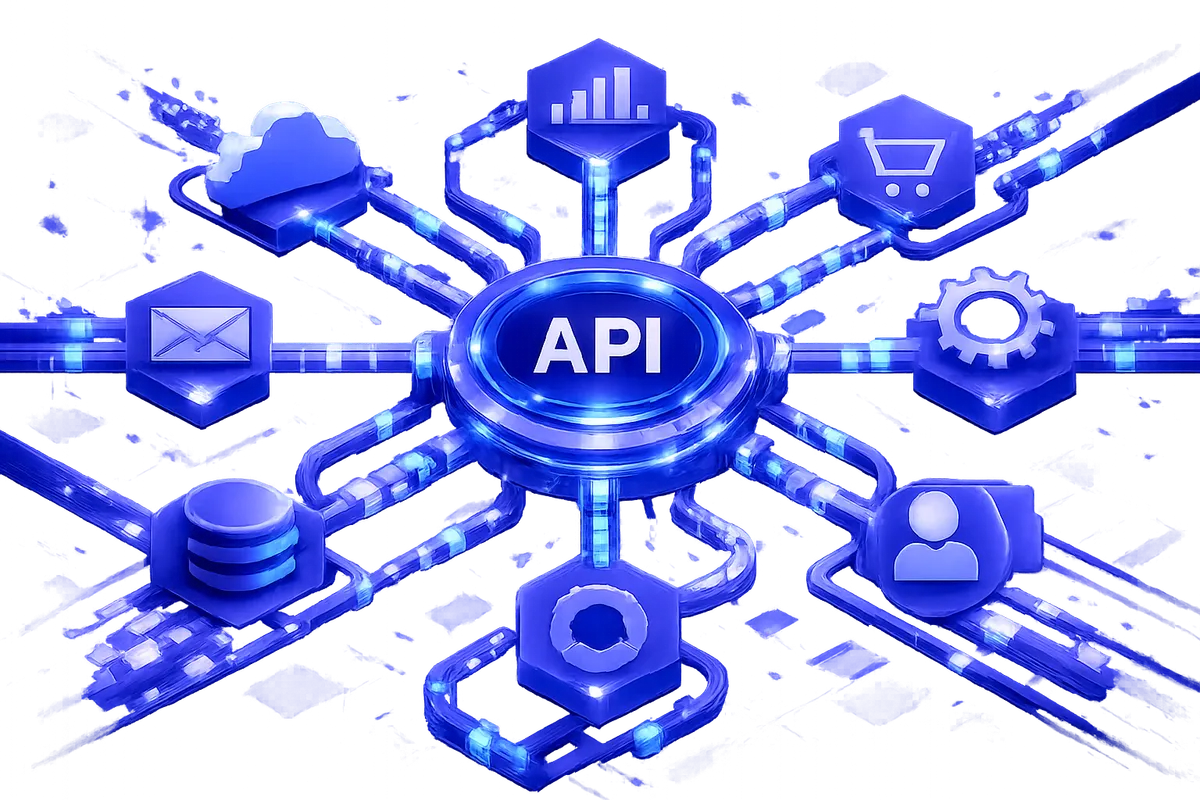
Our API Integration Services in New York
- Integration requirements analysis: mapping your complete technology landscape, documenting data flows that currently exist and those that should exist, and prioritizing integration investments by business impact
- Integration architecture design: selecting appropriate patterns for each integration need, including real-time event-driven architecture, middleware platforms, ETL pipelines, and point-to-point API connectors
- Financial services integrations: Bloomberg, FactSet, Advent, custodian platform APIs, trading system connectivity, compliance data feeds, and regulatory reporting integrations for New York's financial sector
- Healthcare interoperability integrations: HL7 FHIR R4, SMART on FHIR authorization, and custom clinical data flows designed for HIPAA compliance and NYU Langone, Mount Sinai, and NewYork-Presbyterian ecosystem partner requirements
- Media and content platform integrations: content management API connectivity, advertising platform data feeds, subscription system integrations, and multi-platform distribution connectors for New York media companies
- Third-party platform connectors: Salesforce, HubSpot, Workday, NetSuite, Shopify, Stripe, Zendesk, Twilio, and the full range of enterprise and SaaS platforms deployed at New York businesses
- Real estate and proptech integrations: MLS data feeds, property management system connectivity, transaction management integrations, and tenant portal data flows
- Legal technology integrations: matter management system connectivity, document management API integration, client portal data flows, and e-discovery platform connectivity
- Data mapping and transformation: building translation layers between systems with incompatible data models, identifier schemes, and field structures
- Authentication and security implementation: OAuth 2.0, API key management, mutual TLS, and audit logging for regulated industry integrations
- Error handling, retry logic, and dead-letter queue infrastructure ensuring data survives transient system failures
- Real-time event-driven integration architecture for New York's time-sensitive financial and media data flows
- Integration monitoring with health dashboards, failure alerting, and monthly performance reporting
Industries We Serve in New York
Financial Services and Fintech Wall Street's concentration of financial institutions and the fintech companies disrupting them creates New York's most complex and regulated integration market. Common integration needs include trading platform to CRM connectivity for accurate client information, custodian data feeds for portfolio management systems, Bloomberg and FactSet API integrations for market data, compliance platform data aggregation for regulatory reporting, and client reporting data automation. Financial services integrations require security architecture that satisfies NYDFS, SEC, and FINRA requirements, audit trails sufficient for regulatory examination, and performance characteristics that handle financial data volumes reliably. We bring regulatory awareness and financial data expertise to every financial sector engagement.
Media, Publishing, and Entertainment Hudson Yards, Midtown, and Chelsea house media organizations whose operational complexity spans content management, advertising operations, subscription management, and distribution across dozens of platforms simultaneously. Media integration needs include content API connectivity between editorial and distribution systems, advertising platform data aggregation for unified reporting, subscription platform data flows to CRM and analytics systems, and multi-platform distribution APIs that sync content across web, mobile, OTT, and syndication channels. We have built media platform integrations for New York organizations and understand the data volume requirements and editorial workflow constraints of major content operations.
Healthcare Systems and Health Technology NYU Langone, Mount Sinai, NewYork-Presbyterian, and Northwell Health operate at a scale that makes integration complexity unavoidable. The health technology companies building for these systems must meet detailed security review requirements before connecting to their infrastructure. HIPAA compliance is the non-negotiable baseline for every healthcare integration, and New York state regulations add additional requirements on top of the federal framework. We build healthcare integrations with these requirements as design foundations and deliver the security documentation that New York's major health systems require from integration partners during their vendor assessment processes.
Fashion, Retail, and E-Commerce New York's consumer brands, from Garment District fashion labels to Brooklyn DTC companies with national scale, need integration stacks that connect e-commerce platforms to inventory management, order fulfillment, customer service, accounting, and marketing automation. Multi-channel retail creates specific integration complexity: a brand selling through its own website, wholesale accounts, Amazon, and retail stores needs integrations that maintain inventory accuracy and order consistency across all channels simultaneously. We build retail integration stacks for New York brands at every scale and channel configuration.
Real Estate and Proptech New York's real estate market, the most active property market in the world, has generated a generation of proptech companies that need sophisticated integration infrastructure. MLS data feeds, property management system connectivity, transaction platform integrations, and building management system APIs all need to work together in coherent platforms that serve buyers, sellers, tenants, and property managers. We build real estate integration stacks with the data freshness requirements of New York's fast-moving property market built into the architecture.
B2B Technology and Silicon Alley The Flatiron and Chelsea tech corridor produces B2B software companies whose commercial success depends on integration capability. Enterprise procurement processes consistently evaluate whether a software product integrates with the platforms the buying organization already uses. A Silicon Alley SaaS company that integrates cleanly with Salesforce, SAP, and Workday closes enterprise deals that competitors without those integrations cannot win. We build integration capabilities for New York technology companies that expand their addressable market and reduce enterprise sales cycle friction.
What to Expect
Requirements Analysis We map your technology landscape completely: every system, every data ownership boundary, every current manual process that automation should replace, and every regulatory constraint that shapes what the integration architecture can and cannot do. The output is a prioritized integration requirements document that organizes investments by business impact and implementation complexity.
Architecture Design Before writing code, we design the complete integration architecture appropriate to your context, including security architecture for regulated industry clients. For financial services clients, the architecture includes the audit and control framework that compliance teams will review. For healthcare clients, it includes the HIPAA compliance documentation that health systems require from integration partners. You review and approve before implementation begins.
Build and Test We build iteratively with working integrations delivered at each milestone. Testing covers normal operation, error conditions, edge cases, and volume testing for integrations handling significant transaction loads in production.
Monitoring and Support Every integration includes monitoring infrastructure: data flow health tracking, error alerting, and performance monitoring. Ongoing maintenance retainers cover third-party API updates, performance optimization, and incremental additions.