Your Cart (0)

Your cart is empty

New York

Inventory Management in New York

Professional inventory management services for New York businesses. Strategy, execution, and results.

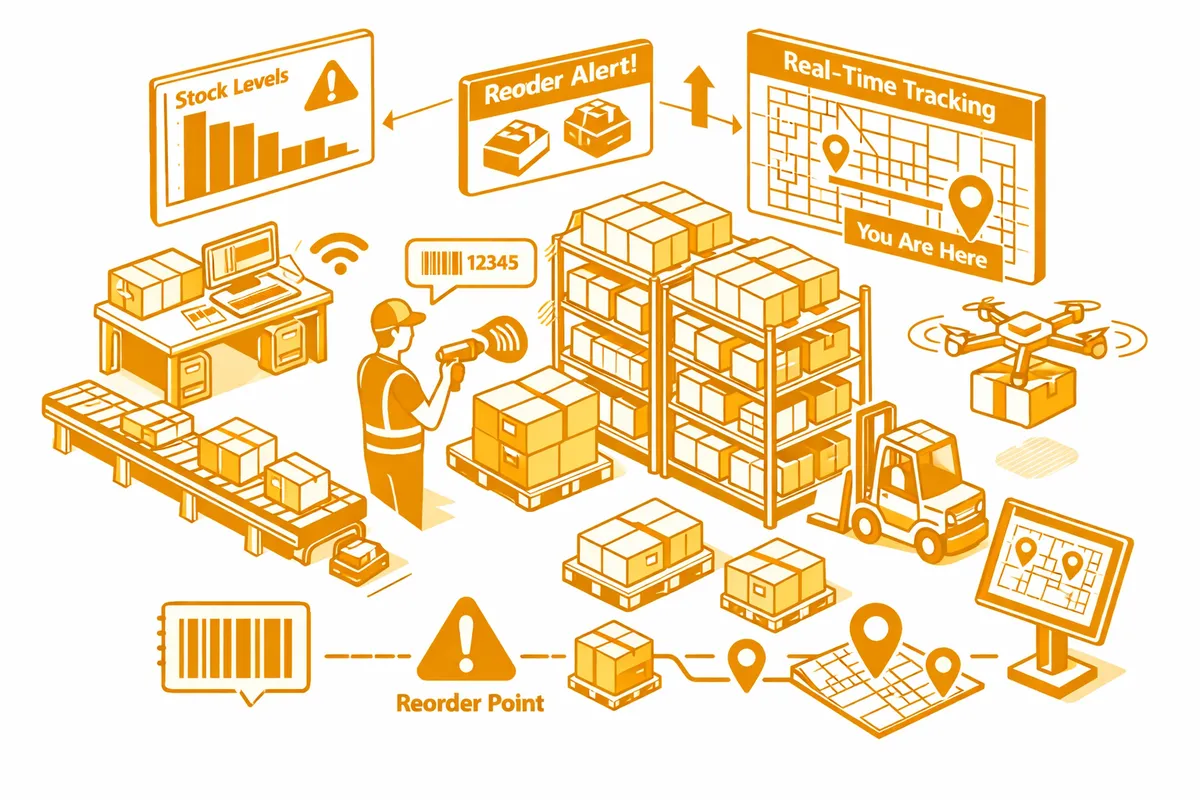
Inventory Management in New York service illustration

Our Inventory Management Systems Services in New York

  • Inventory process audit and operational requirements assessment
  • Custom inventory management platform design and development
  • Real-time stock tracking across locations, warehouses, and sales channels
  • Fashion and seasonal inventory management with wholesale allocation and end-of-season workflows
  • Multi-location restaurant and food service inventory with FIFO enforcement
  • Omnichannel inventory sync: Shopify, Amazon, NuOrder, Joor, wholesale portals, POS
  • Lot tracking, serial number tracking, and expiration date management
  • Demand forecasting based on historical sales patterns and seasonality
  • Automated reorder management with supplier lead time modeling
  • Supplier management and purchase order automation
  • ERP integration for distributors, multi-entity organizations, and manufacturers
  • Mobile inventory management for warehouse and receiving teams
  • Inventory reporting: turnover, carrying costs, space utilization, stockout analysis, waste tracking

Industries We Serve in New York

Fashion, Apparel, and Luxury: New York is the center of the American fashion industry. The Garment District, SoHo, and Midtown showrooms represent the selling front for brands managing complex wholesale, direct-to-consumer, and retail inventory simultaneously. Style-color-size matrix tracking, wholesale allocation management, and end-of-season clearance workflows are standard requirements for fashion brands we serve.

Restaurant Groups and Food Service: New York's restaurant industry is among the most competitive in the world. Multi-location restaurant groups operating in Manhattan, Brooklyn, and beyond manage perishable inventory with specific FIFO, expiration date, and waste tracking requirements. We have built perishable inventory systems for restaurant groups that measurably reduce food waste and improve food cost percentages.

Wholesale Distributors: Brooklyn's Industry City, the Bronx's wholesale corridors, and Queens' commercial districts host large-scale wholesale distributors across food, medical supply, beauty, electronics, and consumer goods. Multi-warehouse, high-SKU inventory management with customer fill rate tracking and demand forecasting is the operational foundation these businesses need to compete.

E-Commerce Brands: New York-headquartered e-commerce brands fulfilling from third-party logistics facilities in New Jersey or the Bronx need real-time inventory visibility that prevents overselling and enables accurate available-to-promise commitments. We integrate with major 3PL inventory systems and e-commerce platforms.

Medical Supply and Pharmaceutical: The healthcare systems anchored across New York's five boroughs require a large medical supply ecosystem with regulatory-grade traceability. Medical device distributors and pharmaceutical companies operating in New York need lot tracking, serialization, DEA compliance, and expiration date management built to FDA standards.

Beauty and Personal Care: New York's beauty industry, from global brands headquartered in Midtown to the emerging independent brands in Brooklyn and Long Island City, manages inventory across retail, wholesale, and DTC channels with fast-moving SKUs and significant seasonal variation. We build inventory systems that keep pace with this category's speed.

What to Expect

Step 1: Inventory Process Audit. We start by documenting your current inventory management state: what you track, where tracking breaks down, what decisions are made without adequate information, and what recurring operational problems tie back to inventory gaps. For New York businesses, we also assess how storage cost per square foot is factored into current inventory decisions.

Step 2: System Design and Scoping. Based on the audit, we design system architecture that reflects New York's specific inventory economics, define integrations with your existing platforms, and establish a phased delivery roadmap with clear milestones.

Step 3: Build and Integration. We build the inventory system and integrate it with your existing ERP, wholesale platforms, e-commerce channels, accounting software, and warehouse management tools. Testing uses your actual product catalog and operational scenarios before live data is migrated.

Step 4: Launch and Continuous Improvement. We launch with your team on a working system, provide training, and monitor early cycles for performance. Post-launch, we support ongoing optimization as your business evolves.

Frequently Asked Questions

Fashion inventory management in New York requires specific capabilities: wholesale pre-season allocation logic that reserves inventory for wholesale commitments while leaving availability for direct-to-consumer sales, at-once inventory management for in-season orders, end-of-season markdown and clearance workflows, and style-color-size matrix tracking across all channels simultaneously. The system prevents a wholesale commitment from overselling against inventory also available in retail channels, and it gives buyers and merchandisers visibility into sell-through rates by style, color, and size to inform reorder and markdown decisions. We design fashion inventory systems for New York brands with these requirements built in from the start, not bolted on as afterthoughts.

Multi-location restaurant inventory management in Manhattan requires FIFO enforcement across all locations, expiration date tracking with advance alerts, waste logging and root cause analysis by category and location, and the ability to transfer inventory between locations when one has excess and another is running low. The system accounts for each location's storage constraints, which in Manhattan can be quite tight, and optimizes ordering quantities to minimize on-hand inventory while avoiding stockouts. We have built perishable inventory systems for New York restaurant groups that reduce food waste and improve food cost margins without sacrificing availability.

Optimizing for storage cost is a specific design objective we build into New York inventory systems. Target days-on-hand calculations are calibrated against your actual storage cost per SKU: slow-moving inventory in expensive New York storage carries a heavier economic penalty than the same situation in a lower-cost market. Carrying cost visibility in reporting makes the real cost of excess inventory visible in financial terms that resonate with ownership and finance teams. Reorder logic is designed to minimize average on-hand inventory within the service level constraints your customers require. The goal is the minimum inventory that maintains service levels, which is a different design objective than simply preventing stockouts.

A focused implementation for a single-location New York retailer or wholesaler with straightforward product types takes 6 to 10 weeks. Multi-location systems, fashion matrix inventory, perishable goods tracking, or complex omnichannel integrations with multiple channel platforms take 12 to 20 weeks. We phase delivery to provide core inventory visibility and the most critical operational capabilities before all features are complete, so your team is working with better data earlier in the process.

Yes. Integration with wholesale platforms like NuOrder, Joor, and Faire is a common requirement for New York fashion and consumer goods companies. Showroom management system integration ensures inventory commitments made in showrooms are reflected in the central inventory pool in real time, preventing double-selling. We also integrate with major e-commerce platforms including Shopify and WooCommerce, ERP systems including NetSuite and QuickBooks, and accounting software to ensure inventory transactions flow through your full technology stack without manual reconciliation.

We design reporting based on the decisions your team needs to make. Fashion brands need sell-through by style-color-size, days of supply versus target, markdown timing analysis, and wholesale commitment tracking. Restaurant groups need waste by category and location, food cost percentage trends, and transfer frequency between locations. Wholesale distributors need turnover by SKU, fill rate by customer, and stockout root cause analysis. We build reporting dashboards that give your team the visibility they need in the format that supports their decision-making process, not generic analytics that require manual extraction and reformatting before they are useful. New York businesses ready to optimize their inventory investment and eliminate the cost of imprecision should contact Running Start Digital. We will start with an inventory process audit to understand your current state and design the system that fits your operation.

Ready to get started?

Let's talk about inventory management for your New York business.