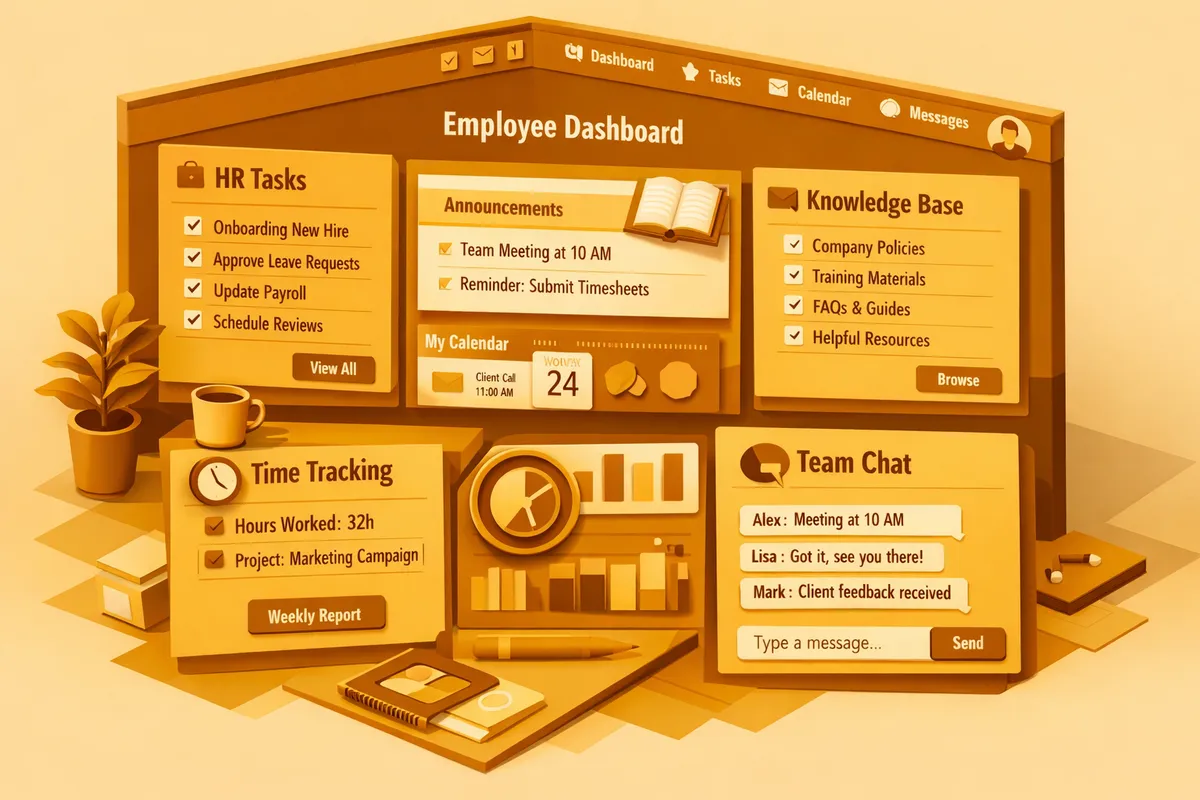
Our Employee Portal Work in New York
- Custom portal architecture and user experience design for complex multi-entity and multi-location organizational structures
- HR self-service: PTO, benefits, pay access, life event changes, and FMLA and NYPFL management
- Freelancer and contractor onboarding portals with Freelance Isn't Free Act compliance workflow support
- Compliance and license tracking for financial services and healthcare employees with expiration alerts
- Pre-boarding and onboarding workflows with digital document signing, I-9 remote verification, and policy acknowledgment
- Internal communications, announcement systems, and organization-wide and department-level messaging
- Performance management, review cycle automation, and goal tracking
- Role-based access control for organizations with multiple business units, regulatory environments, and workforce types
- SSO integration with Active Directory, Google Workspace, Okta, and Ping Identity
- Integration with Workday, ADP, Ceridian, UKG, and financial services and healthcare HRIS platforms
- NYC-specific compliance workflow automation: paid sick leave, NYPFL, salary transparency, and predictive scheduling
- Mobile-first design for field, clinical, retail, and hybrid workforces
Industries We Serve in New York
Financial Services, Banking, and Fintech: Financial District and Midtown financial firms manage employees under FINRA licensing requirements, Series exam renewal tracking, mandatory compliance training documentation, and communication archiving obligations. We build portals that integrate these regulatory requirements directly into HR workflows rather than managing them through separate systems.
Healthcare and Hospital Systems: Northwell Health, Mount Sinai, and NYC Health and Hospitals manage clinical staff across dozens of facilities with credential expiration tracking, continuing education requirements, and shift scheduling that requires administrative and clinical data to work together. We design portals that serve both clinical and administrative workforces with role-appropriate interfaces and workflows.
Media, Publishing, and Entertainment: Midtown and Flatiron media companies manage full-time staff, project-based employees, and extensive freelancer networks simultaneously. Standard HR software handles only full-time employees well. We build portals that accommodate all workforce types with compliant onboarding workflows, project assignment tools, and Freelance Isn't Free Act compliance documentation.
Fashion and Retail: Fifth Avenue and SoHo brands manage store employees, corporate office staff, and seasonal workforces with different scheduling needs, compliance requirements, and communication channels. We build portals that serve all three simultaneously with role-appropriate interfaces.
Technology and SaaS: Silicon Alley and Brooklyn Tech Triangle companies hiring aggressively need onboarding automation that scales and creates excellent first impressions without requiring proportional HR team growth.
Legal and Professional Services: Large Manhattan law firms and professional services organizations use portals to manage attorney licensing tracking, mandatory CLE documentation, performance reviews, and HR self-service across large professional workforces.
What to Expect
Discovery and Workflow Mapping: We interview HR leadership, compliance officers, IT management, and a cross-section of employees across role types, employment categories, and locations. For regulated industries, we review relevant compliance requirements before any design decisions are made. We map every HR workflow currently executed manually and identify which benefit most from automation and custom logic.
Design and Architecture: We produce wireframes and workflow diagrams reviewed and approved by HR, legal or compliance, and IT teams before development begins. NYC-specific compliance workflows, financial services regulatory documentation requirements, and freelancer management logic receive dedicated design attention.
Phased Build and Testing: Core HR self-service and onboarding functionality is delivered first. Compliance modules and advanced workflow features follow in subsequent phases. User acceptance testing involves employees from each distinct role type and employment category. Feedback is incorporated before each phase launches.
Launch, Training, and Support: We train HR teams, compliance administrators, and IT managers on their respective portal management functions. Post-launch monitoring runs for 60 days. Ongoing development is available through retainer or project-based arrangements.