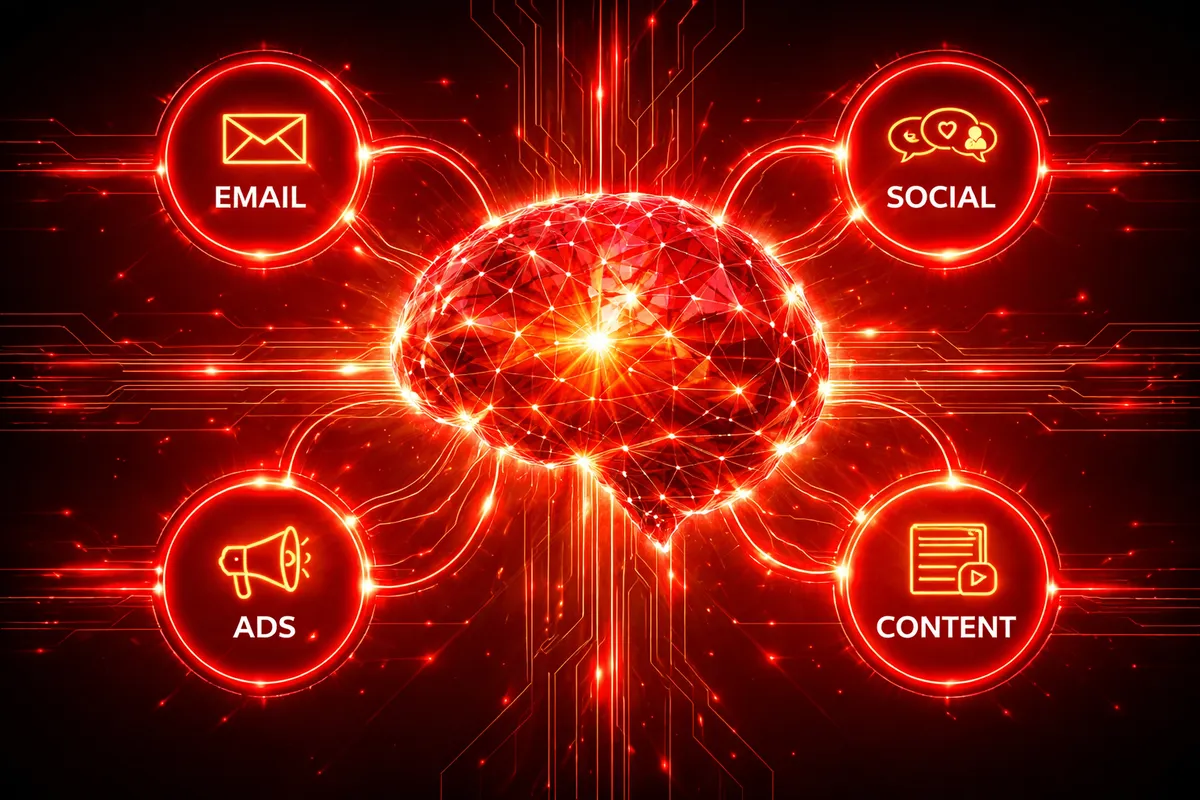
Our AI Marketing Automation Work in New York
- HubSpot, Marketo, Pardot, and Klaviyo implementation for New York companies from Silicon Alley startups to Midtown enterprises and Wall Street financial firms
- AI lead scoring for New York B2B companies, building predictive models trained on historical conversion data to rank prospects by purchase probability with accuracy that exceeds rule-based scoring
- Multi-channel nurture automation managing prospects across email, LinkedIn advertising, paid retargeting, and content syndication channels that New York buyers engage with
- Account-based marketing automation for New York enterprise technology and professional services companies targeting specific named accounts across financial services, media, and enterprise technology
- E-commerce and DTC marketing automation for New York brands using Klaviyo for email, SMS, and behavioral trigger campaigns across the customer lifecycle
- Financial services marketing automation compliance for Wall Street firms requiring FINRA and SEC-compliant marketing communications workflows with compliance review built into sending
- CRM integration connecting marketing automation to Salesforce, HubSpot CRM, and other New York company CRMs, with bidirectional data sync that keeps sales and marketing aligned
- Marketing attribution modeling for New York companies with complex multi-touch buyer journeys and significant marketing spend across paid, organic, and referral channels
Industries We Serve in New York
Financial Services. Wall Street firms, registered investment advisers, and fintech companies in FiDi and Midtown use marketing automation to nurture institutional investor relationships, distribute compliance-approved content, and identify high-value prospects with predictive scoring. FINRA-compliant workflows that route content through approval before sending are a standard requirement we build into every financial services implementation.
Media and Publishing. New York media companies use automation for subscriber acquisition campaigns, subscriber retention and win-back sequences, newsletter personalization, and event marketing around major editorial events. For publishers competing for audience attention in New York, personalization that serves content based on reader behavior is a retention differentiator.
Retail and Fashion. New York's fashion and retail brands use AI-powered automation for customer lifecycle marketing: welcome series, abandoned cart recovery, post-purchase follow-up, VIP customer identification, and win-back campaigns for lapsed buyers. For brands operating stores in SoHo or Midtown alongside e-commerce, cross-channel automation that connects in-store behavior to digital follow-up creates a consistent customer experience.
Technology. Silicon Alley startups and Brooklyn tech companies use marketing automation to scale their go-to-market motion without scaling marketing headcount proportionally. For venture-backed companies under revenue pressure, automation that improves lead quality and shortens sales cycles directly extends runway by reducing the cost per acquired customer.
Healthcare. New York's health systems and health technology companies use automation for patient engagement, provider outreach to the city's thousands of private practice physicians, and the multi-audience marketing complexity of healthcare. NYC Health + Hospitals, NYU Langone, and NewYork-Presbyterian all attract vendors and technology companies that need automation to manage their sales and relationship-building activity.
Professional Services. New York law firms, consulting companies, and accounting practices use automation to stay relevant to clients and prospects with valuable, targeted content between active engagement opportunities. For professional services firms where client relationships generate multi-year revenue, retention-focused automation that surfaces expansion signals is particularly valuable.
What to Expect
Discovery. We audit your existing marketing stack, CRM data quality, lead volume and conversion rates, and current automation if any. We interview sales and marketing leadership to understand your buyer journey and the specific friction points in your current process.
Strategy. We design your automation architecture: platform selection, workflow map, scoring model specifications, content requirements, and integration plan. We present a phased delivery plan with projected performance improvements at each phase.
Implementation. We build platform configuration, develop scoring models, build workflow sequences and triggers, integrate with your CRM, and launch initial automation. Typically six to twelve weeks depending on complexity.
Results. We establish performance baselines at launch and report monthly on lead scoring accuracy, email engagement, qualified opportunity volume, and attribution data. We optimize based on actual performance in the first 90 days.
New York's Competitive Market Rewards Smarter Marketing.
Running Start Digital builds AI marketing automation that gives your New York team the leverage to compete and win in one of the world's most demanding business environments. We work with companies across FiDi, Midtown, Silicon Alley, Hudson Yards, Brooklyn, and throughout the metro area. Contact us to discuss your automation strategy and find out what the right system can deliver for your business.