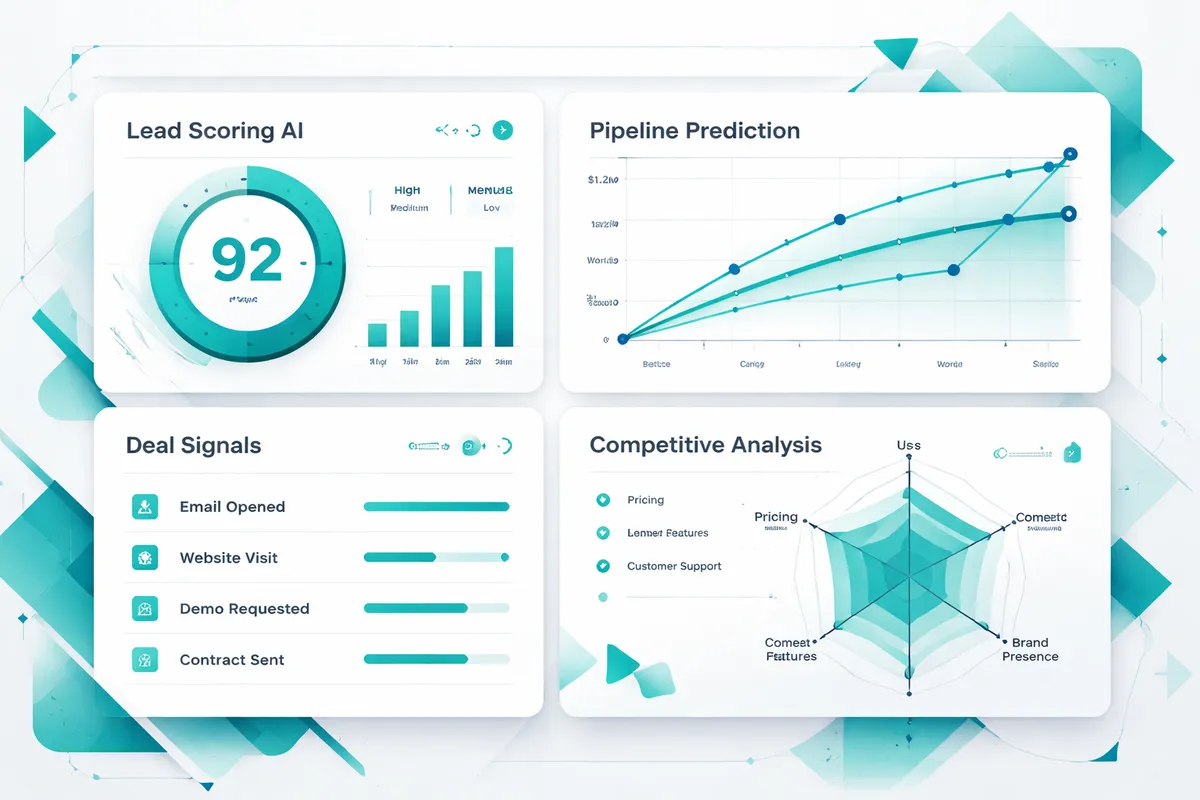
Our AI Sales Intelligence Work in Detroit
- Predictive lead scoring for Metro Detroit manufacturing and automotive B2B companies, training models on their specific customer profiles and historical win patterns from their CRM data
- OEM account intelligence for automotive suppliers, tracking engagement across multiple stakeholders within large automotive buying organizations at Ford, GM, and Stellantis
- Deal health monitoring for Detroit technology and professional services companies managing complex enterprise sales with multiple decision makers and extended evaluation timelines
- Sales forecasting dashboards for Detroit sales leadership, converting rep-estimated pipeline into data-based probability-weighted projections that boards and investors can hold to
- Account health and expansion scoring for Detroit SaaS and service companies managing existing customer portfolios for churn risk and expansion opportunity signals
- Buyer intent monitoring for Detroit companies tracking when ICP target accounts show increased research activity in their product category
- CRM enrichment automation for Detroit B2B teams keeping Salesforce or HubSpot account data current on automotive, manufacturing, and healthcare target accounts
- Sales activity analytics for Detroit sales leaders, identifying which rep behaviors, outreach patterns, and contact strategies correlate with closed deals in Detroit's specific markets
Industries We Serve in Detroit
Automotive. Tier 1 and Tier 2 automotive suppliers selling to OEMs, and technology companies selling into the automotive supply chain from Auburn Hills to Windsor, need AI that handles the complexity of automotive buying processes with their multi-year qualification timelines and multi-stakeholder buying committees. OEM account intelligence that tracks procurement, engineering, and quality stakeholder engagement simultaneously transforms how supplier teams manage these high-stakes relationships.
Manufacturing. Detroit manufacturing technology and services companies selling to production and operations leaders need pipeline analytics calibrated to the long, relationship-based selling cycles these buyers run. A company selling industrial automation or precision tooling cannot rely on standard B2B sales intelligence defaults. The signals that predict close in automotive manufacturing differ from SaaS sales, and models trained on your specific history reflect those differences.
Healthcare. Companies selling into Henry Ford Health, Detroit Medical Center, Beaumont Health, Corewell Health, and the broader Metro Detroit health system network need intelligence on complex buying committees that span clinical, IT, and administrative decision makers who engage at different stages of evaluation and respond to different types of content.
Technology. TechTown and Michigan Central campus companies need AI lead scoring to allocate limited sales resources toward the most promising enterprise opportunities in Detroit's growing but still developing technology buyer market.
Professional Services. Detroit law firms, consulting companies, and accounting practices in the New Center, Downtown, and Southfield use sales intelligence to identify which relationships are approaching expansion inflection points and to time prospecting outreach when target organizations are most likely to engage new advisors.
What to Expect
Discovery. We audit your CRM data quality, historical opportunity volume and conversion rates, current forecasting process, and the specific sales motions your team runs in Detroit's market. We assess the data available to train reliable scoring models specific to your buying patterns.
Strategy. We design the scoring model architecture, deal analytics framework, intent monitoring approach, and CRM integration. We identify the signals most predictive of conversion in your historical data and design a phased delivery plan.
Implementation. We build and validate scoring models, configure intent monitoring, build forecasting dashboards, and integrate with your CRM. Typically eight to twelve weeks from kickoff to production deployment.
Results. Production dashboards showing model accuracy, deal health distribution, and forecast accuracy versus actual. Performance review at 30 and 90 days with ongoing model optimization.
Detroit's Long Sales Cycles Reward Information Advantages.
Running Start Digital builds AI sales intelligence that helps Detroit teams know where to focus, when to engage, and what deals need attention before they slip. We work with automotive suppliers in Dearborn and Auburn Hills, manufacturing technology companies across the metro area, healthcare technology firms selling into Metro Detroit health systems, and technology companies at TechTown and Michigan Central. Contact us to discuss your sales intelligence needs and find out what your pipeline data is already telling you.