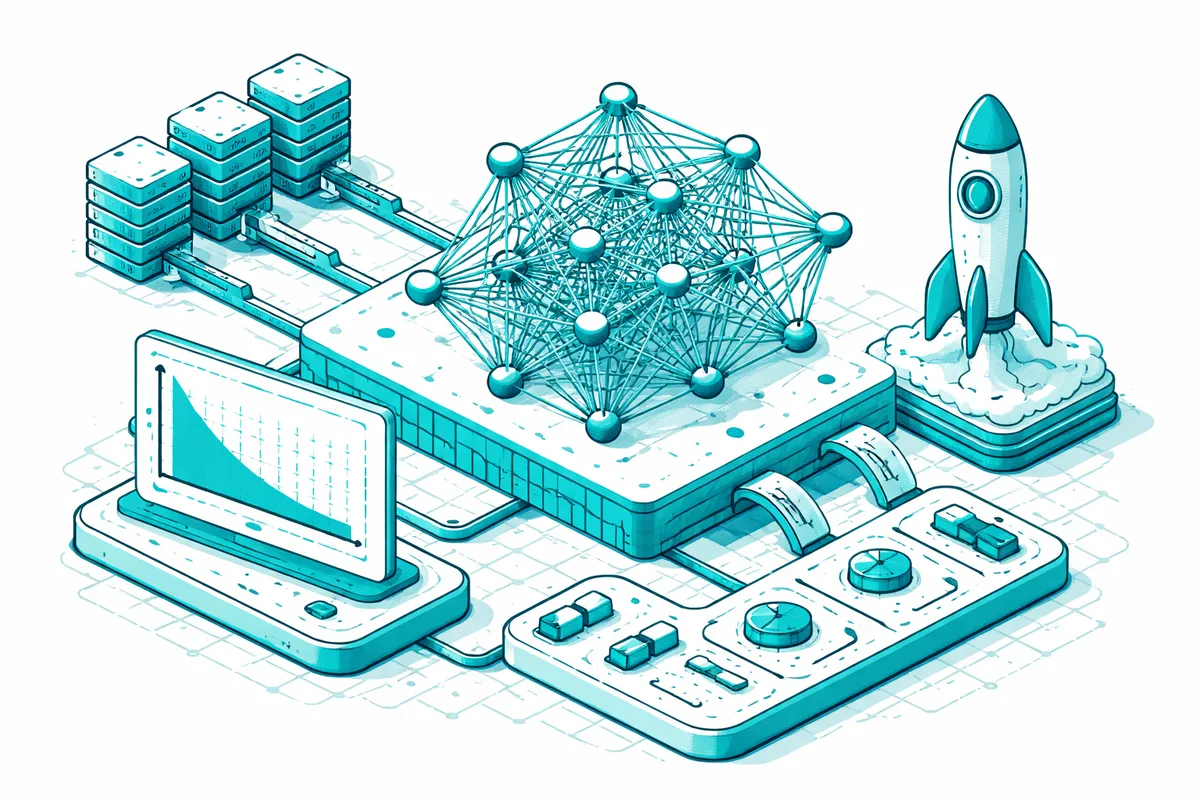
Our AI Model Training Work in Detroit
- Computer vision model training for Metro Detroit automotive suppliers and manufacturers, building quality inspection and defect detection systems trained on production environment images of your specific components
- Predictive maintenance model training for Detroit manufacturers, building equipment-specific failure prediction models on historical sensor data from your actual production equipment under your operating conditions
- Automotive document model training, fine-tuning language models on PPAP, ECN, FMEA, control plan, and other automotive-specific document types for extraction and classification tasks in document automation workflows
- Clinical NLP model training for Detroit health systems at Henry Ford Health, Detroit Medical Center, and Beaumont, adapted to institution-specific clinical terminology and documentation patterns of their specific patient populations
- Demand forecasting model training for Detroit automotive suppliers, building inventory and production planning models on historical demand patterns from OEM customers with the specific characteristics of automotive release schedules
- Anomaly detection model training for Detroit manufacturers, identifying unusual production patterns and quality excursions in real-time sensor streams specific to your production processes
- Foundation model fine-tuning for TechTown and Michigan Central campus technology companies building AI-native products on proprietary domain data
- Model monitoring and retraining pipeline design for Detroit enterprises maintaining model performance over time as production conditions and product mixes evolve
Industries We Serve in Detroit
Automotive. Ford, GM, Stellantis, and their supply network in Dearborn, Warren, Auburn Hills, and Sterling Heights generate inspection data, sensor telemetry, warranty records, and engineering documents that custom models trained on these specific data types leverage far more accurately than generic AI. A Tier 1 supplier that trains a defect detection model on their specific component family and production environment, rather than deploying a generic vision model, achieves the accuracy levels that IATF quality systems require.
Manufacturing. Detroit's precision manufacturing operations in the Downriver corridor and across Macomb County have quality measurement data, equipment sensor histories, and process records spanning decades that custom predictive and classification models can convert into operational AI. A metalforming company with 20 years of press sensor data has the raw material for a tooling wear prediction model that a generic maintenance platform cannot build from scratch.
Healthcare. Henry Ford Health, Detroit Medical Center, Beaumont Health, and Metro Detroit's community health centers have clinical data assets that custom NLP and predictive models can convert into clinical support tools. Models trained on Detroit's specific patient populations reflect the demographic characteristics, disease prevalence patterns, and social determinants that make Detroit's health challenges distinct from national averages.
Technology. TechTown and Michigan Central campus companies building AI products need custom models as their differentiating intellectual property. An industrial IoT startup building predictive maintenance tools for the automotive supply chain needs models trained on automotive equipment data to be credible with Tier 1 buyers.
Automotive Technology. Companies building connected vehicle, ADAS, and autonomous system software need models trained on the specific sensor data and scenario distributions from their vehicle programs, which differ meaningfully across OEMs and vehicle segments.
What to Expect
Discovery. We assess your data assets: what sensor data, image data, documents, or records you have, in what volume, and how well they represent the conditions your production model needs to handle. We define success criteria with your engineering and operations teams.
Strategy. We design the data collection or preparation approach, model architecture selection, training methodology, and evaluation framework aligned with your IATF or business quality requirements.
Implementation. We build the data pipeline, run training iterations, evaluate against held-out test sets representing production variability, iterate to accuracy targets, and deploy to your inspection or production system.
Results. Production deployment with monitoring dashboards showing model accuracy and confidence distributions over time. Performance review at 30 and 90 days. Retraining pipeline documentation so the model improves continuously with new production data.
Detroit's Manufacturing Precision. Applied to AI.
Running Start Digital builds custom AI models with the same discipline Detroit's industries apply to physical engineering systems. We work with automotive suppliers in Dearborn and Warren, manufacturers across the Downriver and Macomb County corridors, health systems serving Metro Detroit, and technology companies at TechTown and Michigan Central. Contact us to discuss your model training needs and get an honest assessment of what custom training can deliver for your operation.