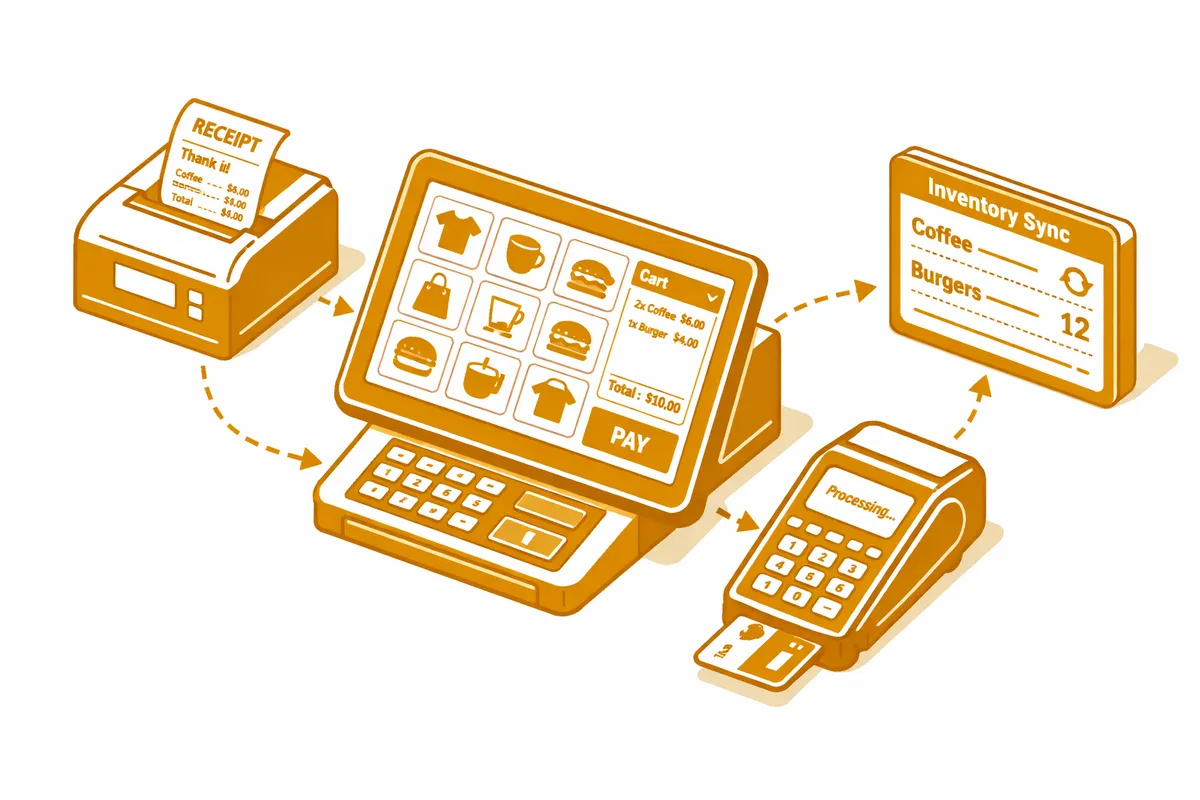
Our POS Systems Services in Atlanta
- Custom POS interface development designed around your specific Atlanta restaurant, retail, or service operation
- Payment processing integration with multiple processor options, optimizing rates for your transaction volume
- Real-time inventory management with low-stock alerts, waste tracking, and purchase order generation
- Customer loyalty program development with points, rewards, and personalized promotion capabilities
- Employee scheduling, role-based permissions, tip management, and time tracking
- Multi-location centralized management with location-level reporting and cross-location analytics
- Mobile POS for food truck operations, pop-up markets, catering events, and outdoor venues
- Kitchen display system integration routing orders from all channels to the right preparation stations
- Third-party delivery platform integration with DoorDash, Grubhub, and Uber Eats
- Event-mode transaction processing configuration for high-volume periods near State Farm Arena and Mercedes-Benz Stadium
- Consignment tracking and settlement reporting for retail boutiques and food hall vendors
Industries We Serve in Atlanta
Restaurants and Bars: Full-service and fast-casual restaurants across Ponce City Market, Krog Street Market, West Midtown, Virginia-Highland, and Buckhead face the full range of POS requirements from table service complexity to bar speed. We build interfaces optimized for the pace your operation requires, with modifier logic, course pacing, and table management appropriate to your service format.
Food Halls and Multi-Vendor Markets: Krog Street Market, Ponce City Market, and the growing number of food hall concepts across Atlanta require POS architecture where individual vendors have their own catalog and reporting while operators have consolidated oversight. We build these systems as a coherent architecture rather than a collection of disconnected tools.
Retail Boutiques: Independent retailers in Virginia-Highland, Little Five Points, Buckhead, and Westside neighborhoods manage inventory and customer relationships that generic retail POS handles inconsistently. Consignment pricing, seasonal inventory management, and loyalty programs require interfaces built for the specific retail format.
Specialty Food and Beverage: Breweries and taprooms in Atlanta's growing craft beverage scene, wine shops, and specialty food producers with retail and wholesale channels need POS that handles both consumer-facing transactions and wholesale order management within a single system.
Service Businesses: Atlanta salons, spas, fitness studios, and personal service businesses use POS integrated with appointment scheduling, service upsells, package management, and client relationship tracking. These operations need more than a payment terminal.
Catering and Events: Catering companies serving Atlanta's corporate and social event market need mobile POS that works at venues across the metro, from Buckhead event spaces to locations near the Mercedes-Benz Stadium complex, with event-specific pricing and package management.
What to Expect
Discovery and Requirements Mapping: We begin by understanding your operation in detail, walking through your workflows, identifying the specific gaps in current POS solutions, and mapping the integrations your system needs. This conversation produces a requirements document that becomes the basis for development.
System Design and Hardware Specification: We design the POS architecture including screen layouts, modifier flows, reporting structures, and integration points. We also specify appropriate hardware for your environment, whether tablet-based, dedicated terminals, or mobile devices for outdoor and event use.
Build, Configure, and Test: We build and configure the system in a test environment, populating it with your actual menu items, modifiers, and inventory. We conduct thorough testing including simulated peak load scenarios for Atlanta venues near major event facilities.
Training, Soft Launch, and Go-Live: We train your staff on the system, run a soft launch period during lower-traffic service to identify any operational adjustments needed, then execute go-live with on-site support available for the initial high-traffic shifts.