Our Inventory Management Services in Atlanta
- Inventory process audit and operational gap assessment
- Custom inventory management platform design and development
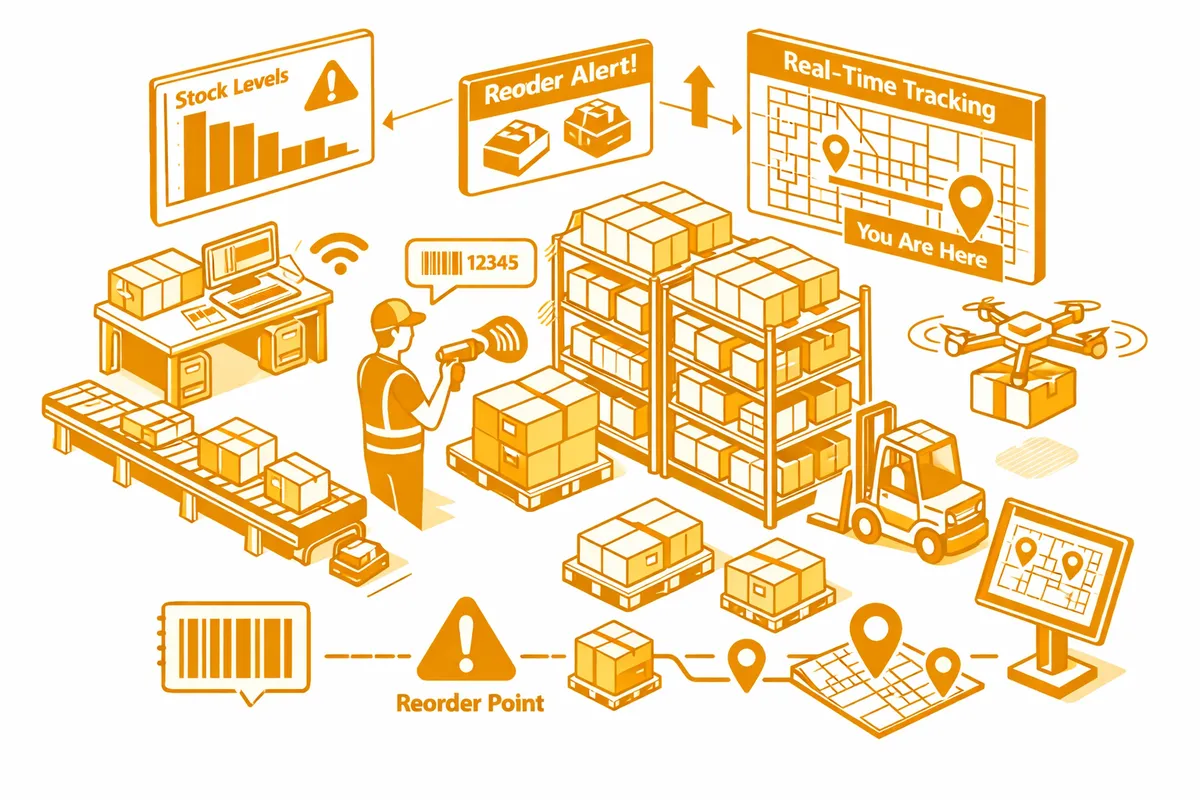
- Real-time stock level tracking across locations, warehouses, and sales channels
- Automated reorder point management calibrated to actual demand patterns
- Multi-location and multi-warehouse inventory synchronization
- Barcode, QR code, and RFID scanning integration for warehouse and receiving operations
- Lot tracking, serial number tracking, and expiration date management
- Demand forecasting using historical sales data, seasonality patterns, and promotional calendars
- Perishable goods management with FIFO enforcement and waste reduction workflows
- Supplier management and automated purchase order generation
- Omnichannel inventory sync: Shopify, Amazon, wholesale portals, POS systems
- ERP integration for manufacturers, distributors, and multi-entity organizations
- Mobile inventory management for warehouse and receiving teams
- Inventory reporting dashboards: turnover, carrying costs, days on hand, stockout analysis
- Lot traceability and recall response workflows for regulated industries
Industries We Serve in Atlanta
Logistics and Distribution: Atlanta's position at the intersection of major interstate corridors and Hartsfield-Jackson makes it a natural distribution hub for Southeast operations. Distributors operating out of College Park, Forest Park, and the I-85 corridor manage high-volume, fast-moving inventory that requires real-time visibility and automated replenishment. We build systems that match the pace of Atlanta's logistics economy.
Food Manufacturing and Distribution: Atlanta's food industry, from the major food distributors serving the Southeast to the restaurant groups operating across the metro area, manages perishable inventory with specific FIFO, expiration date, and lot tracking requirements. Eastern Food Market, the Buford Highway restaurant corridor, and the Atlanta Food Bank supply chain all present specific inventory management challenges we have addressed.
E-Commerce and Retail: E-commerce brands fulfilling from Atlanta-area warehouses need real-time omnichannel inventory visibility that prevents overselling and enables intelligent fulfillment routing. Multi-location retailers from Buckhead to Alpharetta need synchronized inventory that reflects in-store sales and online orders against a single shared pool.
Manufacturing and Industrial: Manufacturers in Smyrna, Norcross, and the industrial parks surrounding the metro manage raw materials, work-in-progress, and finished goods through multi-stage production processes. We build manufacturing inventory systems with stage-level visibility that production teams and financial controllers can both rely on.
Healthcare and Life Sciences: The medical supply and pharmaceutical distribution companies serving Emory, Piedmont, Northside, and Wellstar need lot tracking, expiration date management, and regulatory documentation capabilities that standard inventory software does not provide. We build compliant systems for this sector.
Consumer Packaged Goods: CPG brands headquartered in or distributing through Atlanta manage inventory across retail, wholesale, and e-commerce channels simultaneously. Coca-Cola's supplier ecosystem and the independent CPG brands growing in Atlanta's Midtown and Old Fourth Ward areas both represent clients we serve in this category.
What to Expect
Step 1: Inventory Process Audit. We start by understanding your current inventory management state: what you track, where tracking breaks down, what decisions you cannot make because you lack visibility, and what operational problems recur because of inventory gaps. This audit produces a clear picture of requirements before any design work begins.
Step 2: System Design and Scoping. Based on the audit, we design the system architecture, define integrations with your existing platforms, and establish a phased delivery roadmap that prioritizes the capabilities delivering the most immediate operational value. We scope the project with a fixed timeline and clear deliverables.
Step 3: Build and Integration. Our team builds the inventory system and integrates it with your existing ERP, e-commerce platforms, accounting software, and warehouse management tools. We test against your actual product catalog, supplier relationships, and operational workflows before launch.
Step 4: Launch and Continuous Improvement. We launch with your team on a working system, provide training, and monitor the first operational cycles to ensure everything performs as designed. Post-launch, we support ongoing optimization as your business evolves, adding capabilities, adjusting forecasting parameters, and expanding integrations as your operation grows.