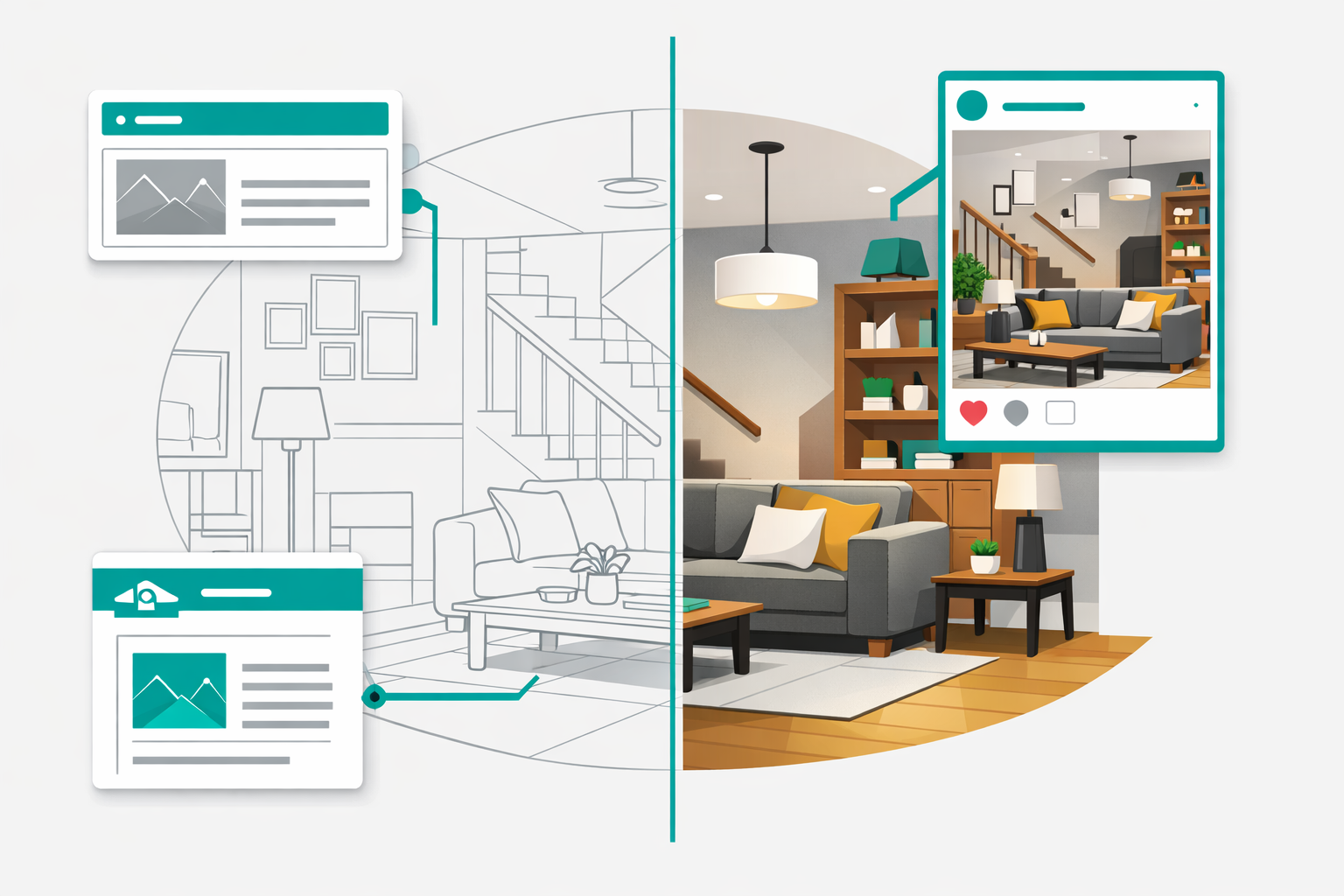
Marketing Channels That Work for Remodeling Companies
Local SEO: Own the Search Results for Your Market
Local SEO is the single highest-ROI marketing channel for remodeling companies. When a homeowner searches "kitchen remodeler in [city]" or "bathroom renovation near me," the companies that appear in the Google Map Pack and top organic results capture the majority of clicks and calls.
Remodeling SEO requires a specific approach. Your Google Business Profile needs to be fully optimized with accurate service categories, service area definitions, project photos, and consistent NAP (name, address, phone) information. You need location-specific landing pages for every city and neighborhood you serve. "Kitchen Remodeling in [City]" pages with unique content, not duplicated templates with the city name swapped in.
Review volume and quality directly impact your local search rankings. Remodeling companies with 50 or more Google reviews and a 4.5-plus rating consistently outrank competitors with fewer reviews. Building a systematic review generation process is not optional. It is a core part of your SEO strategy.
Content also drives organic visibility. Blog posts about remodeling timelines, material comparisons, permit requirements, cost guides, and design trends build topical authority. When Google sees your site consistently publishing helpful remodeling content, it rewards you with higher rankings for commercial search terms. Learn more about how local SEO works for home service businesses.
PPC Advertising: Capture High-Intent Homeowners Immediately
Pay-per-click advertising on Google puts your remodeling company in front of homeowners at the exact moment they are searching for your services. Unlike SEO, which takes months to build momentum, PPC delivers leads from day one.
The key to profitable remodeling PPC is targeting high-intent keywords. "Kitchen remodeler near me," "bathroom renovation contractor [city]," and "whole home remodel estimate" indicate someone ready to hire. Broad terms like "kitchen remodel ideas" attract researchers who may be months away from hiring. Your budget should prioritize the high-intent terms that drive consultations.
Remodeling PPC campaigns need strong landing pages. Not your homepage. Dedicated pages for each service type (kitchen, bathroom, addition, whole-home) with project galleries, pricing context, trust signals, and a clear call-to-action. A homeowner clicking a "kitchen remodel" ad should land on a page that shows them completed kitchens, explains your process, and makes it simple to request an estimate.
Google Local Service Ads (LSAs) are particularly effective for remodelers. These ads appear at the very top of search results with your Google review rating prominently displayed. You pay per lead, not per click, which reduces wasted spend. The Google Guaranteed badge adds instant credibility for homeowners choosing between contractors.
Web Design: Your Portfolio Is Your Best Salesperson
For remodeling companies, your website is your most important sales tool. Homeowners evaluating remodelers spend significant time on contractor websites before making contact. A poorly designed website with low-quality photos, slow load times, or confusing navigation kills leads before they ever reach your phone.
A remodeling website needs to do three things exceptionally well. First, showcase your work through high-quality project galleries organized by type (kitchens, bathrooms, additions, whole-home). Every gallery should include before-and-after photos, project scope descriptions, and design details. Second, communicate your process clearly. Homeowners are nervous about remodeling. A clear explanation of your design-build process, timeline expectations, and how you handle change orders builds confidence. Third, make contact easy. A consultation request form should be accessible from every page.
Professional website design for remodeling companies is not about flashy animations or trendy layouts. It is about presenting your craftsmanship in the best possible light and removing friction between a homeowner's interest and their first contact with your team. Mobile optimization is critical. Most homeowners browse on their phones first. If your portfolio images load slowly or your contact form is difficult to use on mobile, you are losing leads to competitors with better mobile experiences.
Content Marketing: Educate Homeowners and Build Trust
Content marketing is the long game that compounds over time. Remodeling is a considered purchase. Homeowners have dozens of questions before they commit to a $40,000 project. The company that answers those questions earns their trust and their business.
Effective remodeling content includes cost guides ("How Much Does a Kitchen Remodel Cost in [City]?"), timeline articles ("What to Expect During a Whole-Home Renovation"), material comparisons ("Quartz vs. Granite Countertops: Pros, Cons, and Cost"), design trend pieces, and process explainers. This content ranks in search results, drives organic traffic, and positions your company as the knowledgeable expert homeowners want to hire.
Project case studies are especially powerful. A detailed walkthrough of a completed kitchen renovation. The homeowner's goals. Design challenges you solved. Material selections. Timeline. Before-and-after photos. Budget context. These case studies serve double duty. They rank for specific search terms and they function as sales tools when sent to homeowners during the estimate process.
Video content amplifies everything. Walkthrough videos of completed projects, time-lapse renovation footage, and short explainer clips about your process perform well on YouTube, Instagram, and your website. Video builds familiarity and trust faster than any other content format.
Social Media and Review Management: Visual Discovery and Social Proof
Remodeling is inherently visual. Platforms like Instagram, Pinterest, and Houzz are where homeowners discover remodelers and gather inspiration. A consistent presence on these platforms keeps your company top of mind during the long research phase.
Instagram is the priority platform for remodelers. Before-and-after carousel posts, Reels showing project transformations, Stories documenting work in progress, and highlights organized by project type create a living portfolio. The algorithm favors consistent posting and engagement. Two to three posts per week with strategic hashtags builds visibility over time.
Pinterest drives significant referral traffic for remodeling companies. Homeowners create boards for their renovation projects and pin inspiration images. Optimized pins linking back to your project galleries and blog posts generate passive traffic for months after posting.
Reputation management is non-negotiable for remodelers. A homeowner considering a $50,000 to $100,000 project reads reviews carefully. They look at star ratings, review volume, how recent the reviews are, and how you respond to negative feedback. A proactive review generation system that asks satisfied clients to share their experience on Google immediately after project completion builds the social proof that converts browsers into booked consultations.
Houzz remains an important platform specifically for remodelers. A well-maintained Houzz profile with project photos, client reviews, and badge credentials generates qualified leads from homeowners actively planning renovations.
Results You Can Expect
Remodeling companies that invest in a comprehensive digital marketing strategy see measurable results within the first 90 to 180 days. Local SEO improvements typically produce a 40% to 80% increase in organic search visibility for target keywords within six months. Google Business Profile optimization and review generation drive a noticeable increase in phone calls and direction requests within 60 days.
PPC campaigns deliver leads from the first week, with cost-per-lead typically ranging from $75 to $200 for remodeling services depending on your market and competition level. As campaigns optimize over the first 90 days, cost-per-lead decreases and lead quality improves.
Website redesigns with proper portfolio presentation and conversion optimization regularly produce a 30% to 60% increase in consultation requests. Content marketing builds compounding organic traffic, with well-optimized blog posts continuing to generate leads for years after publication.
The most important metric for remodeling companies is not clicks or impressions. It is booked consultations and project revenue. A single kitchen remodel project closed from a Google search lead can generate $30,000 to $75,000 in revenue. The return on a $3,000 to $5,000 monthly marketing investment is not theoretical. It is measurable and substantial.
Frequently Asked Questions
How much should a remodeling company spend on digital marketing?
Most remodeling companies allocate 5% to 10% of gross revenue to marketing. For a company doing $2 million in annual revenue, that translates to $8,000 to $16,000 per month across all channels. Newer companies or those entering new markets may need to invest more aggressively in the first 12 to 18 months to build visibility. The key is tracking cost-per-lead and cost-per-closed-project to ensure your spending produces profitable returns.
How long does SEO take to work for remodeling companies?
Local SEO for remodeling companies typically shows measurable improvements within 90 to 120 days. Google Business Profile optimization can produce results faster, often within 30 to 60 days. Organic rankings for competitive terms like "kitchen remodeler [city]" generally take 4 to 8 months to reach the first page, depending on your market's competition level and your starting point. SEO is a compounding investment. The longer you maintain it, the stronger your results become.
Should remodeling companies use Houzz for marketing?
Yes, but as part of a broader strategy, not as your only channel. Houzz is specifically designed for home renovation discovery and generates highly qualified leads. However, relying solely on Houzz means you are renting visibility on someone else's platform. Combine a strong Houzz presence with your own website, Google Business Profile, and content marketing so you own your lead generation channels. Houzz leads tend to have higher project budgets because the platform attracts homeowners who are serious about quality.
What type of content works best for remodeling company marketing?
Before-and-after project showcases consistently outperform every other content type for remodeling companies. Cost guides ("How Much Does a Bathroom Remodel Cost in [City]?") rank well in search and attract homeowners in the planning phase. Process explainers that walk homeowners through what to expect during a remodel build trust and reduce friction. Video content, especially project walkthroughs and time-lapse transformations, generates the highest engagement across all platforms.
Is PPC advertising worth it for remodeling companies?
PPC is highly effective for remodeling companies because the high average project value makes the economics work well. Even with cost-per-click rates of $15 to $40 for competitive remodeling keywords, closing one project from PPC leads can generate $30,000 or more in revenue. The key is running campaigns with proper targeting, negative keywords, and dedicated landing pages. Poorly managed PPC campaigns waste budget on irrelevant clicks. Well-managed campaigns consistently deliver a 5x to 10x return on ad spend.
How important are online reviews for remodeling companies?
Online reviews are the single most influential factor in a homeowner's decision to contact a remodeling company. Studies consistently show that over 90% of consumers read reviews before choosing a local business, and for high-ticket services like remodeling, homeowners are even more thorough. Aim for at least 50 Google reviews with a 4.5-plus average rating. Respond to every review, positive and negative. A thoughtful response to a negative review demonstrates professionalism and often matters more to prospective clients than the review itself.