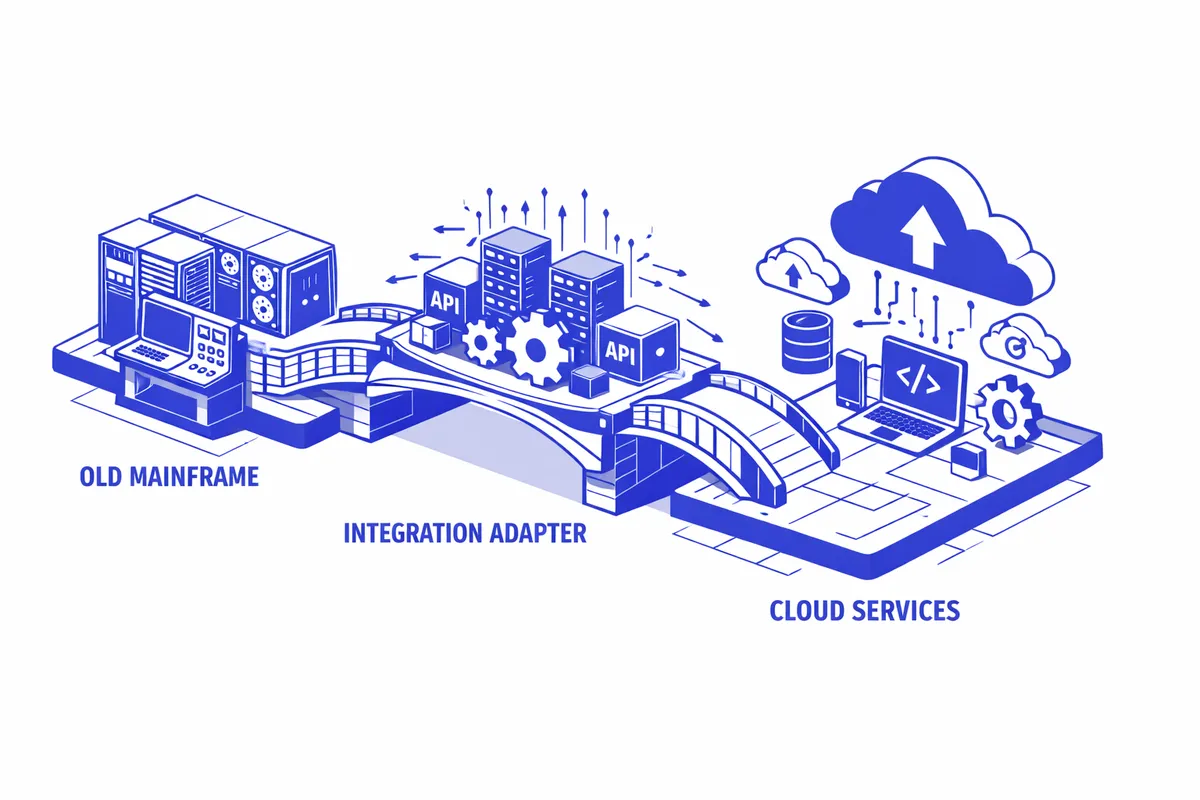
How We Build Legacy System Integration for Sioux Falls
We start with a system inventory that takes the legacy reality seriously. Most failed legacy modernization projects in this market started by treating the legacy system as something to be eliminated. We start instead by mapping what the legacy system does well, what it does poorly, what data it owns authoritatively, what data lives in spreadsheets and shadow systems around it, and where the highest-value integration opportunities are. The inventory produces a written architecture before any code is written, and it almost always identifies one or two integration points that deliver outsized value in the first release.
Architecture is next. We design the integration tier, the staging and audit log layer, the security posture, and the failure-mode handling. Legacy integrations fail in specific ways that modern API integrations do not, including batch-window dependencies, character-encoding gotchas, fixed-width file formats, and inconsistent uptime. We design defensively for those failure modes. For SOC-bound or PCI-bound applications we capture the audit and access-control requirements into the design before development. Implementation runs on Node.js or Python with PostgreSQL on AWS, deployed in two-week sprints with working integrations at the end of each one. We will write to legacy interfaces in whatever protocol they natively speak (SOAP, ODBC, fixed-width file drops, AS400 program calls, JDBC) rather than asking the legacy system to change.
Industries We Serve in Sioux Falls
Construction and Home Services: Larger Sioux Falls construction operators who built internal estimating, scheduling, or job-costing tools twenty years ago and have grown around them need integration layers that bridge those tools to modern field-service software, customer portals, and accounting systems. We build integrations that let crews running across Brandon, Tea, Harrisburg, and the East Side use modern mobile tools while the back-office estimating logic stays exactly where it works.
Real Estate: Established Sioux Falls brokerages and property management firms running on legacy property-management or transaction-management systems need integration into modern MLS feeds, marketing platforms, and investor or homeowner portals. We bridge the legacy system to the modern surface so the back office stays stable while the customer-facing experience modernizes.
Specialty Healthcare: Multi-provider, multi-location specialty practices on the Western Avenue and 41st Street corridors that have run on a particular EHR or practice-management system for fifteen years need HIPAA-compliant integrations that bridge that system to modern patient portals, intake tools, and analytics. We integrate with the major specialty-practice EHRs without asking the practice to rip the EHR out.
Financial Services: Sioux Falls wealth managers, insurance brokers, accounting firms, and the credit card services and fintech operators near downtown often run on core systems that are regulated and certified. We build integrations that bridge those systems to modern client portals, planning software, CRMs, and analytics platforms while preserving the audit trail the regulators require.
Senior Care: Senior living, memory care, home care, and hospice operators across the Sioux Empire suburbs often run on legacy clinical and billing systems that pre-date the family-communication and resident-engagement expectations the current market demands. We integrate those systems to modern family-facing portals and engagement platforms, particularly during the Q4 and Q1 placement-decision spike that puts the most pressure on the system.
Manufacturing and Professional Services: Sioux Falls manufacturers running on AS400, legacy ERP, or homegrown shop-floor software, and the law firms, accounting firms, and A and E firms running on similarly aged practice-management tools, need integrations into modern customer portals, partner APIs, and analytics platforms. We build the integration tier that bridges those legacy systems to modern surfaces without forcing the underlying replacement.
What to Expect Working With Us
1. Legacy System Inventory and Architecture Audit. We document what the legacy system does well, what it does poorly, where the authoritative data lives, and where the highest-value integration opportunities sit. This phase produces a written architecture and an honest project estimate before either of us commits.
2. Integration Architecture Design. We design the integration tier, the staging layer, the security posture, and the failure-mode handling. For SOC, PCI, or HIPAA requirements the design work happens before development. The architecture is approved in writing before any code is written.
3. Sprint-Based Implementation. We build in two-week cycles with working integrations at the end of each one. Your team and any partner stakeholders can test against real software early, which surfaces design misalignments before they become expensive.
4. Launch, Monitoring, and Evolution. We launch with structured monitoring, alerting on integration failures, and runbooks documenting every legacy interface and its quirks. Most Sioux Falls clients stay on a maintenance retainer because legacy interfaces drift in subtle ways and someone needs to be watching when they do.