What We Do
Shopify inventory tracking works until you sell on three channels and two warehouses. QuickBooks stock counts work until your reorder logic depends on supplier lead times that vary by season. Off-the-shelf inventory tools are built for the simple case.
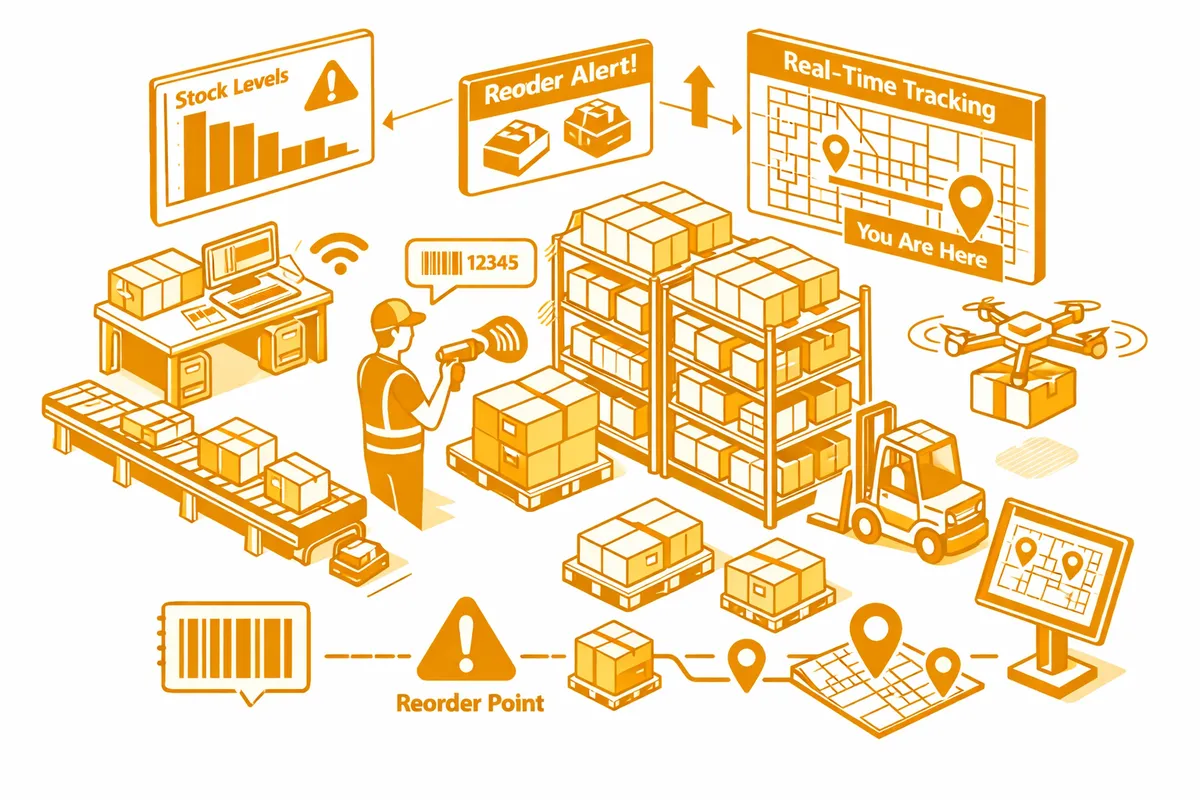
When your business has outgrown that, you need a system built for how you actually operate. We build inventory management systems for the complexity that generic tools cannot handle: multi-warehouse stock with transfer logic between locations, multi-channel selling where a sale on Amazon instantly updates your Shopify and wholesale counts, custom reorder rules that factor in supplier minimums and variable lead times, lot tracking for regulated or perishable goods, and kitting for assembled products. Real-time accuracy across every location and channel, with warehouse staff tools that make receiving, picking, and shipping fast and error-free.
How We Work
We start by mapping your product catalog, warehouse layout, supplier relationships, and sales channel structure. That mapping surfaces the specific requirements that pushed you past what Shopify, QuickBooks, or TradeGecko can handle: lot tracking for perishable or regulated items, FIFO rules for aging inventory, multi-warehouse transfers with different fulfillment rules per location, or kitting for assembled products. We design the data model around those requirements, then build the user interfaces for receiving, picking, cycle counting, and reporting. Barcode or RFID scanning is integrated for fast, accurate transactions.
Reorder automation goes beyond simple reorder points: rules factor in supplier lead times that vary by season, order minimums, freight cost breakpoints, and demand forecasts based on your sales history. Integration with your e-commerce platforms and accounting software ensures inventory and financial records stay synchronized without manual reconciliation. The result is a system shaped to your operations, not a generic tool you have to reshape your operations around.