Our Inventory Management Services in Detroit
- Inventory process audit and operational requirements assessment
- Custom inventory management platform design and development
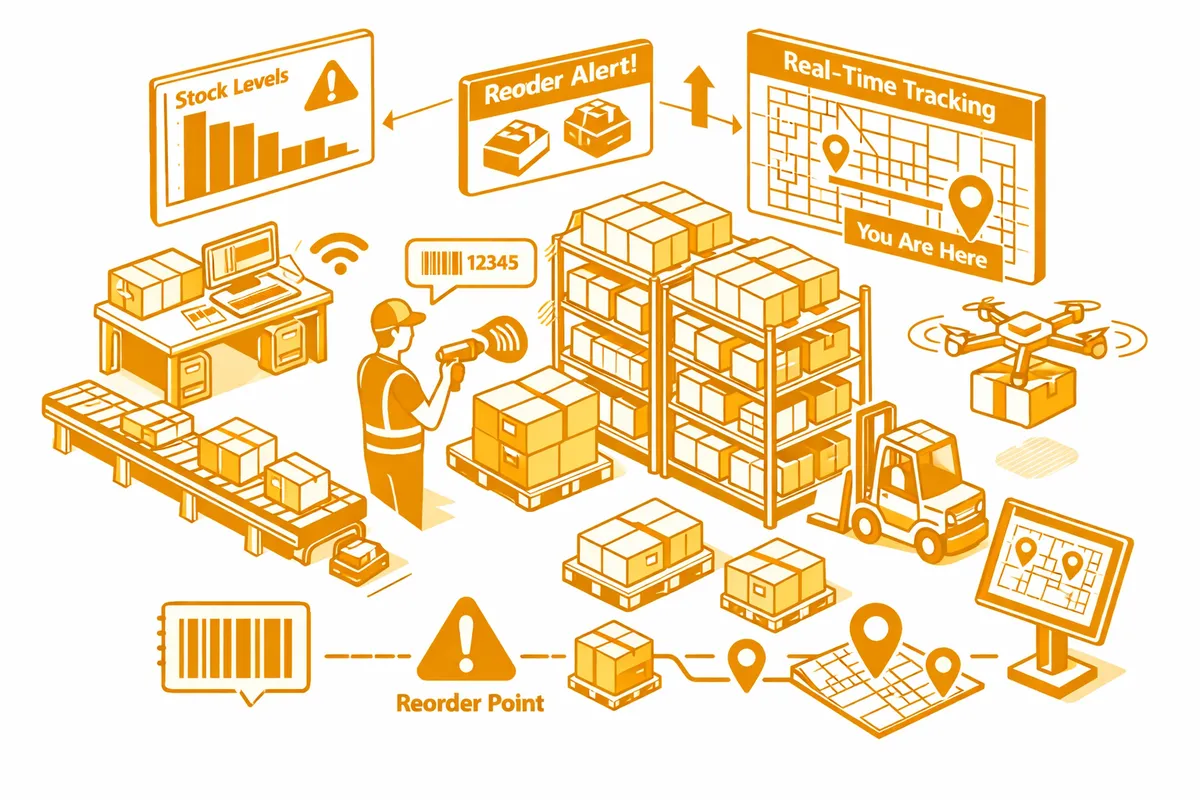
- Real-time stock level tracking across locations, warehouses, and channels
- Automotive JIT inventory management with production order tracking and demand signals
- Multi-stage manufacturing inventory: raw materials, WIP, and finished goods
- Lot tracking, serial number tracking, and expiration date management
- Barcode, QR code, and RFID scanning integration for plant floor and warehouse
- Demand forecasting based on production schedules, customer releases, and historical usage
- Supplier management, EDI integration, and automated purchase order generation
- Multi-location and multi-warehouse synchronization across Metro Detroit facilities
- ERP integration for manufacturing and distribution clients
- Mobile inventory management for warehouse and plant floor teams
- Inventory reporting: turnover, carrying costs, stockout analysis, OEM on-time delivery performance
- Regulated inventory tracking for healthcare, pharmaceutical, and defense clients
Industries We Serve in Detroit
Automotive Tier Suppliers: Detroit's tier supplier network, from the metal fabricators and stampers in Macomb County to the plastics molders and electronics assemblers spread across the Automation Alley corridor, requires JIT-capable inventory management that connects inbound supply, production consumption, and outbound delivery in a single system. Delivery reliability to OEM customers is non-negotiable. We build the inventory infrastructure that supports it.
Manufacturing and Industrial: Manufacturers across Wayne, Oakland, and Macomb counties manage raw materials, work-in-progress, and finished goods through production processes that require stage-by-stage inventory visibility. mHUB Detroit and the broader maker and manufacturer community building in Detroit's Midtown and Corktown industrial spaces also present inventory management requirements that grow with their production ambitions.
Healthcare Supply Chain: Henry Ford Health System, the Detroit Medical Center, Beaumont Health, and the dense network of independent hospitals and outpatient facilities across Metro Detroit anchor a large medical supply ecosystem. Healthcare supply companies require lot tracking, sterilization date management, and regulatory documentation that standard inventory software does not include. We build compliant systems for this sector.
Medical Device and Pharmaceutical Distribution: Detroit's medical device and pharmaceutical distribution companies face FDA traceability requirements, DEA controlled substance tracking, and serialization requirements that demand purpose-built inventory capabilities. We design these systems to the regulatory standards applicable to your specific product category.
Food Distribution and Restaurant Supply: Eastern Market's wholesale district, the food service distributors supplying Detroit's restaurant community in Corktown and Midtown, and the regional food distributors based in the metro area all manage perishable inventory with specific FIFO and lot tracking requirements. We build perishable inventory systems that reduce waste and ensure compliance.
E-Commerce and Retail: Detroit's growing retail and e-commerce base, including the brands emerging from the entrepreneurial community in Midtown and New Center, needs inventory management that scales from startup to regional distribution. We build systems that grow with the business.
What to Expect
Step 1: Inventory Process Audit. We start by documenting your current inventory management state: what you track, where tracking breaks down, what decisions are made without adequate data, and what operational problems recur because of inventory gaps. For automotive suppliers, this includes a detailed review of your JIT delivery commitments and how current inventory visibility supports or undermines them.
Step 2: System Design and Scoping. Based on the audit, we design the system architecture, define required integrations, and establish a phased delivery roadmap. We scope the project with clear timelines and deliverables and communicate honestly about complexity and realistic timeline ranges.
Step 3: Build and Integration. We build the inventory system and integrate it with your ERP, EDI partners, accounting software, and warehouse management tools. Testing uses your actual product catalog, supplier relationships, and production scenarios before any live data is migrated.
Step 4: Launch and Continuous Improvement. We launch with your team on a working system, provide training across all user roles, and monitor early operational cycles to ensure performance meets design objectives. Post-launch support covers ongoing optimization, additional integrations, and capability expansion as your operation evolves.