How We Build AI Integration Services for South Loop
We begin with a workflow audit: mapping the current flow of information through the South Loop business, identifying where AI tools produce output, and documenting where that output needs to go to drive the next step in each workflow. For a South Loop hospitality business near Soldier Field, the audit traces the path from AI demand forecast to pricing update to staffing plan to inventory adjustment, identifying every system touchpoint and every manual step where integration could remove human work from the path.
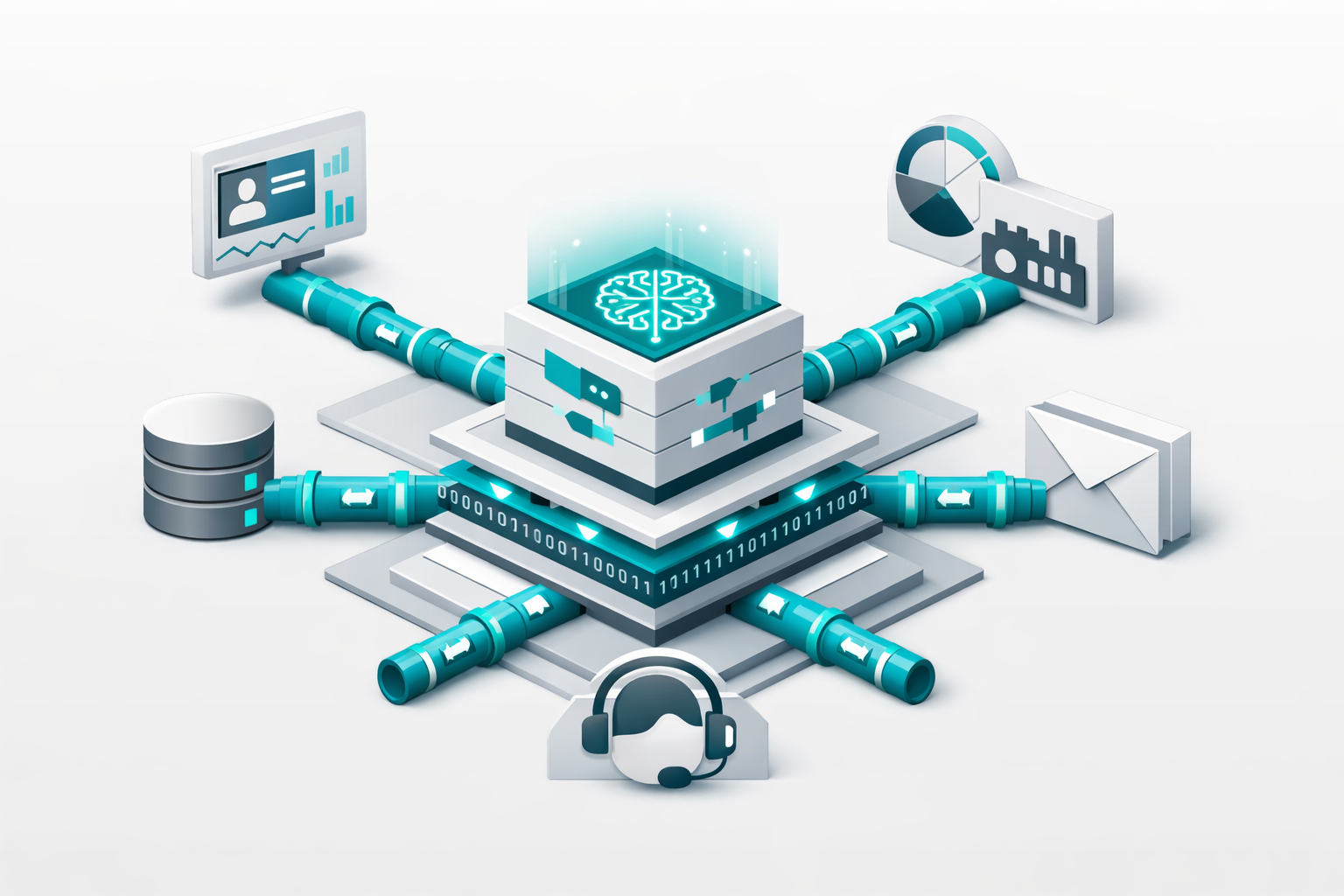
We then design the integration architecture: the connections between AI tools and business systems, the data transformations required to move outputs between systems with different data models, the error handling that prevents a failed integration step from losing data or silently corrupting workflows, and the monitoring that surfaces integration failures before they accumulate into operational problems.
The integrations we build use standard API patterns that connect to the tools South Loop businesses are already running. AI tools with well-documented APIs connect cleanly to downstream business systems. For tools with limited API support, we build extraction layers that capture AI output and route it appropriately. For South Loop businesses with custom internal systems, we build integration connectors that follow the security and access control requirements those systems impose.
Industries We Serve in South Loop
Hospitality and hotel businesses near Museum Campus and Soldier Field have adopted AI tools for pricing, demand forecasting, and guest communication that need to connect to property management systems, staffing platforms, and revenue management dashboards. AI integration services for South Loop hospitality businesses build these connections so AI outputs drive operational decisions automatically rather than informing manual decisions that someone must then re-enter into the system of record.
Creative agencies and media studios on Wabash Avenue near Columbia College use AI tools for content generation, brief analysis, and project scoping that need to connect to project management systems, client portals, and billing platforms. AI integration services for South Loop creative businesses route AI outputs into project workflows so the output becomes part of the deliverable pipeline without manual transfer.
Law firms and professional services firms on Michigan Avenue and Wabash Avenue use AI research, document review, and drafting tools that need to connect to document management systems, matter management platforms, and billing systems. AI integration services for South Loop law firms build the connections that route AI-assisted work product into matter files and capture the AI work time for billing purposes.
Property management firms in South Loop's high-rise corridor use AI tools for maintenance request classification, lease abstraction, and tenant communication that need to connect to property management platforms, work order systems, and accounting software. AI integration services for South Loop property managers build the routing connections that turn AI classification into automatically assigned work orders rather than classification recommendations that someone must manually act on.
Retail and e-commerce businesses on Roosevelt Road use AI tools for demand forecasting, customer communication, and product recommendations that need to connect to inventory management, e-commerce platforms, and marketing systems. AI integration services for South Loop retail businesses build the connections that turn AI predictions into automated inventory reorders and targeted customer communications.
Event and entertainment businesses serving Soldier Field and Museum Campus use AI tools for demand forecasting, ticketing optimization, and event communication that need to connect to event management platforms, hospitality systems, and marketing automation. AI integration services for South Loop event businesses build the data pipelines that connect AI forecasts to operational adjustments without manual mediation.
What to Expect Working With Us
1. Workflow audit and integration mapping. We map the AI tools in use at your South Loop business, the workflows those tools touch, and the downstream systems where AI output needs to flow. For businesses near Museum Campus or Soldier Field with event-driven operations, we map the time-sensitive integration paths where delays in AI output routing have direct operational consequences.
2. Integration architecture design. We design the connection architecture: APIs, data transformations, error handling, and monitoring. For South Loop professional services firms with security and compliance requirements, we design the integration to operate within the access control and audit trail requirements the firm's systems impose.
3. Integration development and testing. We build the integrations and test them against realistic South Loop business data, including the event-night traffic volumes and document processing peaks that create load on integration infrastructure. Testing catches failures that only appear under the real operational conditions the South Loop business faces.
4. Deployment and monitoring. We deploy integrations and monitor them through the first operational period, including the first Soldier Field game night or Museum Campus opening event that tests the integration under peak conditions. Post-deployment monitoring surfaces issues before they accumulate into operational problems.
South Loop AI Integration Considerations
South Loop businesses integrating AI tools face a neighborhood-specific technical landscape worth understanding. The concentration of creative businesses near Columbia College on Wabash Avenue means that many South Loop organizations are integrating AI into creative production workflows where output quality is evaluated by design-literate professionals. Integration that produces AI output in the wrong format, at the wrong resolution, or with incorrect brand parameters is not just a technical failure. It signals to Columbia College-adjacent clients that the business is not operating at a professional level.
For hospitality businesses near Museum Campus and Soldier Field, AI integration needs to handle the event-calendar data that distinguishes South Loop hospitality from generic Chicago operations. An AI tool integrated without event-calendar awareness will produce recommendations and predictions that are systematically wrong during the game-day and exhibition-opening periods when accuracy matters most.
Property management firms in South Loop's high-rise corridor face integration challenges related to the age and diversity of building management systems in the neighborhood. Newer South Loop towers built in the last decade run modern, API-accessible property management platforms. Older buildings along State Street and Roosevelt Road may run legacy systems that require custom integration approaches. We assess system compatibility during the integration design phase and design appropriately for the South Loop building stock diversity.
Learn more about our AI integration services across Chicago or explore other digital services available in South Loop.