AI Integration Services in Chicago
Professional ai integration services services for Chicago businesses. Strategy, execution, and results.
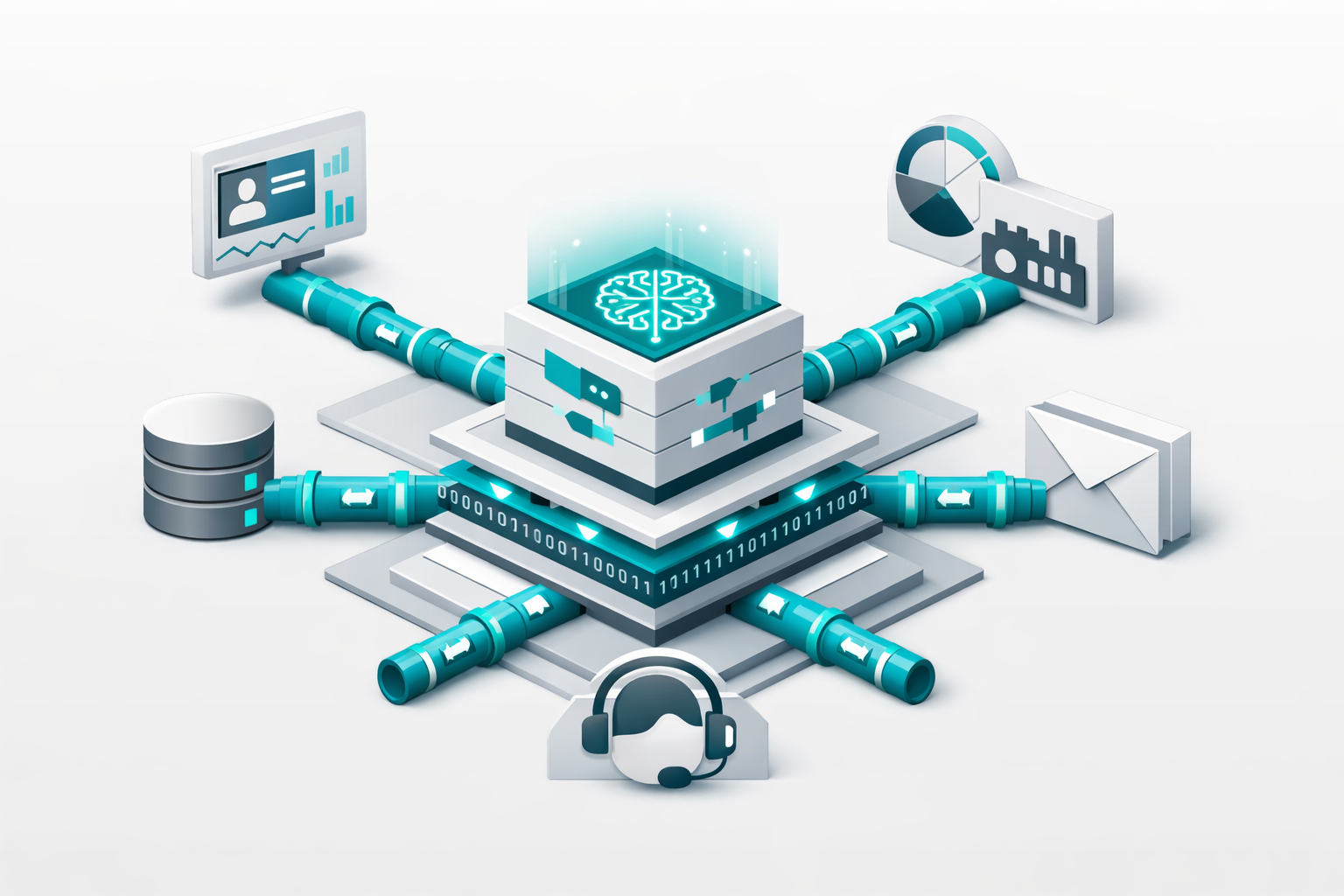
Our AI Integration Work in Chicago
- Salesforce AI enrichment for Loop B2B sales teams where new leads automatically receive firmographic research, contact data enrichment, intent scoring, and drafted outreach sequences pushed directly into the CRM record
- Zendesk integration for West Loop SaaS support teams with AI-powered ticket categorization, knowledge base retrieval, draft response generation, and sentiment analysis attached to every incoming ticket before the agent opens it
- HubSpot marketing automation for River North agencies with AI-generated content suggestions triggered by campaign events, automated A/B test copy creation, and personalization variables populated from AI analysis of customer data
- Epic and EMR integration for healthcare organizations near the Illinois Medical District with AI-assisted clinical documentation, patient communication drafting, and referral letter generation embedded directly in provider workflows
- NetSuite and ERP integration for Chicago manufacturing and distribution companies with AI-powered demand forecasting, anomaly detection on financial transactions, and automated reporting narrative generation
- Slack and Teams AI assistants for enterprise Chicago organizations with AI agents that answer internal questions, surface relevant documents, and execute workflow actions from within the messaging platforms teams already use
- Custom application AI embedding for technology companies at 1871 and the West Loop with AI features integrated directly into product interfaces through API layers that provide intelligence without disrupting the user experience
- Content management system integration for Fulton Market consumer brands with AI-generated product descriptions, SEO optimization, and multi-platform content adaptation pushed directly into Shopify, WordPress, or Contentful
Industries We Serve in Chicago
Financial Services. LaSalle Street firms use complex technology stacks that include CRMs, trading platforms, compliance systems, and client reporting tools. AI integration connects intelligence across these systems. Analyst research flows into portfolio management platforms. Compliance alerts trigger in monitoring dashboards. Client report narratives are generated from data that already exists in your systems. Integration turns disconnected AI experiments into embedded capabilities.
Healthcare. Chicago's healthcare providers need AI that works inside their clinical systems, not alongside them. Integration with Epic, Cerner, and other EMR/EHR platforms means AI-assisted documentation, patient communication, and administrative workflows happen within the tools clinicians already use. No separate login. No additional screens. The intelligence appears where the work happens, respecting HIPAA requirements at every integration point.
Marketing and Advertising. River North agencies and in-house marketing teams at Fulton Market brands use multiple platforms for content creation, distribution, analytics, and client management. AI integration connects these tools so content generated by AI flows directly into the CMS, email platform, and social scheduling tools. Campaign analytics feed back into AI models that improve future content recommendations. The entire content supply chain becomes AI-augmented without changing the tools the team uses.
B2B Technology. West Loop and 1871 technology companies build products and run operations on stacks that include CRMs, support platforms, product analytics tools, and custom internal applications. AI integration embeds intelligence into each of these layers. Sales reps see AI insights in Salesforce. Support agents see AI analysis in Zendesk. Product teams see AI-synthesized user feedback in their analytics dashboards. The AI becomes invisible infrastructure, not a separate tool to learn.
Logistics and Supply Chain. Chicago's logistics companies manage operations through TMS platforms, warehouse management systems, and carrier portals. AI integration adds predictive capabilities to these existing systems. Demand forecasting feeds directly into inventory planning. Exception detection triggers automated responses in shipment tracking. Carrier performance analysis surfaces in the tools dispatchers already use.
What to Expect
Integration Audit. We audit your current AI usage and identify every point where humans are manually bridging AI tools and business systems. Each bridge point is an integration opportunity. We document the systems involved, the data that flows between them, and the triggers that initiate each workflow.
Architecture Design. We design the integration architecture: which systems connect, what data flows between them, what triggers the AI, and where the output lands. Integrations are built using APIs, webhooks, and middleware layers that keep your existing systems intact. We do not replace your tools. We wire AI into them.
Build and Test. Each integration is built with error handling, logging, and monitoring so you see exactly what is flowing between systems. We test with realistic data volumes and edge cases. Every integration is documented so your technical team can maintain it independently. Rollback procedures are defined in case any integration needs adjustment post-launch.
Launch and Monitoring. Integrations go live with monitoring dashboards that track data flow, error rates, and AI performance. We provide a handoff that includes documentation, troubleshooting guides, and a support period for questions that arise during the first weeks of operation. Monthly reviews identify optimization opportunities and new integration candidates.
Frequently Asked Questions
CRMs like Salesforce and HubSpot, support platforms like Zendesk and Intercom, ERPs like NetSuite and SAP, marketing tools like Marketo and Mailchimp, content management systems like WordPress and Contentful, EMR/EHR systems, databases, and custom applications with APIs. If your system has an API or accepts webhooks, we can integrate AI into it.
No. We integrate AI into the systems you already use. Your team keeps working in the same tools with AI-powered capabilities embedded directly into their workflows. The goal is to make your existing systems smarter, not to add new tools that your team has to learn and manage.
All integrations use encrypted connections, respect your existing access controls, and can be configured to keep sensitive data within your infrastructure. For Chicago financial services firms and healthcare organizations, we design integrations that comply with industry regulations including SOX, FINRA, and HIPAA. We do not store your business data on our systems.
A single system integration takes 3 to 6 weeks from audit through deployment. Multi-system projects connecting AI across your full stack take 8 to 16 weeks depending on the number of systems, complexity of data flows, and security requirements. Most Chicago businesses start with one high-impact integration and expand from there.