AI Compliance Governance in Chicago
Professional ai compliance governance services for Chicago businesses. Strategy, execution, and results.
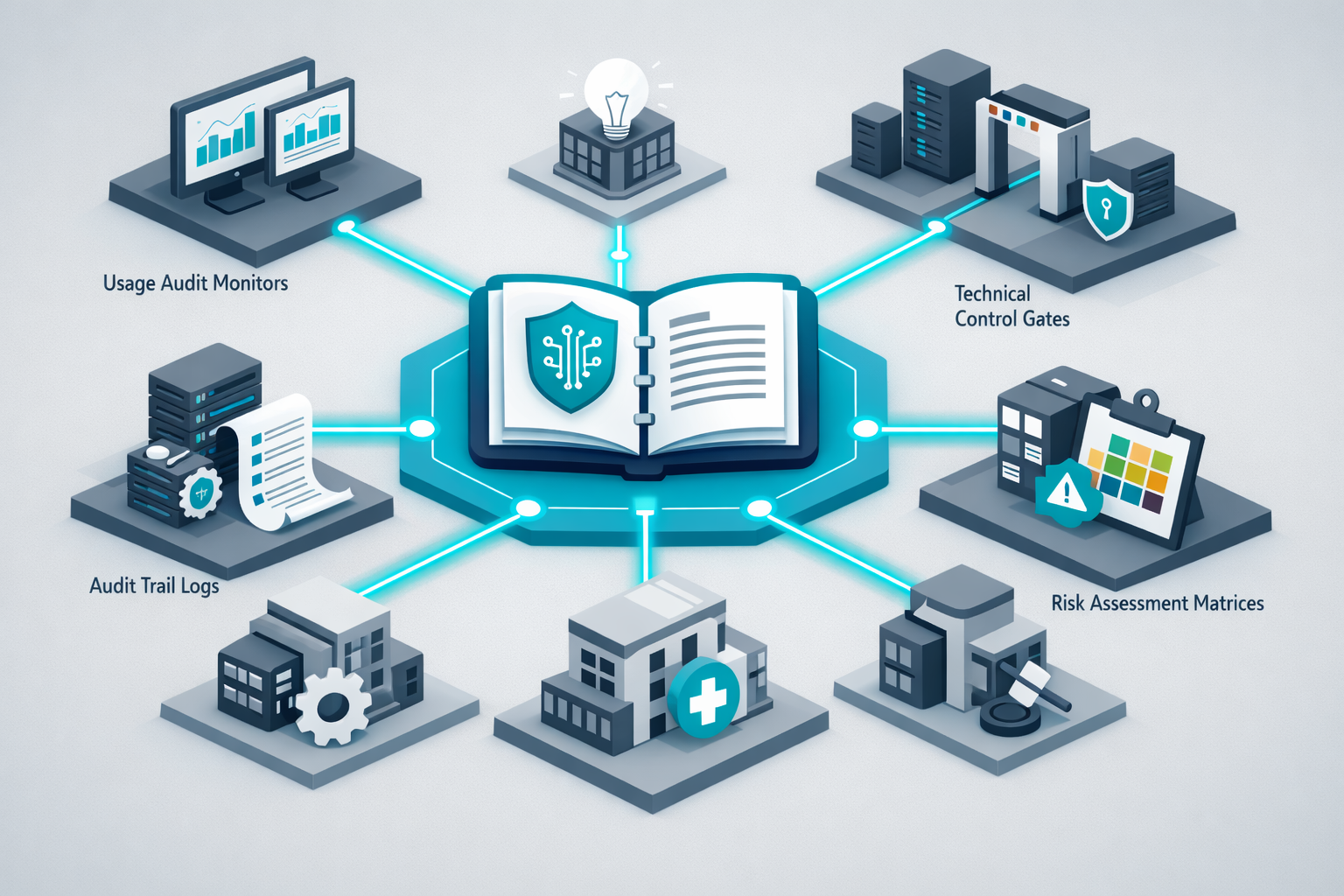
Our AI Compliance & Governance Work in Chicago
- AI usage audits for LaSalle Street financial institutions mapping every AI tool in use, the data flowing through each tool, the business purpose, and the gap between current usage and regulatory requirements including SEC, FINRA, and SOX
- Governance framework design for Loop enterprise organizations with AI acceptable use policies, data classification rules for AI inputs, output review requirements, vendor assessment criteria, and incident response procedures
- Illinois-specific compliance programs for Chicago employers addressing the Illinois AI Video Interview Act, Biometric Information Privacy Act, and Personal Information Protection Act as they apply to AI tools in hiring, operations, and customer interactions
- Technical control implementation for healthcare organizations near the Illinois Medical District with data loss prevention rules preventing PHI from reaching unauthorized AI tools, approved tool whitelists, and logging infrastructure for HIPAA audit trails
- AI vendor assessment programs for Chicago enterprise procurement teams with evaluation criteria covering data handling, model training practices, retention policies, security certifications, and contractual protections for each AI vendor
- Board and executive AI risk reporting for Chicago companies preparing governance documentation that communicates AI risk posture, mitigation strategies, and compliance status to board members and executive leadership
- AI governance committee setup for enterprise Chicago organizations including charter development, meeting cadence, decision authority, escalation procedures, and integration with existing risk management and compliance functions
- Employee AI training and acceptable use programs for organizations across Chicago with role-specific guidance on what AI tools are approved, what data can and cannot be processed, and how to handle AI-generated output in regulated contexts
Industries We Serve in Chicago
Financial Services. LaSalle Street's banks, investment firms, and insurance companies face the most complex AI governance requirements in Chicago. SEC guidance on AI use in investment management, FINRA requirements for AI in broker-dealer operations, SOX implications for AI in financial reporting, and model risk management expectations from OCC and Federal Reserve create a regulatory matrix that demands structured governance. We build frameworks that address each regulatory body while remaining practical enough for teams to follow.
Healthcare. Chicago's healthcare ecosystem, anchored by Northwestern Memorial, Rush, and the University of Chicago Medical Center, needs AI governance that protects patient data while enabling the clinical and administrative benefits of AI. HIPAA requirements for AI tools that touch patient information, consent requirements for AI-assisted clinical decisions, and documentation requirements for AI-generated clinical content all need to be addressed in a governance framework that clinical and administrative staff can actually follow.
Legal. Chicago's law firms face unique AI governance challenges around privilege, confidentiality, and professional responsibility. AI tools that process client information raise questions about privilege waiver. AI-generated legal analysis raises questions about professional competency standards. Governance frameworks for legal organizations address these profession-specific concerns alongside general data handling and compliance requirements.
Insurance. Chicago's insurance industry uses AI for underwriting, claims processing, and customer service. Illinois Department of Insurance oversight and emerging state AI regulations create governance requirements specific to insurance applications. Governance frameworks for insurers address model fairness, decision explainability, and regulatory reporting requirements that apply to AI-assisted insurance operations.
Higher Education. Northwestern, University of Chicago, UIC, and DePaul face AI governance challenges that span research integrity, student data privacy, academic honesty, and administrative AI usage. Governance frameworks for universities address FERPA requirements, research ethics, institutional data handling, and the unique tension between encouraging AI innovation in research while maintaining academic standards.
What to Expect
AI Usage Audit. We start by mapping what AI tools are being used across your organization, by whom, with what data, and for what purposes. This audit reveals the current state of AI usage, identifies uncontrolled risk areas, and provides the factual foundation for every governance decision that follows. For many Chicago organizations, this audit is the first time leadership sees the full picture of AI adoption.
Risk Assessment and Policy Design. From the audit we build a risk assessment that maps each AI use case to the regulatory requirements, contractual obligations, and organizational risk tolerances that apply. The governance framework includes an AI acceptable use policy, data classification rules, output review requirements, vendor assessment criteria, and incident response procedures. Policies are written to be enforceable and practical, not aspirational documents that sit in a shared drive.
Technical Controls. Policies without enforcement are suggestions. We implement data loss prevention rules that prevent sensitive data from reaching unauthorized AI tools, output monitoring that flags potentially problematic content, approved tool whitelists, access controls, and logging infrastructure that creates the audit trails regulated industries require. Technical controls ensure governance is embedded in the workflow, not dependent on individual compliance.
Training and Governance Committee. We train your team on the framework and help you stand up an AI governance committee that maintains it as regulations and AI capabilities evolve. The committee charter defines meeting cadence, decision authority, escalation procedures, and reporting requirements. Your organization has the structure to manage AI governance independently going forward.
Frequently Asked Questions
If your team is using AI tools with company data, you already have AI risk. Governance gives you visibility into that usage, controls to manage the risk, and documentation that satisfies regulators, auditors, and clients who ask about your AI practices. Illinois-specific regulations including BIPA and the AI Video Interview Act create additional urgency for Chicago businesses that have not yet addressed AI compliance.
Depending on your industry: the EU AI Act (if you serve EU customers), Illinois Biometric Information Privacy Act, Illinois AI Video Interview Act, CCPA (California customers), HIPAA (healthcare), SEC/FINRA/SOX (financial services), FERPA (education), and emerging federal AI guidance. We map the specific regulations that apply to your Chicago organization based on your industry, customer base, and data handling practices.
Both. A policy without enforcement is a suggestion. We implement data loss prevention rules, access controls, monitoring systems, approved tool whitelists, and audit logging that enforce your AI policies technically, not just procedurally. The technical controls ensure governance works even when individual employees are not thinking about compliance.
An initial audit and policy framework takes 4 to 8 weeks. A comprehensive program with technical controls, training, governance committee setup, and regulatory mapping takes 10 to 20 weeks depending on organizational size and regulatory complexity. Most Chicago businesses start with the audit to understand their current exposure and then build the governance program in phases.