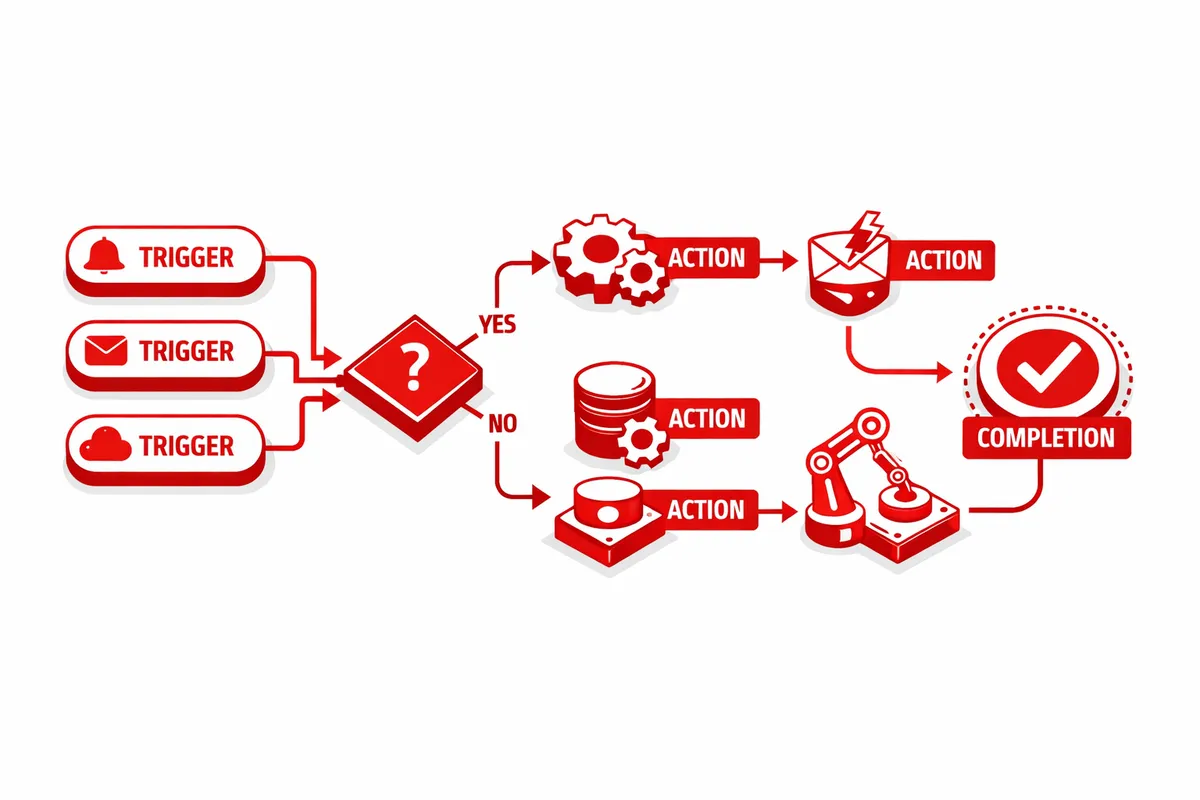
The Three Phases of AI Change Management
Phase 1: Prepare (Before Implementation)
Communicate the why. Before you announce any AI tool, explain why the change is happening. Connect it to business goals your team cares about. "We are growing 30% and need to scale without burning everyone out" is more compelling than "AI is the future." Frame it in terms of what the team gains, not what the technology does.
Address fears directly. Tell your team explicitly: "AI is replacing tasks, not people. Here is what that means for each role." Be specific. If a customer service rep spends 60% of their time on routine inquiries and AI will handle those, explain that their role shifts to complex customer relationships and improvement projects. At one 35-person logistics company, the operations manager mapped out every role on a whiteboard showing which tasks would shift to AI and which would expand. That single meeting reduced anxiety more than any company-wide email could.
Identify champions. Find 1-2 people on your team who are excited about AI. They become your internal advocates. Champions should represent different departments and experience levels. Train them first so they can help their peers. The ideal champion is not your most technical person. It is the person others trust and go to for advice.
Set expectations. Be honest about the timeline and the learning curve. "The first month will be slower. By month three, you will wonder how you worked without it." Honest expectations prevent disillusionment. Share a written timeline with milestones so the team can see progress markers ahead.
Involve the team in selection. When choosing AI tools, include end users in the evaluation. People adopt tools they helped select. Tools imposed from above meet resistance. Give your team three options to test and let them weigh in on which one fits their workflow best. Even if you have already made the decision, involving them in configuration choices gives them ownership.
Phase 2: Implement (During Rollout)
Start small and visible. Launch with one team, one process, one clear win. When that team succeeds, their success story sells the change to everyone else. A dental practice we worked with started by automating appointment confirmations for one hygienist's schedule. Within two weeks, no-shows dropped 35%. The other hygienists asked for it before management even offered.
Provide hands-on training. Do not just show people the tool. Let them use it with real tasks in a safe environment. Hands-on training with immediate feedback builds confidence faster than presentations. Structure training as 30-minute sessions over five days rather than a single three-hour marathon. Short repetition beats long exposure.
Pair new users with champions. Your AI champions should be available to answer questions, troubleshoot, and encourage colleagues during the first two weeks. Peer support is more effective than management directives. Champions should check in proactively, not wait for people to ask.
Create a safe space for mistakes. Tell your team that mistakes during the transition are expected and acceptable. If someone uses the AI tool incorrectly and produces a bad output, treat it as a learning opportunity, not a failure. One effective technique: share your own mistakes with the tool publicly. Leaders who model learning behavior normalize the struggle.
Maintain the old process temporarily. Run the AI and manual processes in parallel during the transition period of two to four weeks. This reduces anxiety (the safety net is there) and builds evidence (the team can see AI outperforming the manual process in real time).
Celebrate early wins. When the AI saves time, catches an error, or delights a customer, broadcast it. Concrete wins build momentum and convert skeptics. Create a shared channel or board where the team posts their wins. "AI caught a duplicate invoice that would have cost us $4,200" is the kind of story that shifts culture.
Phase 3: Sustain (After Launch)
Gather feedback continuously. Schedule weekly check-ins during the first month, biweekly for months two and three, then monthly. Ask specific questions: "What is working? What is frustrating? What is missing?" Use a simple survey (three questions, takes 60 seconds) plus one live conversation per cycle.
Iterate based on feedback. When your team identifies problems, fix them quickly. Nothing kills adoption faster than ignored feedback. Even small adjustments show that leadership is listening. Track every piece of feedback in a visible document so people can see their input resulted in action.
Measure and share results. Show your team the numbers. Hours saved, errors reduced, customer satisfaction improved. Data makes the change feel worthwhile, not just tolerable. At the 90-day mark, present a full before-and-after comparison to the entire team.
Evolve roles and responsibilities. As AI handles more routine work, help your team grow into their expanded roles. Provide training for the new skills they need. A customer service rep who now handles complex cases may need negotiation or empathy training. Budget for this upskilling. It signals that you are investing in people, not replacing them.
Recognize adaptation. Acknowledge team members who embrace the change and help others. Recognition reinforces the behaviors you want and signals that AI adoption is valued. Public recognition in team meetings carries more weight than private praise.
The ADKAR Framework Applied to AI
The ADKAR model (Awareness, Desire, Knowledge, Ability, Reinforcement) provides a structured approach to individual change. Here is how it maps to AI adoption specifically.
Awareness. The person understands why AI is being introduced. This is where your "why" communication happens. Until someone understands the business reason, they cannot move forward.
Desire. The person wants to participate. This is where addressing fears and showing personal benefit matters. "AI will handle the parts of your job you complain about most" creates desire. "Management decided we are using AI now" does not.
Knowledge. The person knows how to use the AI tools. This is your training phase. Hands-on, repeated, with real tasks.
Ability. The person can perform their job using AI in their daily workflow. This takes weeks of practice after training. Champions and support structures bridge the gap between knowledge and ability.
Reinforcement. The person continues using AI because they see results and receive recognition. Without reinforcement, people revert to old habits within 60 to 90 days.
Map each team member to their current ADKAR stage and tailor your approach. Someone stuck at Desire needs a different conversation than someone stuck at Ability.
Handling Resistance
Resistance is normal and often rational. Here is how to address the most common forms.
The skeptic: "AI cannot do what I do." Acknowledge their expertise. Then run a side-by-side test. Let them do the task their way while AI does it simultaneously. Review the results together. Often, the AI handles the routine parts well, which validates both the AI and the person's unique value on complex tasks.
The anxious: "I am going to lose my job." Have a direct, honest conversation. If AI will eliminate the need for their role, tell them early and help them transition. If their role is evolving (which is far more common), be specific about what the new role looks like and what support you will provide. Put it in writing.
The overwhelmed: "I do not have time to learn another tool." Reduce their workload temporarily during the transition. If you are asking someone to learn a new tool while maintaining their current output, you are setting them up to fail. A 20% workload reduction for two weeks costs less than a failed adoption.
The passive resister: "I tried it and it did not work." Dig into the specific experience. Often, passive resistance stems from one bad interaction with the tool. A 15-minute coaching session that resolves their specific issue can flip them from resistant to enthusiastic. Ask them to show you exactly what happened.
The leader resister: "My team does not need this." This is the most dangerous form of resistance because it blocks an entire team. Address it privately. Understand their concerns. If possible, let their team pilot the tool voluntarily. Peer pressure from other teams succeeding often resolves leadership resistance within 30 days.
Communication Strategy
Before launch (weeks negative three to negative one). Three to four communications over two to three weeks. Start with the strategic rationale, then shift to practical details. Use team meetings for discussion, email for documentation. The first communication should come from the highest-ranking person possible.
During launch (week one). Daily updates during the first week. Highlight successes, acknowledge challenges, share tips. Keep the tone supportive and practical. Short video updates (under two minutes) from the project lead work well here.
After launch (weeks two through twelve). Weekly updates for the first month, then monthly. Share metrics, user stories, and upcoming improvements. Transition from "we are doing this" to "this is how we work now."
Always. Keep an open channel for questions and concerns. A Slack channel, a shared document, or a recurring office hours session. People need to know they can raise issues without judgment.
For related guidance on implementing the technology side, see our workflow automation services and AI marketing automation platform.
Measuring Change Success
Track these metrics to gauge how well your change management is working.
Adoption rate. What percentage of your team is actively using the AI tool? Target 80%+ by the end of month two. Below 60% at the 60-day mark signals a serious problem that needs immediate attention.
Usage frequency. How often are people using it? Daily use indicates integration into workflows. Weekly or less suggests the tool is optional, not embedded. Pull usage logs weekly and identify anyone who has not logged in within the past five days.
Proficiency growth. Are people getting better at using the tool over time? Track output quality and completion times. Compare week-one metrics to week-four metrics for each user.
Satisfaction scores. Ask your team: "On a scale of 1-10, how helpful is this AI tool in your daily work?" Scores below 6 indicate problems to address. Track the trend line, not just absolute numbers. A team averaging 5 but trending upward is healthier than a team averaging 7 but trending down.
Business metrics. Are you achieving the outcomes that justified the AI investment? Time savings, error reduction, customer satisfaction improvements. Tie every AI tool to one primary business metric that leadership cares about.
Common Change Management Mistakes
Announcing too late. Surprising your team with an AI tool creates anxiety and resistance. Give at least two to three weeks of communication before the first training session. People need time to process the change emotionally before they can engage with it practically.
Over-promising. "AI will eliminate all your tedious work" sets expectations that reality cannot meet. Promise specific, achievable improvements. "AI will draft your first version of customer emails, saving you 45 minutes per day" is testable and believable.
Under-investing in training. A 30-minute demo is not training. People need hands-on practice with real tasks, follow-up sessions, and ongoing support. Budget five to eight hours of training per person for a major AI tool rollout, spread across the first two weeks.
Ignoring middle managers. Team leaders shape their team's attitude toward AI. If managers are not bought in, their teams will not be either. Invest extra time in manager preparation. Train managers one to two weeks before their teams so they can answer questions confidently.
Moving too fast. Deploying AI to the entire company in one week overwhelms everyone. Phase the rollout. Let each group stabilize before bringing on the next. A phased approach across three to four groups over six to eight weeks consistently outperforms big-bang launches.
Not connecting to compensation. If AI adoption is important enough to invest in, it is important enough to recognize in performance reviews. Add AI proficiency to role expectations and reward people who excel at human-AI collaboration.
Building an AI-Ready Culture Long Term
Change management for a single AI tool is a project. Building a culture that continuously adopts AI is a strategic advantage. Here is how to think about this long term.
Make learning a job expectation. Allocate two to four hours per month for every employee to explore new AI tools and techniques relevant to their role. This is not optional professional development. It is a structured investment.
Create internal case studies. Every successful AI implementation within your company becomes a teaching tool for the next one. Document what worked, what failed, and what you would do differently. Build an internal library that reduces the learning curve each time.
Hire for adaptability. As you add new team members, assess their comfort with AI and technology change. The ability to learn and adapt to AI tools is becoming as fundamental as proficiency with email or spreadsheets.
Share industry benchmarks. When competitors adopt AI capabilities, share that information with your team. Competitive context creates urgency without fear. "Our competitor launched AI-powered customer support last month" is a motivator, not a threat, when your team is already building skills.
How Running Start Digital Can Help
We manage the people side of AI implementation alongside the technology. From communication planning to training delivery to adoption tracking, we ensure your team embraces AI rather than resists it. Our workflow automation and AI marketing automation services include change management as a core component, because technology without adoption is just an expense. We also provide CRM and martech consulting to help align your tools with your team's actual workflows. Contact us to plan your AI transition.
Frequently Asked Questions
### How long does AI change management take? Expect 3 to 6 months from first communication to full adoption. The technology might be deployed in weeks, but people need months to fully adapt. Plan for a 90-day adoption curve for each AI tool. The most critical window is days 14 through 45, when initial excitement fades and the real habit-building happens.
### What if my team is already overwhelmed with other changes? Assess change fatigue before adding AI to the mix. If your team is mid-way through another major transition, wait until they have stabilized. Stacking changes increases failure rates for all of them. A useful rule: no team should face more than two significant changes in any 90-day period.
### Should I make AI adoption mandatory or voluntary? Start voluntary. Let early adopters build success stories. Once the value is proven (typically 30 to 60 days), transition to mandatory with the evidence to back it up. Forcing adoption before proving value creates resentment. The sequence matters: demonstrate, then require.
### How do I handle an employee who refuses to use AI tools? Have a direct conversation about their specific concerns. Offer additional training and support. If the resistance persists after reasonable accommodation (typically 60 days of structured support), frame it as a job requirement: "This tool is part of how we work now, just like email or our CRM." Document the support you provided so the conversation is fair.
### What is the biggest change management mistake with AI? Treating it as a technology project instead of a people project. The technology is the easy part. Getting your team to trust, adopt, and optimize their use of AI is the real challenge. Companies that allocate 70% of their AI budget to technology and 30% to change management consistently outperform those that skip the people investment.
### Do I need a change management specialist? For teams under 20 people, the business owner or operations manager can manage the change with the framework in this guide. For teams of 20 to 50, designate an internal project lead who spends 25% of their time on change management activities. For larger organizations or complex multi-tool rollouts, a specialist accelerates adoption and reduces risk. The cost of a specialist is typically recovered in faster adoption timelines alone.