How We Build Multi-Agent Systems for Sioux Falls
We start by mapping the workflow as a whole rather than as individual tasks. A patient intake flow is decomposed into intake, verification, scheduling, prior auth, and confirmation. A vendor onboarding flow is decomposed into KYC, contract, payment setup, document collection, and activation. Each decomposition produces a list of agent roles, the handoffs between them, and the escalation triggers where a human must enter.
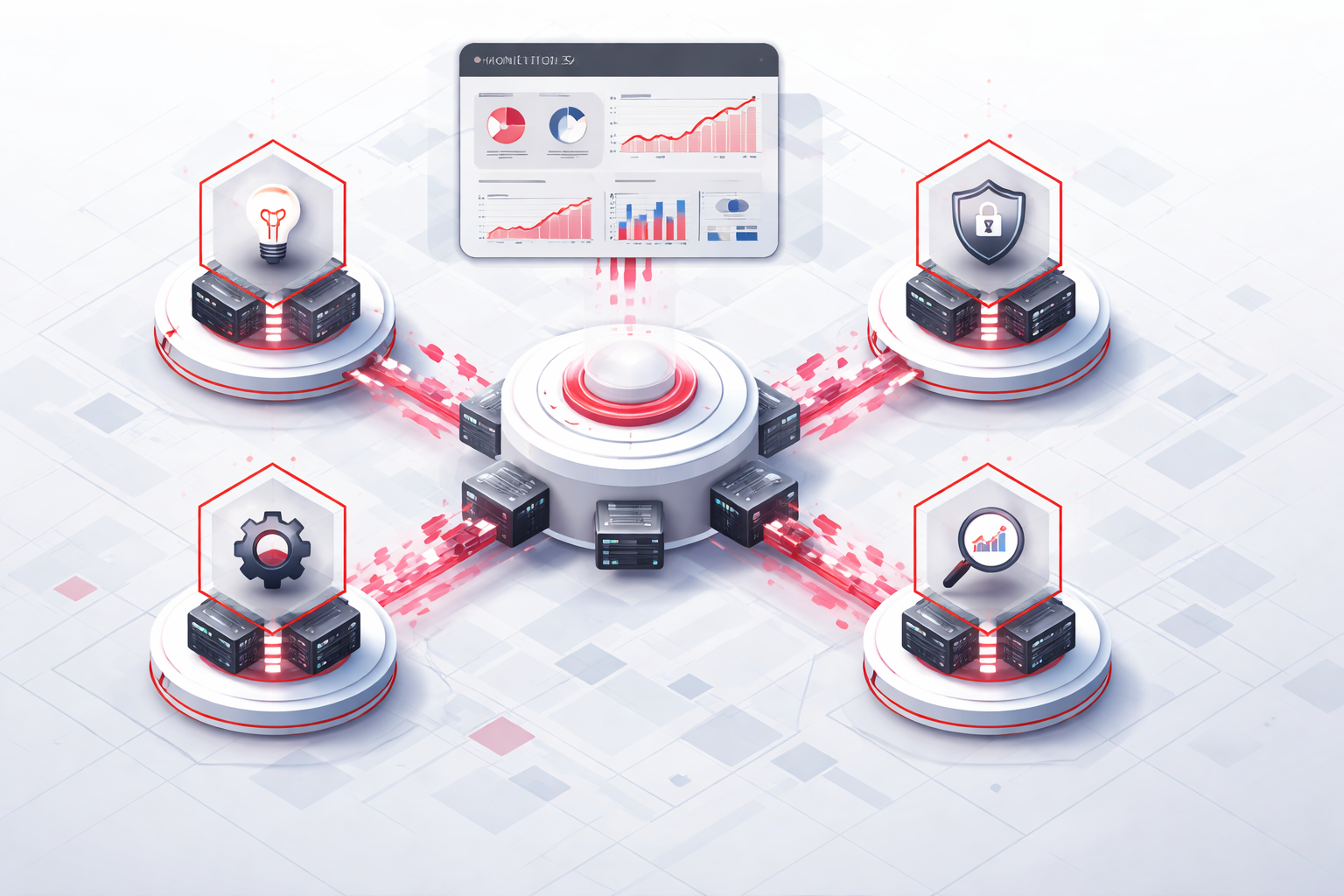
Build happens in three layers. The first is the agent fleet. We design each agent for a single responsibility with a clear set of tools, a defined decision boundary, and a contract for what it produces and consumes from neighboring agents. The intake agent reads the inquiry, asks the right clarifying questions, and produces a structured patient record. The verification agent takes the record and coordinates payer checks. Each agent is small enough to test, audit, and improve independently.
The second layer is orchestration and shared context. Agents communicate through a shared workflow state that records every decision, every handoff, and every input. The state is observable end to end, which means the operator can see at any moment where any case is, what the agents have decided, and what is pending. Logging is built in by default, not added after.
The third layer is human-in-the-loop integration. Multi-agent systems must escalate cleanly. We define the explicit triggers where a human enters: clinical judgment, high-value decisions, compliance edge cases, anomalies, and any case where the agents lack confidence. The human sees the full context, makes the call, and the workflow resumes. The system is designed to make humans more leveraged, not to push them out.
Industries We Serve in Sioux Falls
Construction and Home Services. A roofer, HVAC contractor, plumber, electrician, remodeler, or landscaper running multiple crews across Brandon, Tea, Harrisburg, and Hartford manages a workflow that spans lead intake, qualification, estimate, scheduling, dispatch, completion, invoicing, and review. Multi-agent systems orchestrate the entire flow inside the spring through fall season, with specialized agents handling each stage and human attention reserved for the genuinely complex jobs.
Real Estate. Brokerages, mortgage brokers, and property managers in Sioux Falls run multi-stage workflows across listing, marketing, lead handling, showing coordination, contract management, financing, and closing. Multi-agent systems orchestrate the full transaction lifecycle so a relocating Minneapolis family moves through agents handling each phase rather than waiting on a single overworked coordinator.
Specialty Healthcare. Vendor and specialty practices tied to the Sanford and Avera referral networks (dental, orthodontic, chiropractic, physical therapy, dermatology, OB-GYN, optometry, audiology, mental health, med spa) run patient flows that span intake, verification, scheduling, prior auth, treatment, billing, and recall. Compliance-aware multi-agent systems handle the routine flow inside HIPAA, escalate clinical judgment to providers, and let front-desk and clinical teams focus on the patient relationship.
Financial Services. Insurance brokers, wealth managers, credit unions, accounting firms, and the mid-market fintech bench underneath Wells Fargo, Citi, and First PREMIER run client onboarding, ongoing service, and compliance workflows that cross advisors, custodians, document processors, and reviewers. Multi-agent systems orchestrate household-level flows with audit trails preserved at every hop.
Senior Care. Assisted living, memory care, home health, and hospice operators across the Sioux Empire run inquiry, tour, application, move-in, ongoing care, and family communication workflows that intensify through the Q4 to Q1 family decision window. Multi-agent systems handle the intake and operational orchestration so the human team focuses on the family relationship and clinical care that matters most.
Manufacturing and Professional Services. Precision ag suppliers, ag-tech operators in the Raven Industries and POET Energy orbit, Daktronics-tier industrial fabricators in the East Side belt, and the law and accounting firms clustered between downtown and the Empire Mall area run multi-stage workflows for quoting, project management, document production, billing, and engagement reporting. Multi-agent systems orchestrate the administrative spine so the senior people focus on the engineering, the legal advice, or the audit work.
What to Expect Working With Us
1. Workflow Decomposition. A fixed-price engagement that maps the operator's end-to-end workflow, identifies the agent roles and handoffs, defines the escalation triggers, and produces a written orchestration plan. The plan is the architecture document the operator owns regardless of next steps.
2. First Two Agents Live. Inside sixty days the first two agents in the workflow are operational with full observability, shared workflow state, and human review on every action. The handoff between them is exercised on real cases.
3. Full Orchestration. Inside one hundred and twenty days the full agent fleet is deployed end to end across the workflow. Human review tapers to exception cases. Operator-side reporting shows throughput, accuracy, and time-saved metrics in real time.
4. Compounding Phase. Months four through twelve are when the multi-agent system runs as the operational backbone of the workflow. Adding new edge cases, new payer types, new property categories, or new manufacturing variants becomes a configuration change rather than a project.