What We Do
A supply chain that requires human coordination at every step is a supply chain that breaks when one person is unavailable. Purchase orders that should generate automatically require someone to remember to create them. Supplier communications that should be systematic depend on a buyer who has seventeen other things to do. Shipment status that should update automatically requires a customer service rep to check a carrier website.
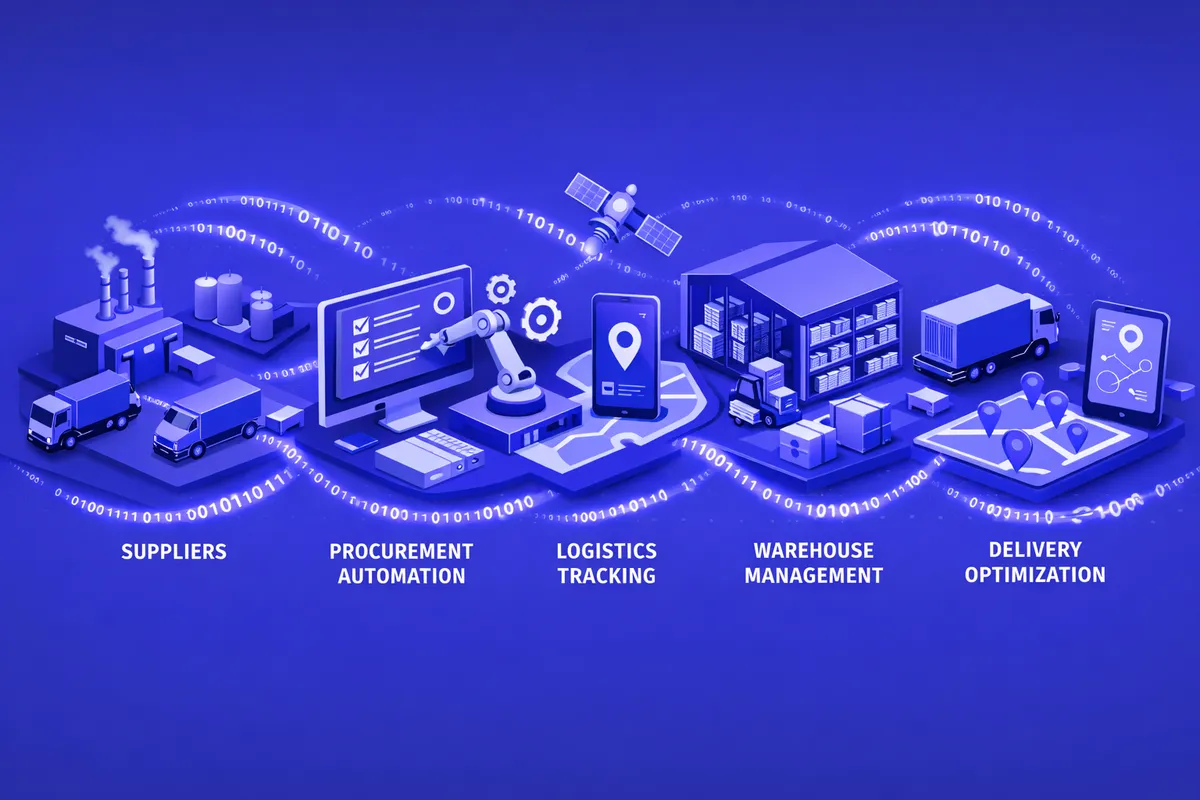
Supply chain automation connects those dots: when inventory falls below a reorder point, a purchase order is generated and sent to the right supplier. When an order is shipped, the customer receives tracking information. When a supplier confirms a delivery date, the relevant teams are notified. No manual steps, no dropped balls.
How We Work
We begin by mapping your full supply chain: supplier relationships and their communication capabilities, inventory reorder logic, procurement approval rules, carrier integrations, and customer communication triggers. That map identifies every manual touchpoint and evaluates each for automation. We then design the automation architecture: reorder triggers connected to your inventory system, purchase order generation and routing, EDI or API connections to suppliers depending on their capability, carrier tracking integrations for real-time shipment visibility, and customer notification workflows.
Approval routing is built for purchase orders above threshold amounts. Exception handling manages situations where supplier confirmation is late, a carrier reports a delay, or a shipment arrives with discrepancies. Every automation event is logged for audit and reporting purposes.