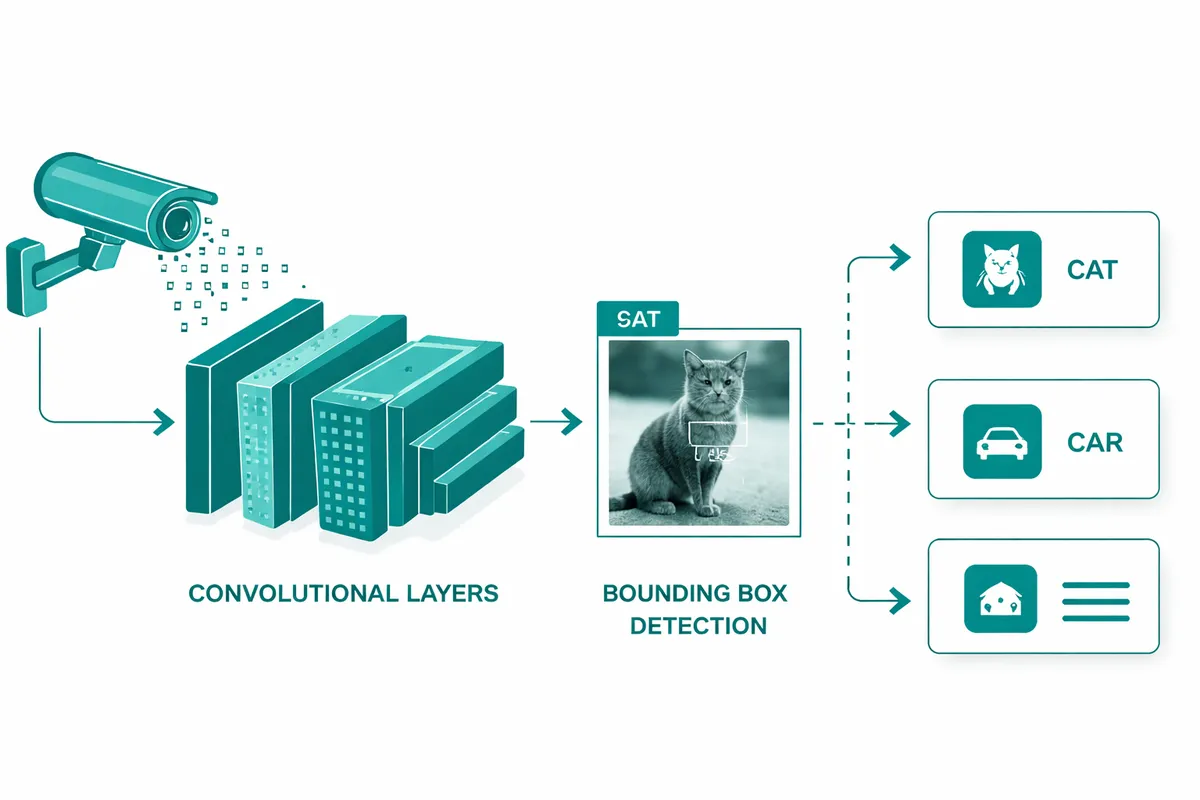
Our Computer Vision Work in New York
- Fashion product image classification, attribute extraction, and visual search for retailers and brands in SoHo, the Garment District, and DTC e-commerce operations
- Media asset tagging, scene detection, duplicate identification, and content cataloging automation for publishers and production companies in Midtown and Hudson Yards
- Document image extraction and data capture for financial services and legal firms in FiDi and Midtown, including contract classification, form extraction, and verification
- Medical image pre-screening, anomaly detection, and worklist prioritization for hospital systems and diagnostic imaging centers across the five boroughs
- Retail shelf monitoring, inventory counting, and planogram compliance for consumer goods companies and retail chains
- Real estate property image analysis, virtual staging quality control, and listing image processing and classification
- Identity verification and fraud detection document analysis for fintech and financial services companies in Silicon Alley
- Security video analytics and access control for commercial properties, mixed-use developments, and institutional facilities
Industries We Serve in New York
Financial Services and Fintech (FiDi, Midtown, Hudson Yards). New York's financial sector processes enormous volumes of document images: contracts, loan applications, compliance filings, account opening forms, and trade confirmations. Manual document processing is slow, expensive, and error-prone at scale. Computer vision-based document processing handles classification, data extraction, and verification at speeds and accuracy levels that human review cannot match. For fintech companies in Silicon Alley handling identity verification and fraud detection, we build computer vision pipelines that process document images in real time at transaction scale.
Fashion and Retail (SoHo, Garment District, DTC brands). New York's fashion industry is one of the country's most data-intensive creative industries. Product catalog management at scale requires automated image attribute extraction: color, pattern, silhouette, material, occasion, and style category. Visual search allows shoppers to find products by image rather than keyword. Counterfeit detection systems protect brand integrity in secondary markets. We build fashion computer vision systems for brands ranging from independent DTC companies to major department store retailers.
Media, Publishing, and Entertainment (Midtown, Hudson Yards). New York's media companies manage content archives that span decades and require intelligent search, categorization, and rights tracking. Scene detection, object recognition, person identification, and content tagging at scale make archives searchable and repurposable. Broadcast and streaming companies use computer vision for quality control, automated closed captioning, and content moderation. We build media vision systems that handle the volume and format diversity of professional media archives.
Healthcare and Medical Imaging. New York City's healthcare sector includes some of the world's most complex clinical organizations. NYU Langone, Mount Sinai, NewYork-Presbyterian, and Montefiore collectively process millions of imaging studies annually. Computer vision that assists radiologists with triage, anomaly flagging, and worklist prioritization improves throughput without adding clinical staff. Every healthcare deployment is HIPAA-compliant by design, using de-identified training data and compliant deployment infrastructure.
Real Estate and Proptech. New York's real estate market generates high volumes of property photography, floor plans, and inspection documentation that computer vision processes effectively. Listing image quality assessment, virtual staging consistency verification, damage detection in inspection photos, and space classification are all applications we have built for New York real estate operators and proptech platforms.
Legal Services (Midtown). Large law firms in Midtown process high volumes of scanned legal documents: contracts, filings, evidence materials, and correspondence. Computer vision-based document classification and extraction accelerates discovery, due diligence, and document review workflows. We build legal document processing pipelines that integrate with your matter management and e-discovery systems.
What to Expect
Discovery. Two weeks evaluating your specific visual data challenge: what you need to detect, classify, or extract, the volume and throughput requirements, the data you have available for training, and the compliance constraints that apply. We produce a feasibility assessment with accuracy projections and a realistic scope before any development commitment.
Strategy. We design the complete system architecture: model design approach, training data plan, integration specifications, compliance design, and deployment environment. For New York clients with NYDFS, HIPAA, or content licensing compliance requirements, these are addressed during the architecture phase.
Implementation. Data collection and annotation, model training and validation, integration development, and staged deployment. We test against your actual production conditions and data distributions before sign-off. Most New York projects run 10 to 16 weeks, with timelines compressed when labeled data already exists.
Results. Monitoring dashboards tracking accuracy, throughput, and exception rates. Ongoing maintenance includes model retraining as data distributions shift and expansion support for new use cases and object classes.