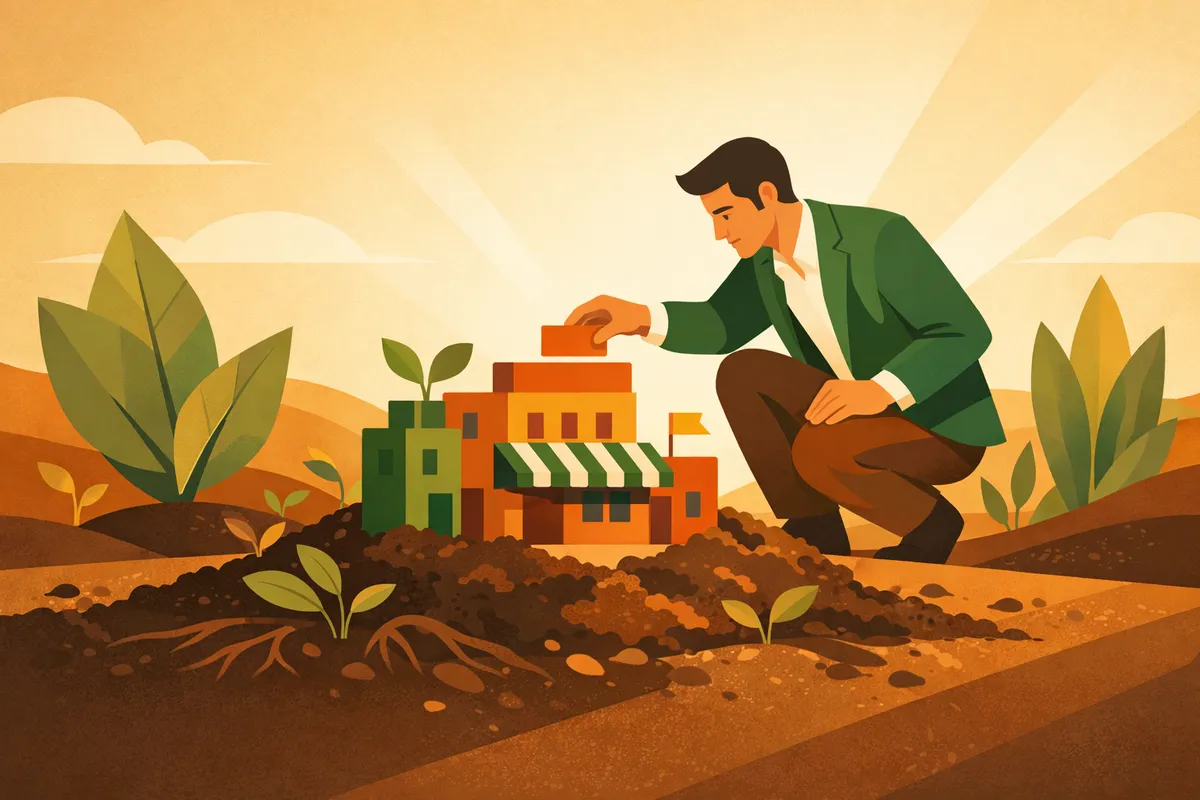
The Ownership Question
Venture capital is not free money. It is an exchange. You trade equity and control for cash and, theoretically, access to a network. The equation seems simple when you are staring at a wire transfer from a firm with a recognizable name. But the actual cost reveals itself over time:
- You answer to a board. Your decisions require approval from people whose incentives may not match yours.
- You operate on an exit schedule. The fund has a 10-year life. Your company must return capital within that window.
- You cannot stay small and profitable. If growth slows, you face pressure to pivot, sell, or shut down.
- You cannot walk away. Shareholders have rights. Your flexibility disappears.
Bootstrapping is not a rejection of ambition. It is a different thesis about how ambition gets built. It says: I will generate revenue from customers first. Revenue is the only validator that matters. With revenue, you control the timeline. With revenue, you build for your actual customers instead of the investors' exit thesis. With revenue, you keep the company.
This is not for everyone. Bootstrapping is harder at the start. It requires discipline, saying no to premature hiring, and moving slowly where venture capital allows speed. But for founders who want ownership and sustainable profit, bootstrapping is often the superior path.
The Economics of Revenue-Funded Growth
A venture-backed startup operates under a different set of laws. It must grow at a rate that justifies the capital deployed.
Here is the math. If you raise $5 million at a $20 million post-money valuation, you have diluted your founders' stake to 75%. To make that worthwhile for investors, the company must return $100 million or more at exit. That is the deal. That is why venture-backed companies must grow fast and pursue winners-take-most markets.
A bootstrapped startup operates under the law of cash flow. Every dollar you spend must be recovered from customers. There is no margin for waste. There is also no deadline. Your $100,000 in revenue does not need to become $1 million next year. If your business generates $20,000 in monthly profit, you have $240,000 per year to reinvest or take home. You set the pace.
Different Behaviors, Different Companies
These two paths create fundamentally different behaviors:
| Venture-Backed | Bootstrapped | |
|---|---|---|
| Optimizes for | Growth rate, market share | Unit economics, customer retention |
| Hiring | Ahead of revenue | When revenue demands it |
| Spending | Aggressive acquisition | Only what customers pay for |
| Product | Features that signal ambition to investors | Features customers ask for |
| Pressure | External: grow or die | Internal: stay profitable |
Over time, the bootstrapped company that reaches profitability has learned how to operate efficiently. It has customers who use it actively. It has no external pressure to abandon the business model when growth slows. Both paths produce successful companies. But they produce different kinds of success. You should choose consciously.

When Bootstrapping Works Best
Bootstrapping succeeds in markets where you can charge for value quickly. It fails in markets where you need to spend heavily before you can charge anything.
Where It Works
- B2B services. A consultant or agency can start today. Find three clients. Charge them. Use that revenue to hire contractors. Grow from profit. A founder with domain expertise can become a services business on day one and a productized service by year two.
- Narrow B2B SaaS. Instead of building a platform for "all teams everywhere," you build for "accounting teams at B2B marketing agencies." The specificity lets you charge from month one. Early customers pay $5,000 to $10,000 per year because the product solves their exact problem. You use that revenue to expand into adjacent segments.
- Niche products with high margins. If you are selling a physical product with 60%+ margins to a specific community, you can fund growth from profit. Make the first batch. Sell it. Make the next batch larger. The cycle compounds.
Where It Struggles
- Consumer social networks. You need massive scale before the network has value. You cannot charge consumers upfront.
- Deep hardware or biotech. The first customer is years away. R&D costs are enormous before any revenue flows.
- Markets requiring regulatory approval. Compliance costs burn cash before you can sell.
The test is simple: Can you get a paying customer in month three? If yes, you can bootstrap. If not, you are going to need capital from somewhere.
The Lean Operation
Bootstrapping is not an excuse to cut corners on what matters. It is a mandate to cut everything that does not matter.
What matters: - Your ability to serve customers well - The founder's time and attention - Building something people actually need - Understanding why customers chose you - Keeping customers happy enough to stay and refer others
What does not matter: - Office space (work from home the first year) - A big team (you and contractors you pay only for needed work) - Impressive titles or proven business processes - A fully-built product roadmap before you have 10 customers
The lean operation is built around the constraint that you have limited capital and limited time. You optimize for learning fast and spending slow. You use software platforms instead of hiring specialists. You test ideas with customers before you build for six months.
Ship, Learn, Improve
Venture-backed companies often justify polish with their capital. "We raised $5 million so we'd better look like a $5 million company." You cannot afford this story. You ship the thing that works. You take feedback. You improve. You do this monthly instead of quarterly.
Over time, this builds a different kind of rigor. You learn customer truth faster than funded competitors. You adapt faster because you have fewer committees to convince. You avoid catastrophic bets because you cannot afford to be wrong about big decisions.
Revenue From Day One
The bootstrap path begins not with a grand vision but with a customer. You need someone with a problem, a willingness to pay for the solution, and a way to reach them quickly.
Three Proven Approaches
1. Pre-sell before you build. Identify potential customers and offer to build a custom solution. They pay you. You build. You deliver. You now have revenue and proof of concept. A SaaS founder might pre-sell 5 annual licenses at $5,000 each, generating $25,000 to fund development.
2. Productized services. You solve a specific problem for a specific type of customer on a fixed timeline for a fixed price. Example: "I will audit your marketing funnel and create a 30-day improvement plan for $5,000." You can deliver this 10 times per month. That is $50,000 in monthly revenue. As you refine the process, you automate parts of it and eventually turn it into software.
3. Consulting while building. Consult in your domain to pay the bills and fund product development. Many successful founders spent two to three years consulting in their industry, understanding problems deeply, building relationships with potential customers, and saving capital. The consulting income funded the early product. Eventually product revenue surpassed consulting revenue and they transitioned.
The key to all three: you have real customers paying you real money. This is not a grant from your parents or an investment from angels. It is payment for value delivered. If customers will not pay for it, no amount of venture capital will change that. If customers will pay for it, you have found the seed that grows into a business.
Cash Flow Management and the Bootstrapper's Model
A bootstrapped business lives and dies by cash flow. Not profit. Not growth rate. Cash flow.
Cash flow is the actual money moving in and out of your bank account. You might have $1 million in annual recurring revenue but if your customers do not pay for 90 days and you need to pay contractors weekly, you will run out of cash. You will die with revenue in the pipeline.
The Bootstrapper's Financial Dashboard
Track three numbers religiously:
- Monthly revenue: What customers actually paid you this month (not invoiced, not projected, paid)
- Monthly expenses: Salary, software, contractors, customer acquisition, everything
- Runway: How many months of expenses you can cover with cash on hand
Target: cash flow breakeven within six months. This means monthly revenue equals monthly expenses. You are no longer burning through savings. Every dollar you make can be reinvested.
The Critical Mindset Shift
From breakeven, you have choices. You can take all profit as salary. You can reinvest all profit into growth. You can do something in between. You control the trade-off. A venture-backed founder does not have this choice. They must grow because investors expect it.
Be conservative with assumptions and aggressive with measurement. Do not project growth you have not yet achieved. If you are growing 10% month-over-month, model that continuing. If growth is slowing, model the slower rate. Measure actual results against your model every month.
The survival rule: If your model says you have 12 months of runway, plan to reach breakeven in nine. Many bootstrapped businesses fail not because the idea is bad but because the founder did not manage cash flow aggressively enough. They spent on growth before reaching profitability. They hired too fast. They ran out of cash with customers in the pipeline.
Ownership and Full Control
This is the underrated advantage of bootstrapping. You own the company. All of it. Every success flows to you. Every mistake is yours to learn from. Every decision is yours to make.
The Exit Math
Consider a sustainable $10 million annual revenue business throwing off $2 million in annual profit.
- Bootstrapped founder: Can simply keep the company and enjoy the profit. Or sell at $20 million to a strategic buyer and walk away happy. Full control over the decision.
- Venture-backed founder: Must find a buyer willing to pay $100 million+ to justify the capital deployed. If no one will pay that, the board pushes for a merger, acquisition at a lower price, or continued growth until someone will. The game continues whether you want to play or not.
Features and Pricing Freedom
A bootstrapped founder can charge what their customers can afford. They can build features that make existing customers happy. They can optimize for customer success and retention. A venture-backed founder needs to acquire customers faster to justify the burn rate. They might build features that attract new customers instead of serving existing ones. They might price for scale instead of actual customer value.
None of this makes venture capital wrong. Many founders want to build massive companies and venture capital accelerates that path. But understand the cost. Ownership and control are what you trade for capital and speed.
When to Raise Later, From a Position of Strength
Some bootstrapped companies reach a point where raising capital makes sense:
- You have product-market fit
- You have revenue and profitability
- Customers are telling you to hire more because you are too slow
- You have identified a massive adjacent market with a clear expansion path
- Investors have approached you because they see the traction
Raising from this position is completely different from raising as a first-time founder with an idea. You have leverage. You can be picky about investors. You can demand fair valuations. You build first, then raise to accelerate.
Example companies that bootstrapped first: - Mailchimp was profitable before investors approached them. They ultimately sold for $12 billion without ever taking VC. - Basecamp has never raised. They chose not to. They have been profitable for over 20 years. - ConvertKit bootstrapped to $1 million ARR before considering outside capital.
Raising is a tool. It is not success. It is not validation. It is capital you can use to accelerate growth. Use it if it helps you build a better company. Do not use it because investors are offering or because you think it is what founders are supposed to do.
The Bootstrapped Advantage
Venture capital has the advantage of speed. You can hire fast, spend on marketing, grow before competitors, and take risks on new product lines because you have capital to absorb the loss.
Bootstrapping has advantages that are harder to see at first but compound over time:
- You learn business fundamentals that venture-backed founders often skip
- You understand unit economics because you have to
- You understand customers deeply because they are paying you directly
- You build efficiently because waste is painful
- You build real relationships with customers because you have to defend your revenue
- You make better long-term decisions because short-term growth is not forced on you
This is not motivational speaking. This is structural. When your business generates profit on day one, you learn faster than when investors are funding your losses. When your paycheck depends on happy customers, you build better products than when success is measured by user growth. When you have full ownership, you make decisions that make sense for the business instead of decisions that look good to investors.
Many bootstrapped founders stay small and profitable. This is not failure. This is choice. They have chosen to own a valuable business that generates income instead of owning a smaller piece of a huge company. Both are valid. Choose consciously based on your values, not based on what you think you are supposed to do.
Related Guides
How to Build Your Investor Pipeline Before You Need Money
Start building investor relationships before your raise. Learn how to create a warm pipeline so capital is ready when you are.
Financial Modeling for Founders Who Hate Spreadsheets
Build a startup financial model without an MBA. Learn the five numbers that matter, unit economics, and honest assumptions investors trust.
The Founder's Guide to Seed Fundraising
A complete guide to raising your seed round. Build your investor pipeline, nail your pitch, negotiate terms, and close the wire.