Our UI/UX Design Work in Detroit
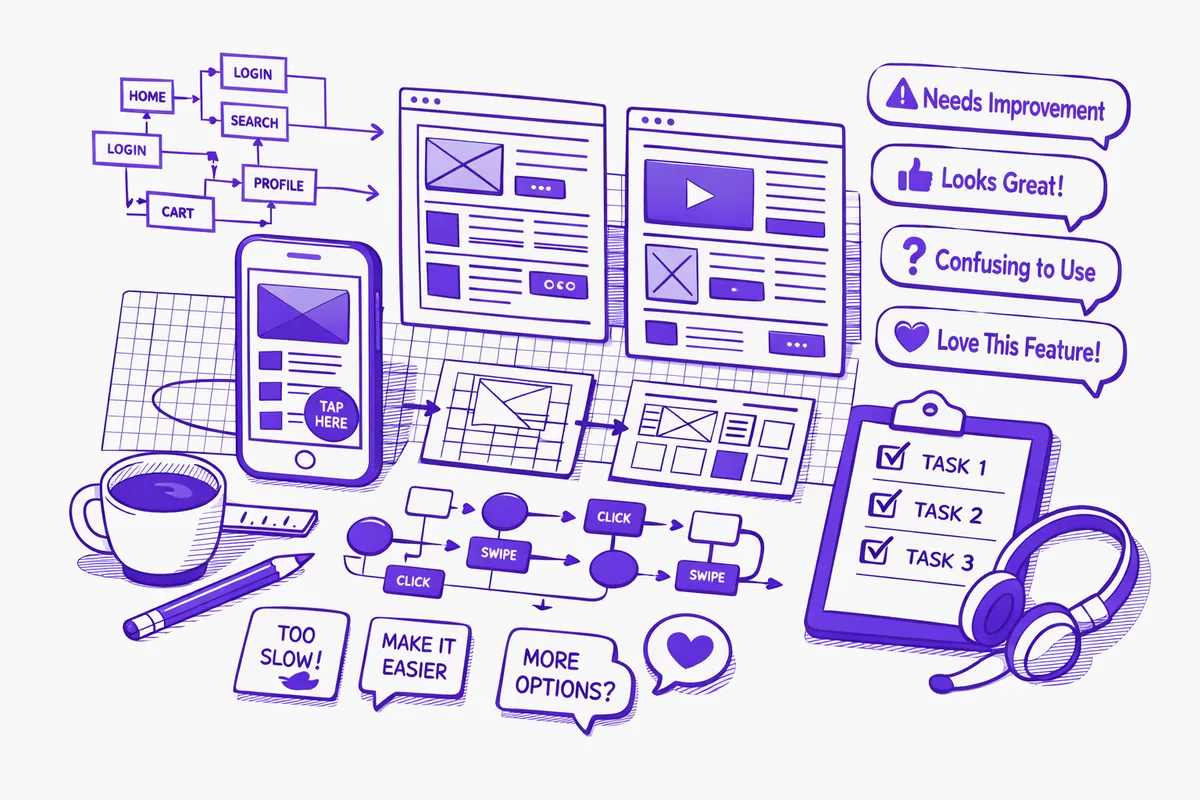
- User research: moderated interviews, contextual inquiry in actual work environments, and usability testing
- User journey mapping covering all user types and roles within complex multi-stakeholder applications
- Information architecture and navigation design for multi-role enterprise applications
- Wireframing and low-fidelity prototype creation and stakeholder review
- High-fidelity interface design and interactive Figma prototypes
- Mobile app design for iOS and Android, including ruggedized device considerations
- Web application and SaaS product design with enterprise detail
- Automotive supplier portal and dealer management interface design
- Manufacturing floor and quality management system UX
- Healthcare application design with clinical workflow integration
- Design systems and shared component libraries for product development teams
- Accessibility design meeting WCAG 2.1 AA compliance
- Developer handoff with complete Figma specifications and component documentation
Industries We Serve in Detroit
Automotive Technology and Mobility: The automotive technology sector around Dearborn, Warren, and Auburn Hills is one of the highest-complexity UX environments in the world. We design supplier portals, dealer management systems, connected vehicle interfaces, fleet management tools, and mobility platform applications for the companies serving the OEMs and building the next generation of transportation software. Our process includes contextual research in manufacturing environments, not just usability labs.
Manufacturing and Industrial Software: Detroit's manufacturing base, which extends from the city proper through Macomb County and into the broader Southeast Michigan industrial corridor, operates software that touches every stage of production. ERP systems, quality management platforms, production tracking tools, and maintenance management applications all need interfaces designed for the conditions in which they are actually used. We design for the plant floor, not the conference room.
Healthcare Systems and Clinical Applications: Henry Ford Health System, Detroit Medical Center, Beaumont Health, and their associated clinical programs represent a significant healthcare IT market. Clinical applications serve physicians, nurses, and administrative staff under time pressure and cognitive load that make usability failures especially costly. We design healthcare applications with the clinical context in mind, including workflow integration, role-based interfaces, and accessibility requirements for diverse patient populations.
Fintech and Financial Services: Detroit's growing fintech community, supported by TechTown and the broader startup ecosystem, is building products that serve underbanked communities and small business owners across Metro Detroit and beyond. We design financial applications that communicate trust while reducing the barriers that have historically excluded parts of Detroit's population from financial services.
Professional Services Workflow Tools: Law firms, accounting practices, consulting firms, and other professional services organizations in Downtown Detroit and Midtown operate internal tools that determine team productivity. We design workflow applications, client portal systems, and knowledge management tools that serve the specific working patterns of professional services organizations.
Logistics and Transportation Technology: Detroit's position at the center of the North American automotive supply chain creates demand for logistics and transportation management software that is sophisticated and widely deployed. We design these systems for the dispatchers, fleet managers, and logistics coordinators who use them daily.
What to Expect
Discovery and Research: We begin by understanding your users in their real context. For automotive and manufacturing clients, this means observing actual workflows on the plant floor or in the dealer service bay. For healthcare clients, it means understanding the clinical workflow before designing any interface. We review existing analytics and support data, interview users, map the current experience, and identify specifically where it breaks down. This phase produces the evidence base that makes all subsequent design decisions defensible.
Information Architecture and Wireframing: With research complete, we design structure before surface. Information architecture defines how features and content are organized for the different user types your application serves. Wireframes establish flow and layout without visual design distraction. We review wireframes with stakeholders, conduct lightweight usability testing on key flows, and refine before committing to high-fidelity design work.
High-Fidelity Design and Prototyping: We build precise interface designs in Figma, including interactive prototypes that allow stakeholders and test users to experience the product before development begins. This phase includes design system creation, ensuring every component is consistent, documented, and ready for developer implementation.
Testing, Iteration, and Handoff: We test prototypes with real users matching your target demographic, including users in actual work contexts for manufacturing and automotive clients. Testing findings are incorporated before final handoff. Developer handoff includes annotated Figma components, interaction specifications, and design system documentation. We remain available during development to review implementations and address questions.
Ready to Improve Your Product's User Experience in Detroit?
Detroit businesses understand engineering quality. Running Start Digital applies that standard to digital product design. Every design decision is grounded in research, validated with real users, and documented for accurate implementation. Schedule a consultation to discuss your product, your users, and where UX improvements will have the most impact on adoption, productivity, and business outcomes across Metro Detroit.