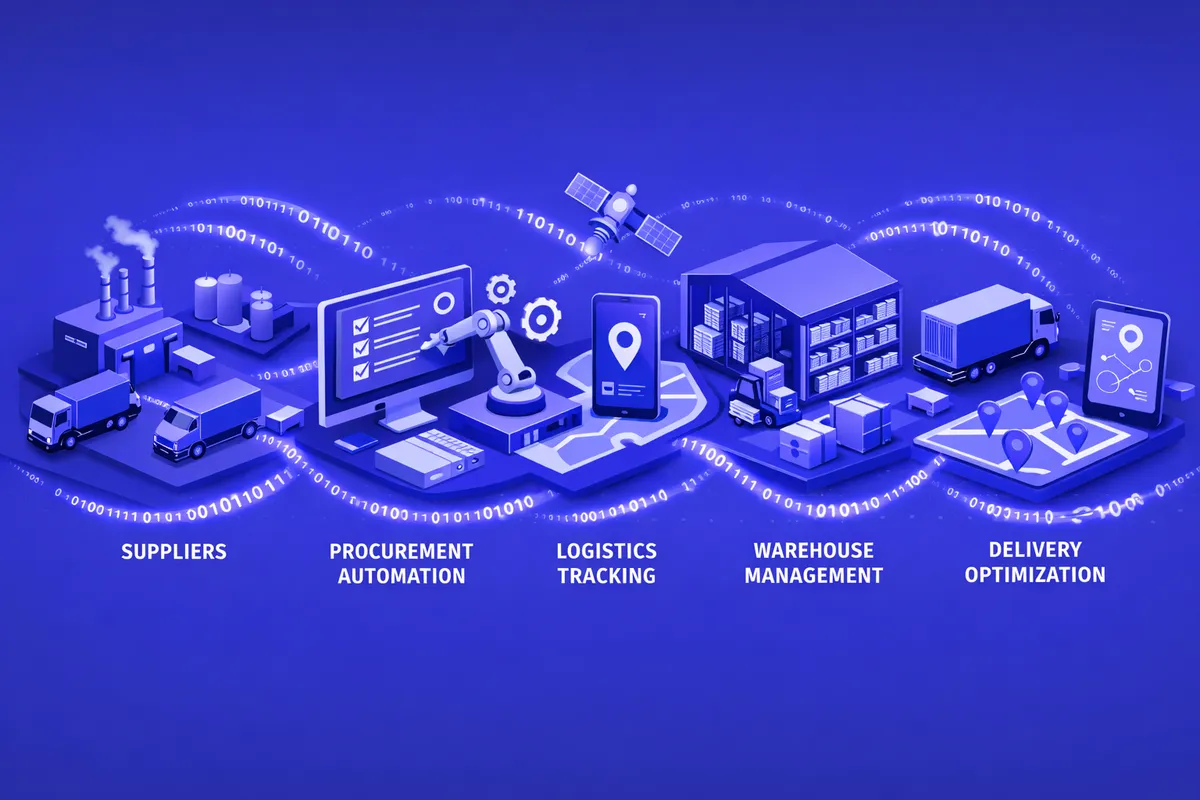
How We Build Supply Chain Automation for Wicker Park
Supply chain automation for Wicker Park operators starts with a vendor and process audit that respects the informal structures these businesses have built. We catalog every vendor relationship: contract terms or informal agreements, order frequency, lead times, historical performance, and the current process for ordering, receiving, and reconciling. For a Milwaukee Avenue boutique with a vintage and new inventory mix, that catalog spans distributor relationships, estate sale pipeline contacts, and import vendors with fundamentally different procurement rhythms.
From the vendor catalog, we map workflows to identify where informal processes create risk. Most Wicker Park businesses have procurement "processes" that exist in the owner's or manager's head rather than in a documented system. That works until the person leaves or the volume exceeds what one person can track. Automation captures the informal process, makes it explicit, and runs it consistently regardless of who is managing the operation day to day.
Wicker Park's creative-class character means automation must fit the aesthetic of how these businesses operate. We do not impose enterprise procurement systems built for manufacturing on a Damen Avenue design studio. We design automation that matches the actual workflow: lighter on bureaucracy, focused on the vendor categories that generate the most friction, and built to improve over time as performance data accumulates.
We integrate supply chain automation with your accounting system so purchase orders generate expected expense records, received inventory updates counts without manual entry, and invoices route for payment after reconciliation against purchase orders. For small independent retailers, this integration with QuickBooks or similar systems often has the most immediate impact because it eliminates the monthly reconciliation session that currently consumes half a day.
Industries We Serve in Wicker Park
Independent boutique retailers on Milwaukee Avenue manage procurement across product categories with different vendor relationships, minimum order requirements, return policies, and lead times. Automated reorder point management monitors inventory levels and triggers purchase orders at the right time to avoid stockouts during the fall retail season without requiring the owner to review stock counts manually every week. Vendor performance tracking builds documented records that inform buying decisions at trade shows and seasonal market visits.
Music venues and event spaces near the Flat Iron Arts Building and along Division Street manage procurement for bar inventory, event supplies, equipment maintenance, and contractor services across a concert calendar with unpredictable demand spikes. Automated bar inventory monitoring with par level management connected to the event calendar reduces over-ordering during slow weeks and prevents stockouts before high-attendance shows.
Vintage and consignment retailers on Damen Avenue manage vendor relationships that do not fit standard procurement models: estate sale networks, consignment agreements with individual sellers, and import vendors with irregular delivery cycles. Automated vendor communication tracking logs every outreach, every shipment, and every payment so consignment reconciliation at month-end requires minutes rather than hours of backtracking through text messages and email threads.
Bars and restaurant operations along North Avenue and Milwaukee Avenue manage procurement cycles where beverage distributor reliability and pricing accuracy directly affect margin. Automated invoice reconciliation against contracted distributor pricing catches price discrepancies at receipt rather than during monthly reconciliation when the invoice has already been paid.
Design studios and creative agencies in Wicker Park manage procurement for production materials, software subscriptions, contractor services, and client event hosting. Automated procurement workflows with approval routing by project code and dollar threshold replace the informal purchasing processes that currently produce inconsistent expense attribution and missed approvals.
Tattoo shops and specialty service studios on Hoyne Avenue and Wolcott Avenue manage supply procurement for equipment, materials, and cleaning supplies with vendor relationships that require compliance documentation alongside standard purchasing. Automated compliance tracking alongside purchase order management ensures that supply vendor certifications are current at the time of each order rather than discovered to have expired during a routine audit.
What to Expect Working With Us
1. Vendor and procurement process inventory. We spend the first two weeks documenting your complete vendor landscape and current procurement workflows without disrupting the informal systems that keep your business running. This inventory produces a vendor performance baseline and identifies where automation will reduce the most friction for your specific Wicker Park operation.
2. Automation architecture and integration design. We design the automation layer to match your actual workflows rather than force-fitting an enterprise procurement model. For most Wicker Park independent businesses, the integration priority is accounting system connectivity, because it eliminates the manual reconciliation cycle that creates the most concentrated time cost.
3. Phased build with priority on highest-friction workflows. We build and deploy automations in order of business impact, starting with the procurement workflows that generate the most manual work or carry the most financial risk. For a Milwaukee Avenue boutique, that typically means reorder management for core inventory categories first, followed by vendor performance tracking, followed by consignment reconciliation automation.
4. Vendor communication rollout and performance monitoring. Effective supply chain automation includes vendor-facing components: purchase order transmission, acknowledgment tracking, and delivery confirmation. We manage the vendor rollout and provide a monitoring view that shows you the performance data you need to make better vendor decisions without requiring dedicated purchasing staff.