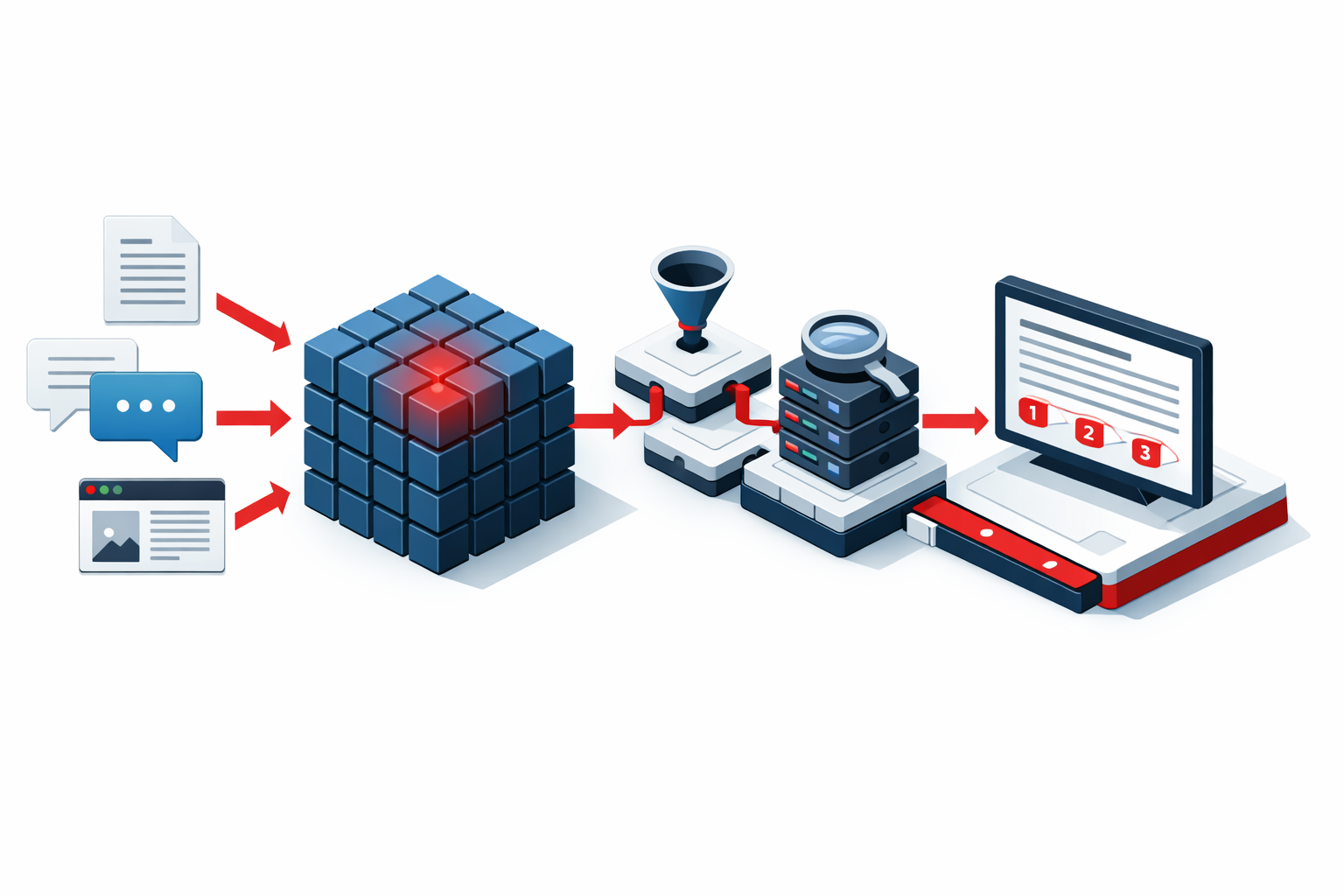
How We Build RAG Systems for Wicker Park
The first step is a knowledge audit across all the places where institutional knowledge currently lives. For a music venue near the Damen Blue Line station, that means show calendars, booking communications, artist contracts, social media performance data, and the informal notes that experienced staff maintain. For a design studio in the Flat Iron Arts Building, it means project files, client emails, approved creative briefs, and past campaign performance reports. For a vintage retailer on Milwaukee Avenue or Hoyne Avenue, it means inventory records, purchase notes, and customer preference data.
We interview key team members to capture knowledge that exists only in people's heads. This interview process is systematic: we ask about decision logic, recurring patterns, historical context, and the reasoning behind choices that are not documented anywhere. The output is a written knowledge base that becomes the foundation of the RAG system before any indexing begins.
From the audit, we build an index that connects all the identified knowledge sources. We configure the retrieval system around the specific questions your team actually asks rather than generic categories. We test with real questions from real staff and refine the retrieval configuration until results are consistently accurate and useful.
Integration into existing workflows follows the indexing phase. Team members query the system from tools they already use: Slack, a dedicated web interface, or embedded search within project management tools. We train the team on effective query construction and establish processes so new knowledge flows into the system automatically as the business generates it. New shows get logged. New client projects get indexed. New inventory gets documented. The system stays current because it connects to the same tools the team uses to do the work.
Industries We Serve in Wicker Park
Independent Music Venues along Milwaukee Avenue use RAG to store complete show history, artist performance data, audience response, and promoter relationship records. A new booking coordinator has instant context before reaching out to any artist or promoter. Booking decisions improve because they reference documented history rather than relying on whoever happens to remember. Wicker Park's music scene reputation depends on consistent, informed programming decisions.
Design Studios and Creative Agencies working out of spaces on the North Avenue and Wolcott Avenue corridors use RAG to preserve client aesthetic preferences, past project direction, creative brief history, and competitive positioning notes. New designers onboard faster because the system answers questions that would otherwise require interrupting senior staff. Client relationships improve because work builds on documented history rather than reconstructing preferences from scratch each engagement.
Vintage and Boutique Retail Shops on Damen Avenue and Milwaukee Avenue use RAG to store the provenance, era context, and story behind inventory. Staff conversations with customers become more confident and specific because the knowledge backing up the recommendation is accessible instantly. Buyers use the system to avoid duplicate acquisitions and identify gaps in the current inventory mix.
Tattoo Shops and Independent Studios in the Wicker Park creative corridor use RAG to document client consultation notes, style preferences, reference imagery, and session history. Artists who join the shop have access to the client relationship context that previously lived only with the artist who built it. Client continuity survives staff transitions.
Bars and Restaurants operating in the Wicker Park scene near Division Street and North Avenue use RAG to store recipe documentation, supplier relationship notes, menu experiment outcomes, and event history. Staff can access the reasoning behind menu decisions, the story behind signature items, and the event programming history that informs future scheduling.
Independent Record Stores operating in the neighborhood use RAG to store album information, artist backstory, collector preferences, and sales history by category. Staff expertise deepens faster because the system provides the cultural context and collector community knowledge that previously required years of experience to accumulate.
What to Expect Working With Us
1. Knowledge Audit: We interview key team members and conduct a systematic audit of all the places where institutional knowledge lives in your Wicker Park business. We document show history, client preferences, inventory stories, decision logic, and any other knowledge that should survive staff transitions. This phase produces a written knowledge base before any technical development begins.
2. Integration and Indexing: We connect your data sources, including Google Drive, Slack, email, project files, and specialty platforms, into a unified index. We configure retrieval around the specific questions your team asks. We test with real queries from real staff and refine until results are consistently accurate and actionable.
3. Workflow Integration and Training: We integrate the RAG system into the tools your team already uses. We train staff on effective query construction. We establish processes so new shows, new client projects, and new inventory feed the system automatically through the tools the team uses to document work.
4. Ongoing Iteration: We review search result accuracy regularly in the weeks after launch. We refine retrieval configuration based on the queries that work well and those that return unsatisfactory results. We add new data sources as the business generates them and adjust the system as the team's needs evolve.