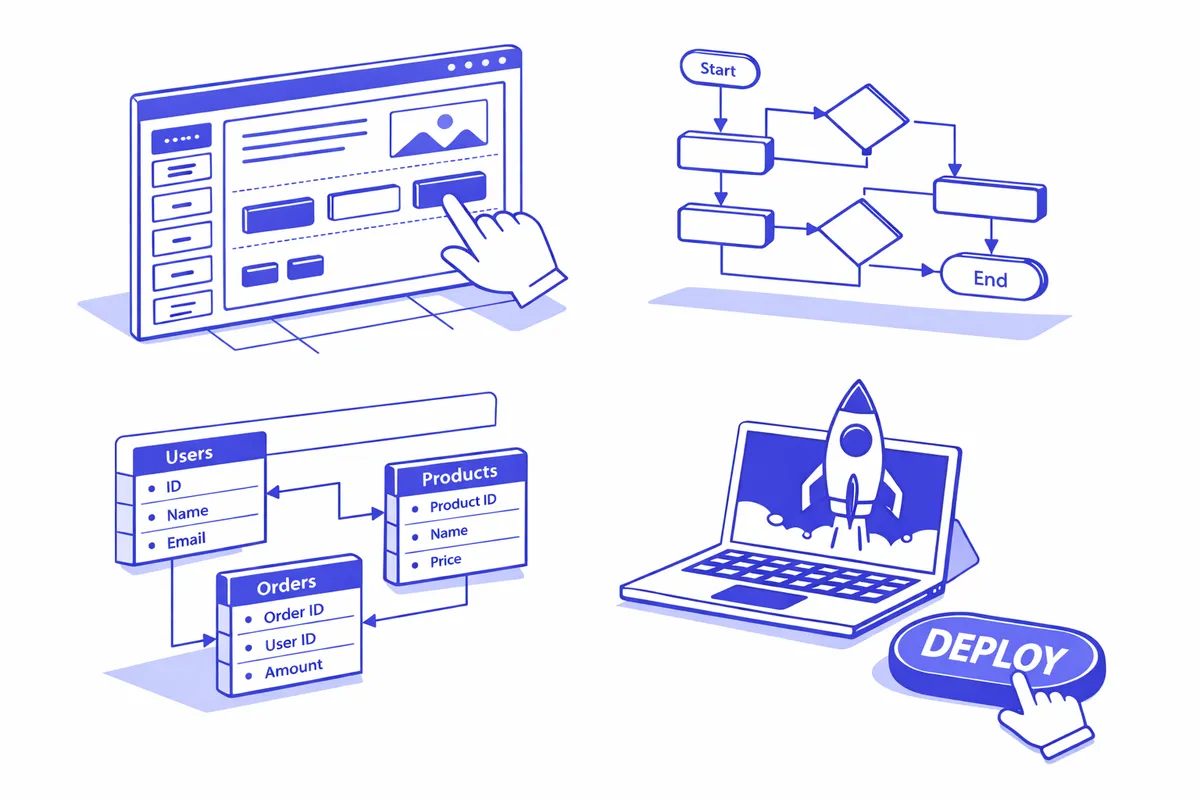
How We Build No-Code Platform Development for Wicker Park
Wicker Park businesses value directness. We approach every project by understanding the specific problem that is costing time or money, evaluating the simplest tool that solves it well, and building a system the operator can actually maintain without technical help.
For independent retailers on Milwaukee Avenue, that often means an Airtable inventory system with a Shopify or Square integration that keeps physical and online inventory synchronized without manual data entry. Adding new products, updating prices, and tracking what sold by category becomes a task the owner handles from their phone rather than a spreadsheet reconciliation session.
For creative agencies and design studios near the Flat Iron Arts Building, the right architecture is usually an Airtable project tracker with Zapier automations that send status notifications when milestones complete, move cards through stages when clients approve deliverables, and generate invoicing triggers when projects close. The team spends less time on status updates and more time on client work.
For music and event businesses, the build focuses on a central event record in Bubble or Airtable that links every downstream task, vendor, and communication. Everyone working the event sees the same information. No more lost texts containing the load-in time.
Industries We Serve in Wicker Park
Independent boutique retailers on Milwaukee Avenue and Damen Avenue use no-code to connect physical and online inventory, automate reorder triggers, and build customer communication tools that function like those of larger retailers without requiring the same operational staff.
Design studios and creative agencies near the Flat Iron Arts Building use Airtable project trackers with Zapier automations to manage client pipelines, approval workflows, and billing coordination without the complexity of enterprise project management software built for teams ten times their size.
Music venues and event production companies in the Milwaukee-Damen-North corridor build event coordination tools in Bubble and Airtable that link venue details, artist requirements, vendor contacts, and production timelines into a single record accessible to everyone working the show.
Tattoo shops and appointment-based studios on Damen Avenue and Hoyne Avenue build custom intake and booking management tools in Airtable that handle the deposit, consent, and aftercare communication workflow more elegantly than generic appointment booking platforms.
Vintage and specialty retail shops along Division Street use Airtable to manage curated inventory, track provenance information, and communicate with consignors in a structured system that spreadsheets cannot replicate without constant manual upkeep.
Bars and restaurants near Wicker Park and along North Avenue use no-code for private event inquiry management, staff scheduling coordination, and the vendor communication that runs on email threads until someone builds a proper system.
What to Expect Working With Us
1. Discovery and honest platform recommendation. We understand your specific operational problem first. Platform selection follows from requirements. We tell you what will actually solve the problem, including when the answer is a simpler tool than you expected or when no-code is not the right fit.
2. Architecture before configuration. We design the data model before touching the platform. For Wicker Park's owner-operators who will maintain the system themselves, a clean architecture from the start is what prevents the painful rebuilds six months later.
3. Build with continuous access. You preview the system as it develops. Your team validates that the tool matches your actual process before we finalize anything. We do not deliver surprises.
4. Handover your team can act on. Training is hands-on, not a recorded video. Documentation covers the system your team will actually use. The goal is that your operator can add a new field, adjust an automation, or create a new view without calling us.