How We Produce Logo Design for Wicker Park
The brief is not about preferences. It is about the business. We start by understanding what the business does, who it is for, what the owner wants people to feel when they walk through the door or land on the website, and what the business should not be confused with. For a bar near The Robey Hotel, the brief conversation might establish that the mark needs to feel rooted and independent, not craft-hipster-generic, and needs to work at signage scale above the door and at small scale on a cocktail napkin. Those are design constraints, not aesthetic preferences.
Reference gathering is a working process, not a mood board exercise. We ask the owner to point to identity work they find credible, in any category, and to identify what specifically works about it. We also ask for examples of identity work that feels wrong for the neighborhood, and to explain why. Both answers are useful. The negative references often tell us more than the positive ones. A Wicker Park studio owner who says "I don't want to look like a Logan Square coffee shop" is giving us meaningful information about how they see themselves in the neighborhood hierarchy.
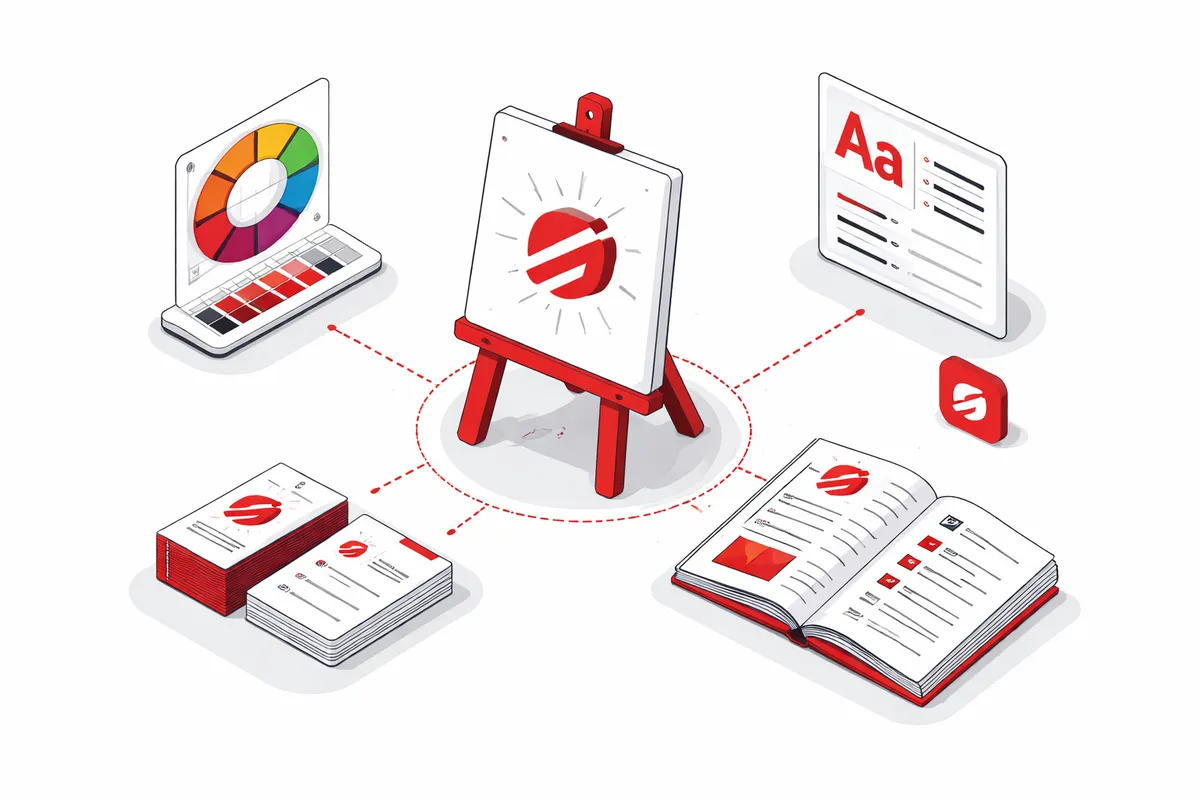
We produce two or three distinct directions, not a wall of variations. Each direction represents a genuinely different interpretation of the brief, not cosmetic iterations on the same concept. The presentation includes rationale for each direction: why it works for this business, what it argues about the brand, and where it will succeed or show limitations at different scales and contexts. The goal is a decision conversation, not a preference vote. We narrow to one direction, refine it through two rounds of feedback, and deliver a final mark with the complete file set for every context where it will be used.
Industries We Serve in Wicker Park
Tattoo shops and body art studios along Division Street and Hoyne Avenue are in one of the most visually sophisticated categories in the neighborhood. The clients who book tattoo appointments are themselves making a permanent visual choice, and they evaluate the studio's own visual identity as a proxy for the artist's taste. A studio mark that reads as generic or dated is a trust signal problem before a single consultation happens. We work from the artists' actual aesthetic and the studio's cultural position in the neighborhood.
Independent music venues and event spaces near The Robey Hotel and along North Avenue carry a legacy of visual identity that runs deep in Wicker Park. The Double Door's long history on this block established a standard for what a Wicker Park venue mark looks like: graphic, bold, local. A logo for a venue in this neighborhood has to hold up on a concert poster, work as a favicon on a ticketing site, and look right stitched on a hoodie. We build for all three uses from the start.
Boutique and vintage retailers on Milwaukee Avenue need marks that communicate the quality and intentionality of their curation without overexplaining it. The best retail logos for this market are confident and economical. They do not list services or taglines. They establish a feeling. A vintage shop logo that works understands the difference between nostalgia and authenticity and lands on the right side of that line.
Design and creative agencies near the Flat Iron Arts Building have an unusual brief: their logo is visible to the very same people who evaluate visual identity professionally. A design agency logo that looks like an uninspired exercise, or that follows a trend that was current three years ago, is a trust problem with their target client. We treat agency identity projects as the highest-scrutiny category we work in.
Bars and cocktail lounges scattered between North Avenue and Division Street serve a visual environment where every cocktail menu, every social post, and every piece of merchandise carries the brand. A bar logo that works for Wicker Park reads as independent and opinionated without trying too hard. The tension between those requirements is real and the design has to resolve it.
Specialty food and coffee businesses operating along Milwaukee Avenue and in the mixed-use blocks of the neighborhood compete in a category where visual identity is practically a prerequisite for media coverage, influencer attention, and word-of-mouth. A logo that photographs well, reads well in a black-and-white stamp on a coffee sleeve, and looks at home on an outdoor sign along Milwaukee Avenue is doing real marketing work with every customer interaction.
What to Expect Working With Us
1. Brief, references, and competitive landscape review. We spend the first session getting the brief right. That means understanding the business, the audience, the competitive context, and the specific visual territory the client wants to occupy or avoid. We look at other brands in the Wicker Park corridor and the broader northwest side to understand what is already in the market before we start sketching anything.
2. Two or three distinct directions, presented with rationale. We do not show rough sketches or concept thumbnails at the first presentation. We show refined directions that are far enough along to evaluate as real candidates. Each direction comes with a written explanation of the reasoning behind it. We want the selection conversation to be about which direction is right for the business, not about which one looks prettiest at first glance.
3. Refinement through two structured rounds. After direction selection, we refine through two rounds of feedback. Each round has a defined scope: round one addresses the significant feedback, round two addresses the fine-tuning. We do not loop indefinitely. Most projects land in a stronger place with two focused rounds than they do with five meandering ones.
4. Final files and use guidance. Delivery includes the complete file set: vector source files in AI and EPS formats, export files in SVG, PNG, and JPEG for web and print, and variations for light and dark backgrounds. We include a brief use guide that covers color values, minimum size requirements, and clear space rules. The guide is written for a non-designer, which means the owner or the social media manager can apply the logo correctly without needing to call us first.