How We Build Legacy System Integrations for Wicker Park
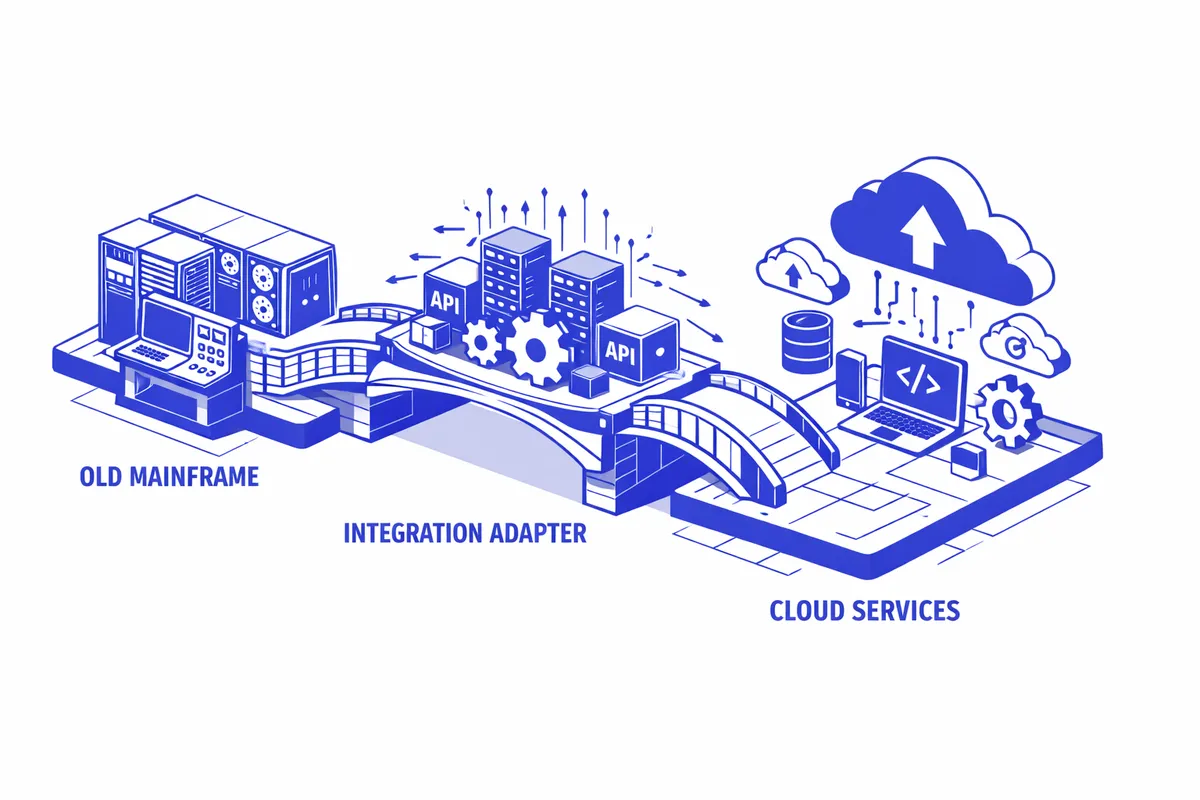
The audit phase starts with documentation. We map every system the business currently uses, every manual data transfer that happens between those systems, and every downstream decision or report that depends on that data being current and accurate. For a Milwaukee Avenue retailer, that map might show five systems with four manual transfer points. For a design agency near the Flat Iron Arts Building, it might show a client database that feeds neither the project management tool nor the invoicing system, creating three separate places where client status has to be reconciled manually.
From that map, we identify which connections are technically feasible, which ones require custom middleware or translation layers, and which legacy systems are so outdated that integration is not possible and a targeted replacement is the better path. We are direct about the last category. If a system is genuinely at the end of its integration life, we say so and scope the replacement as part of the same engagement rather than building an integration that will fail in eighteen months.
The integration build typically proceeds through a sequence of connection points ordered by data volume and business impact. The connections that affect the most daily decisions go first. A POS-to-accounting connection that currently requires a manual export every close of business goes before a historical data access connection that is used monthly. Each integration is tested with real data, including the edge cases and exceptions that the manual transfer process currently handles informally, before it is declared complete.
Industries We Serve in Wicker Park
Long-established boutique retailers along Milwaukee Avenue who have been operating since the neighborhood's early independent retail era often have the most complex legacy situations. POS systems that were installed in the early 2000s and have never been replaced hold years of sales history, customer records, and vendor relationships. Connecting that history to modern inventory management and e-commerce tools without losing the data or disrupting the daily operations of a busy retail floor is exactly the kind of problem we are built for.
Bars and restaurants near North Avenue and Division Street frequently run a combination of legacy back-office accounting software and newer front-of-house POS systems that were never designed to communicate with each other. The manual reconciliation between them is a daily labor cost. An integration layer that moves end-of-day sales figures, inventory depletion counts, and comps records directly from the POS into the accounting system eliminates that process entirely.
Design studios and agencies operating near the Flat Iron Arts Building who have used the same project management or billing tool since their founding sometimes find that tool cannot communicate with the modern design platforms their team now uses. An integration that creates projects in the old PM tool when new work is initiated in Figma or Notion, and syncs status updates back, keeps the historical record intact while removing the manual double-entry.
Music venues and booking operations with long histories in the neighborhood near The Robey Hotel often have booking records, artist payment histories, and event revenue data in legacy spreadsheet-based systems or early database tools. Connecting that historical record to modern event ticketing and financial platforms creates a complete picture without requiring a manual data archaeology project every time someone needs to look up what an artist was paid three years ago.
Independent record stores on Milwaukee Avenue that have been using the same inventory management system for a decade face the challenge of connecting that system to modern e-commerce and streaming data without rebuilding their entire catalog from scratch. An integration layer that reads from the legacy inventory system and publishes to an online storefront makes the existing catalog visible to buyers who will never walk through the door.
Professional service businesses that have operated out of Wicker Park's mixed-use and storefront spaces for years often have client records in legacy CRM tools or database systems that predate modern API design. A translation layer that allows the old records to be queried and updated from modern tools preserves the historical relationship data while making it accessible in the workflow context the current team actually uses.
What to Expect Working With Us
1. System inventory and data flow mapping. We document every piece of software in your operation, how data moves between systems today, and where the manual transfer points are. For a business with legacy systems, this often surfaces data that the owner did not know was trapped in one system and inaccessible to others. The map is the foundation for every decision that follows.
2. Integration feasibility and prioritization. Not every connection is technically feasible, and not every feasible connection is worth building at the same time. We present a prioritized integration roadmap that tells you which connections are straightforward, which require custom development, and which are not possible without replacing the legacy system first. You decide which connections to build and in what order based on real information about cost and complexity.
3. Build, test, and validate with real data. We build integrations against your actual data, not test data. This is important for legacy systems because the data is often irregular, with formatting inconsistencies and edge cases that accumulated over years. We validate that the integration handles your real data correctly before it goes into production, including stress-testing against the high-volume periods like the Wicker Park Fest event surge or the holiday retail season.
4. Documentation and transition support. Every integration we build is documented. The documentation covers what each integration does, what happens when it fails, and how to diagnose and resolve common error conditions. We train whoever is responsible for operations on what to watch for and how to handle exceptions. The business should be able to operate the integration independently within two weeks of launch.