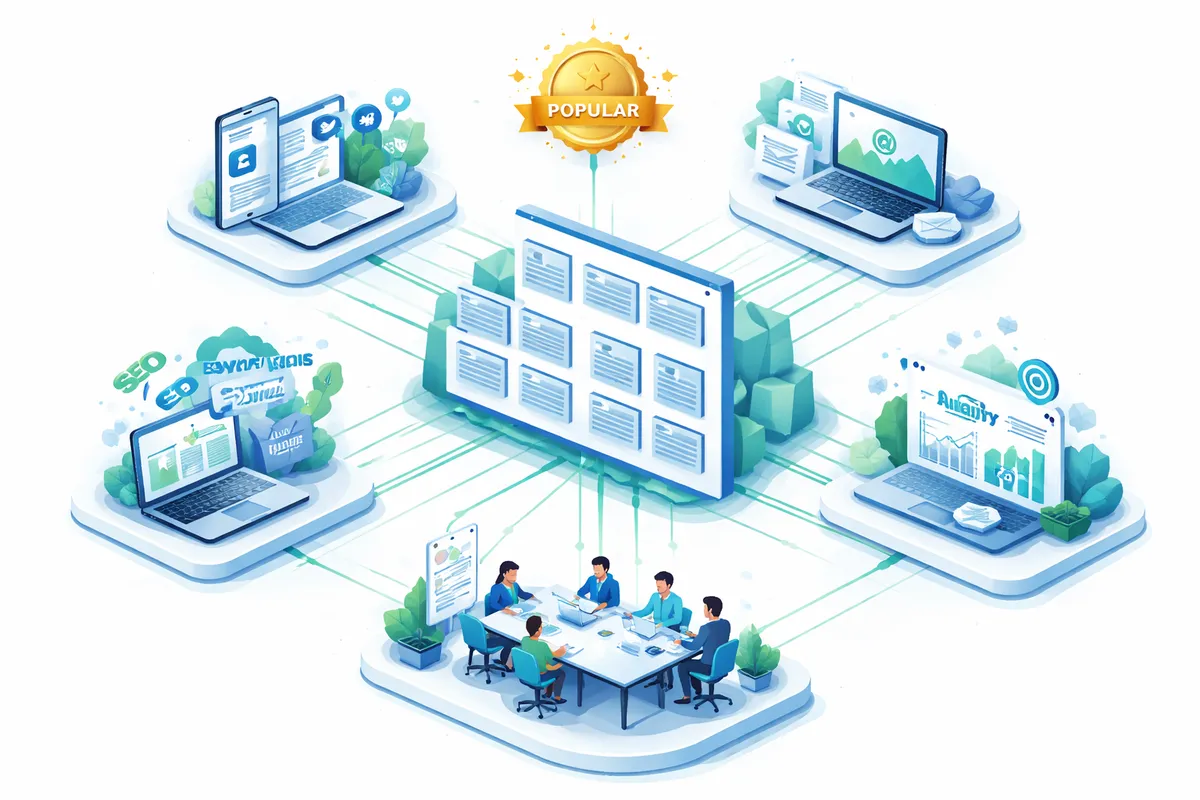
How We Build Growth Marketing for Wicker Park
The first question in a growth marketing engagement is always what you have already proven. Most Wicker Park businesses have an existing customer base that reflects who they are best at serving. A design studio with twelve long-term clients has real data about the kind of business that becomes a long-term client. A boutique with a loyal regular set has real data about which products drive repeat visits. We start by extracting the insights from what is working before building campaigns to acquire more of it.
Channel selection for Wicker Park businesses is specific to the neighborhood's audience and the business type. A vintage clothing retailer on Milwaukee Avenue has an audience that is highly active on Instagram and TikTok, responds to visual content, and makes decisions based on what feels current and authentic. A B2B creative agency on Damen Avenue has an audience that does not convert from Instagram content but does respond to LinkedIn visibility and email sequences. We match the channel mix to the audience reality rather than applying a default media plan to every engagement.
Email remains one of the highest-return channels for independent businesses with an existing audience. We build list growth, segmentation, and campaign automation as a core component of every growth engagement. For a Wicker Park venue, that means a newsletter strategy built around the event calendar with enough editorial content that people open it rather than just deleting it. For a studio or agency, it means a nurture sequence that keeps past clients connected through work updates, case studies, and relevant perspective without feeling like a sales email every month.
Industries We Serve in Wicker Park
Music venues and live event spaces near the Double Door legacy blocks and along North Avenue need audience growth strategies that operate on two timelines simultaneously: building the subscriber and follower base who will show up to future events, and driving ticket sales for specific upcoming shows. Those are different channels with different message cadences. A venue growth strategy separates them and manages both, rather than blending them into a single promotional drumbeat that serves neither well.
Boutique and vintage clothing retailers on Milwaukee Avenue are competing for share of a consumer who shops across multiple independent retailers, not just on price. The growth lever for these businesses is depth of connection, not discount offers. Content that shows the curation logic behind the merchandise, the sourcing stories, the culture of the store, turns occasional visitors into loyal advocates. Social content strategy built around the actual merchandise and the people behind it is more valuable than promotional posts with the sale price in the caption.
The Wicker Park design and creative agency market runs primarily on referral and reputation. Growth marketing for these businesses is less about awareness and more about amplifying credibility at the moment when a prospective client is doing research. A LinkedIn content strategy that puts the agency's thinking in front of creative directors and brand managers, combined with a case study library that is actually readable, builds the kind of trust that converts research into an inquiry.
Bars and cocktail lounges on Division Street and North Avenue face a discovery challenge that is partly geographic and partly about occasion matching. Most customers choose a bar based on what they feel like on a given night. Growth marketing for these businesses targets the moment of intent, primarily through local search, Google Maps optimization, and social content that communicates the atmosphere clearly enough that someone making a Saturday night decision picks you over the other options in the neighborhood.
Fitness and wellness studios operating out of Wicker Park's mixed-use spaces on Hoyne Avenue and Damen Avenue grow through a combination of class pass marketplaces, local search, and referral from existing members. A growth strategy that uses email and SMS to convert trial members into long-term subscribers, and incentivizes referral from the most engaged existing members, is more sustainable than repeated discount offers that attract the wrong audience.
Tattoo shops and specialty service studios build books through portfolio visibility, and portfolio visibility in 2025 is primarily an Instagram and TikTok problem. A content strategy built around the artists' work, the studio culture on Division Street or Hoyne Avenue, and the client process creates a steady stream of new booking inquiries from people who found the studio through the feed rather than word of mouth. Paid amplification of the best organic content accelerates the reach.
What to Expect Working With Us
1. Customer and revenue analysis before any campaign planning. We start by looking at who is already buying from you, how they found you, and which segments generate the most repeat business. For a Milwaukee Avenue retailer, this means reviewing point-of-sale data and email list behavior. For a studio or agency, it means mapping the client acquisition sources behind your current revenue. This analysis tells us where growth is most achievable and what the highest-priority channels are.
2. Channel strategy and content calendar, approved before launch. You see the campaign plan before we spend anything. Channel selection, budget allocation, content themes, and the first month's calendar are all presented for review and approval. We do not run campaigns that you have not read and agreed to. For businesses tied to Wicker Park's seasonal rhythm, the calendar is built around the neighborhood's key windows: the festival season, the holiday retail stretch, and the January slow period.
3. Campaign launch and first-month measurement. The first month is primarily about data collection. What message resonates? Which audience segment responds? What is the cost per new customer versus returning customer? We run the campaign, collect the data, and refine based on real results rather than assumptions. Month two looks meaningfully different from month one based on what we learned.
4. Monthly reporting with actual decisions attached. Every monthly report ends with three specific decisions about the next month's strategy based on what the data showed. We do not send you a PDF of charts and leave the interpretation to you. The report is a working document that tells you what changed, why it changed, and what we are doing differently as a result.