How We Build Employee Portals for Wicker Park
We start by mapping how your team actually communicates today. For a lot of Wicker Park businesses that means a group text, a shared calendar, a paper schedule taped near the register, and a manager who fields questions in person. We sit with you during a real shift, not a quiet conference call, and watch where the friction lands. A creative agency off Hoyne Avenue has different gaps than a music venue near the old Double Door space, and the portal has to fit the gap that exists.
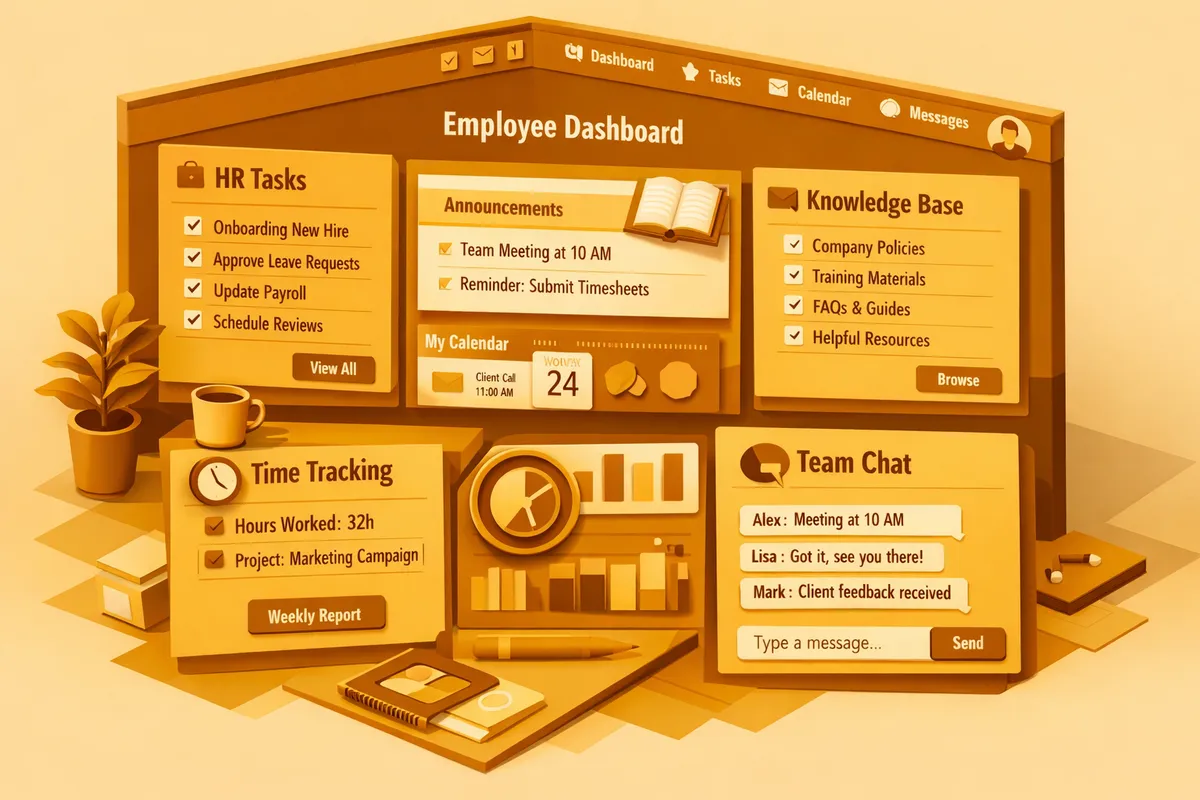
From there we scope the portal around the roles you carry. Hourly staff get availability submission, shift swaps, pay stub access, and document acknowledgment. Salaried creatives and managers get time-off requests, project assignment visibility, and team rosters. Owners get an approval queue and a record of who has signed what. We do not ship a generic HR dashboard and ask you to grow into it. We build the portal for the team standing behind your counter on Wolcott Avenue right now.
We layer in AI where it removes manual steps rather than where it looks impressive. The portal can read an uploaded ID or tax form, pull the fields, and route it to the right place, so a new hire near North Avenue is not waiting on a manager to do data entry. It can answer common policy questions in plain language so staff stop interrupting a shift to ask. Then we connect the portal to the payroll and scheduling tools you already run, test it against your actual roster, and train your team on the floor where they will use it.
Industries We Serve in Wicker Park
Independent music venues and event spaces along the Milwaukee Avenue corridor run on rotating door staff, sound techs, bartenders, and night-of contractors. An employee portal lets a venue near the former Double Door post the week's call times, collect availability from a roster that changes show to show, and give every worker a clean record of hours worked without a manager rebuilding the schedule by hand each week.
Vintage and boutique retail shops near Wicker Park and the six corners scale staff for weekend and festival traffic, then pull back midweek. With an employee portal, a shop on Damen Avenue can onboard a seasonal hire through a self-serve flow, manage shift swaps when a salesperson has a conflict, and keep pay stubs and tax documents in one place the worker can reach from their phone.
Bars and restaurants off North Avenue and Division Street cycle large hourly teams and care about getting onboarding paperwork right the first time. An employee portal handles new-hire forms, handbook acknowledgment, and tip-reporting visibility, so a manager on the floor near the Damen Blue Line station is not chasing signatures during a dinner rush.
Design studios and creative agencies around the Flat Iron Arts Building and Hoyne Avenue carry a mix of salaried staff and project contractors. A portal gives the full team a roster, time-off visibility, and a place to find contracts and onboarding docs, while contractors get a limited view scoped to what they need without exposing internal HR records.
Tattoo studios and body-art shops near the Flat Iron Arts Building often run as collectives where each artist sets independent hours. An employee portal works as the shared backbone: artists post their availability, the studio tracks who is in the chair when, and licensing and consent documentation lives in one organized record instead of a drawer behind the front desk.
Coffee shops and cafes along Milwaukee Avenue and Wolcott Avenue open early and run on staggered shifts. An employee portal lets an opening barista confirm their schedule the night before, gives the owner a fast approval queue for shift swaps, and keeps wage notices and food-handler certifications current and easy to pull when an inspector asks.
What to Expect Working With Us
1. Shift-side discovery. We come to your business during an actual working shift and watch how your team handles scheduling, questions, and paperwork today. For Wicker Park clients this usually surfaces a tangle of group texts and paper that the portal will replace, and seeing it live tells us what to build first.
2. Role-scoped build. We construct the portal around the specific roles you employ, from weekend retail staff to project contractors to owners. You review a working version with your real roster loaded, not a demo, so the feedback you give is grounded in your team.
3. Seasonal-ready launch. We connect the portal to your payroll and scheduling tools and launch it ahead of a staffing ramp, so when festival-season hiring hits the six corners your onboarding flow is already running. We train staff on the floor, in short sessions between shifts.
4. Ongoing tuning. After launch we track what staff use, what they skip, and where they still ask a manager. We adjust the portal as your team and your season change, because a Wicker Park roster in July does not look like the same roster in February.