How We Build Data Analytics AI for Wicker Park
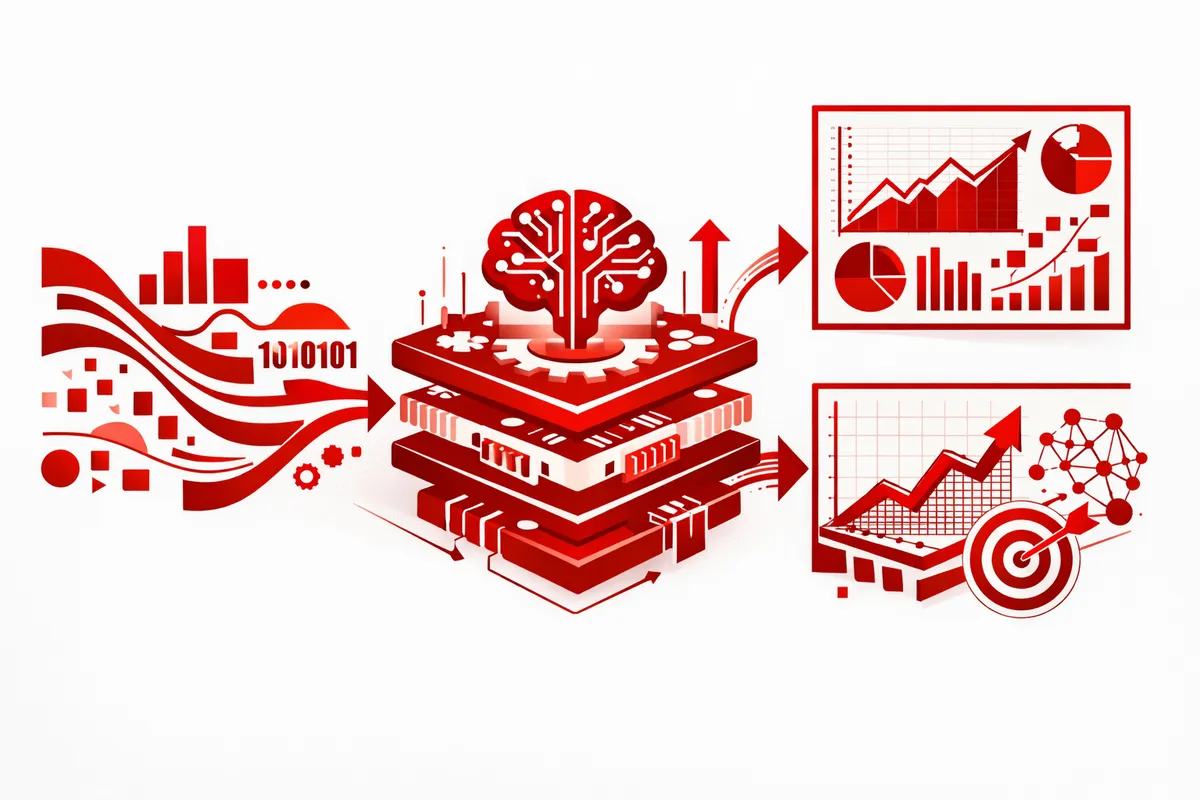
Every engagement starts with a data audit. We map every source of operational data your business generates: point-of-sale transactions, ticketing and reservation data, inventory records, email engagement data, social media analytics, and any other systems your business uses. Most Wicker Park businesses discover they have more usable data than they realized, spread across more systems than they track consistently.
Against that map, we identify the business questions that matter most. For a venue, that might be: which show attributes predict strong attendance? For a boutique, it might be: which inventory categories generate the best margin per square foot? For a bar, it might be: what is the relationship between promotional spend and revenue per night?
We build the data pipeline to consolidate the relevant data into a clean, analysis-ready form. We then build the analytics models that answer your specific questions. For a venue, that is an attendance prediction model that accounts for genre, pricing, and promotional timing. For a boutique, it is a category performance model that shows margin, velocity, and seasonality for each product type. For a bar, it is an operations analytics model that surfaces the most valuable levers for revenue and cost management.
Dashboards deliver the output to the people who need it. We design dashboards for operators, not data scientists. The information your venue booker needs to make booking decisions should be visible in seconds, not buried in a spreadsheet report.
Industries We Serve in Wicker Park
Music venues and performance spaces near the Flat Iron Arts Building and throughout Wicker Park use analytics to understand show-by-show economics, attendance predictors, audience demographics, and the relationship between promotional activity and ticket sales. Venues that make booking decisions from data outperform venues that rely on intuition.
Vintage and boutique retail shops along Milwaukee Avenue and Damen Avenue use analytics to understand inventory velocity, category margin contribution, customer lifetime value, and seasonal buying patterns. Retailers that buy based on what their data shows has worked outperform retailers that buy based on what seems interesting.
Bars and restaurants near the Milwaukee-Damen-North six corners use analytics to understand revenue per night, traffic patterns, menu item profitability, staffing optimization, and promotional ROI. Operators who understand their business mathematically make consistently better operational decisions.
Tattoo studios and personal service businesses on Division Street and Milwaukee Avenue use analytics to understand booking patterns, client retention rates, artist utilization, and revenue per available appointment slot. Studios that understand their capacity and demand precisely can price and schedule more profitably.
Design studios and creative agencies near Hoyne Avenue use analytics to understand project profitability by type, client lifetime value, pipeline conversion rates, and resource utilization. Agencies that track these metrics can make better hiring, pricing, and client selection decisions.
Independent fitness and wellness businesses in Wicker Park use analytics to understand member retention patterns, class fill rates, revenue per member, and the marketing channels that drive the most valuable new memberships.
What to Expect Working With Us
1. Data audit and priority setting. We map your data sources, assess data quality, and identify which analytics questions would have the highest business impact. You receive a written brief that explains which data we will use and what we expect to learn from it. This phase takes one to two weeks.
2. Pipeline and model development. We build the data consolidation pipeline and analytics models. For most Wicker Park businesses, this phase takes four to six weeks and involves close collaboration with you to ensure the models reflect how your business actually works.
3. Dashboard deployment and training. We build and deploy your analytics dashboards and train the team members who will use them. We design dashboards around specific decisions so the data surfaces when it is needed, not as a general report to browse.
4. Ongoing model refinement and expansion. We review model performance monthly and refine based on new data and changing business conditions. As you become comfortable with your initial analytics, we identify the next questions to build models for.