How We Build Custom ERPs for Wicker Park
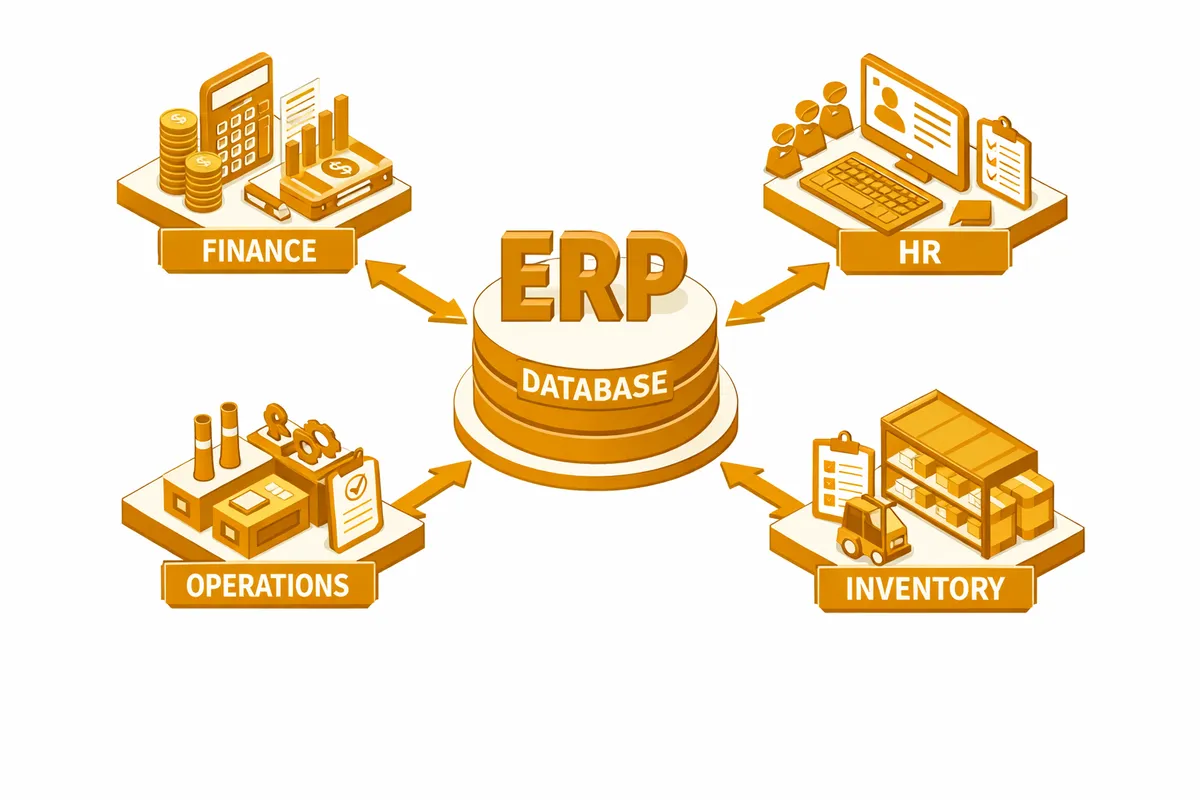
The scoping process for an ERP engagement is more deliberate than for simpler tools, and deliberately so. We spend the first two sessions mapping every operational domain: inventory management, staffing and scheduling, vendor relationships, purchasing and reorder workflows, financial reporting, and any service or event programming the business runs alongside its core function. We are looking for where the current tools break down, where data gets re-entered manually between systems, and where someone is doing work that a connected system could do automatically.
For a Milwaukee Avenue retailer, the inventory model is typically the most complex domain. We document every product category, every vendor relationship, any consignment agreements, and the current reorder logic, even if that logic lives entirely in a buyer's head. For a creative agency near the Flat Iron Arts Building, the complexity is more likely in project tracking, subcontractor billing, and retainer management. Each business type generates a different ERP architecture even if the underlying technology is similar.
The build proceeds in functional domains rather than as a single launch. The inventory and purchasing module goes live first for a retailer. The project and staffing module goes live first for an agency. This staged approach means the business is running on a real system for the highest-priority domain within four to six weeks, rather than waiting twelve weeks for a complete system. Remaining modules come online in sequence with the operation already trained on the core behavior of the new system.
Industries We Serve in Wicker Park
Vintage and specialty clothing retailers on Milwaukee Avenue carry the operational challenge of mixed inventory ownership, consignment tracking, and a buying process that is partly planned and partly opportunistic. An ERP built for this environment tracks owned stock, consignment quantities, payout obligations, and vendor lead times in a single view. Seasonal buying for holiday retail becomes a planned operation rather than a scramble.
Design and production agencies clustered near Damen Avenue and the Flat Iron Arts Building manage a business that is simultaneously a service operation and a project factory. Staff utilization across concurrent projects, subcontractor costs against project budgets, retainer billing schedules, and the sales pipeline feeding future capacity are four distinct operational concerns that an integrated ERP holds together in ways that separate tools cannot.
Food and beverage establishments along North Avenue and Division Street that operate both a restaurant and an event business have inventory, staffing, and revenue models that differ between service modes. The Tuesday dinner service and the Saturday private buyout require different prep quantities, different staffing levels, and different cost structures. An ERP that models both modes separately and rolls them up into unified financial reporting makes weekly decisions sharper.
Music venues and multi-use spaces near The Robey Hotel manage event calendars, artist deal structures, ticket revenue splits, equipment inventory, and recurring vendor relationships with sound and lighting companies. These operational streams rarely fit together in any off-the-shelf platform. An ERP built around the venue's actual deal flow and event lifecycle connects the booking, the cost planning, and the settlement into one system rather than three.
Specialty retailers with wholesale and retail channels operating on the Milwaukee Avenue corridor sometimes serve both individual retail customers and small businesses or restaurants that buy in volume. The inventory, pricing, and fulfillment logic for these two channels is different, and managing both through a single retail POS creates inaccuracies. A custom ERP with separate channel management and unified inventory visibility handles both without the friction.
Multi-location creative businesses that started on Hoyne Avenue or Division Street and have expanded to a second space find that the tools that worked for one location fail in ways that are hard to predict across two. Inventory visibility across locations, staff scheduling that spans sites, and financial reporting that can be read at the location level or rolled up to the total business are all ERP features that matter the moment you have a second address.
What to Expect Working With Us
1. Operations audit across every domain. We do not start with technology. We start with a structured review of your current operational workflows: what data you track, where it lives, where it gets lost, and what decisions you cannot currently make because you do not have the information to make them. For a Wicker Park business with layered complexity, this audit typically runs two sessions and produces a map that shows clearly which domains need ERP support and which are already working well enough to leave alone.
2. Architecture design and priority sequencing. After the audit, we design the ERP architecture and agree on the sequencing of which domains to build first. You review the design before development begins and confirm it reflects how your business actually works. Priority sequencing ensures that the parts of your operation creating the most pain get addressed first, rather than waiting for a complete system.
3. Phased build with functional launches. Development runs in phases tied to the priority sequence. You go live on the first module while we are building the second. Each module is fully tested and stable before we move on. This approach means you are operating on real systems before the full project is complete, and your team is building familiarity with the new tools incrementally rather than facing a complete transition all at once.
4. Ninety-day stabilization period. After the final module launches, we hold a ninety-day window for stabilization. Real operations expose edge cases that scoping sessions do not predict. A vendor relationship that works in twelve of thirteen situations generates an exception on the thirteenth that the system needs to handle. A seasonal pattern like the Wicker Park Fest inventory surge tests the purchasing and reorder logic in ways that normal weeks do not. We catch and resolve these during the stabilization period before stepping back to scheduled support.